

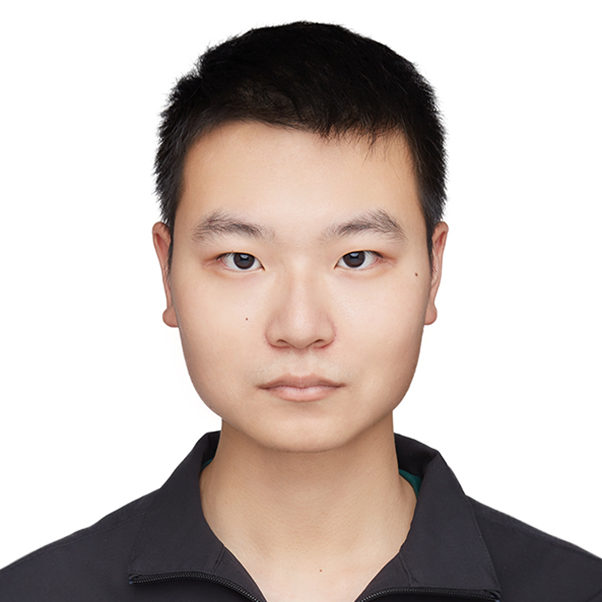
 Yongxin Guo
· 5 previous affiliations
- ByteDance (China)Since 2026
- Researcher · Since 2026
- Alibaba Group (China)2025–2026
- Researcher · 2025–2026
- PhD student · 2020–2025
- Tencent (China)2024
- Intern · 2024
- Nankai University2016–2020
- Undergrad student · 2016–2020
1 other author named Yongxin Guo: Yongxin Guo (City University of Hong Kong · 2 papers)
Research Overview
Yongxin Guo focuses on federated learning in heterogeneous environments, the efficiency of transformer architectures, and multimodal large language models. His early work addressed distribution shifts and client heterogeneity in distributed optimization. More recently, his research has shifted toward video temporal grounding, mixture-of-experts models, and reasoning capabilities in vision-language systems.
Research Trajectory
Yongxin Guo’s early research focused heavily on distributed optimization and federated learning, particularly addressing the challenges of non-stationary and heterogeneous environments. During his doctoral studies at the Chinese University of Hong Kong, Shenzhen, he investigated how real-world system dynamics—such as intermittent client availability and shifting data distributions—impact model optimization. This led to Towards Federated Learning on Time-Evolving Heterogeneous Data, which introduced a continual federated learning framework designed to capture and adapt to time-evolving heterogeneity across edge devices. He subsequently developed methods to mitigate "local learning bias," a phenomenon where client models overfit to their specific data at the expense of global performance. In FedBR: Improving Federated Learning on Heterogeneous Data via Local Learning Bias Reduction, he utilized label-agnostic pseudo-data and a min-max contrastive learning strategy to improve convergence and accuracy across heterogeneous datasets without compromising privacy.
Continuing this trajectory, his work expanded to address simultaneous label, feature, and concept shifts across clients. He introduced a bi-level optimization approach in FedRC: Tackling Diverse Distribution Shifts Challenge in Federated Learning by Robust Clustering, grouping clients based on underlying decision boundaries to significantly improve global generalization. He later formalized the broader landscape of clustered federated learning with Enhancing Clustered Federated Learning: Integration of Strategies and Improved Methodologies, proposing a four-tier framework and an improved algorithm that automatically determines cluster counts while reducing communication costs through a feature-classifier split. His expertise in distributed and privacy-preserving systems has also been applied to domain-specific challenges, such as load balancing in Personalized Federated Management and Load Balancing for Multiple Charging Stations, and defending against attribute inference attacks in cross-domain recommendation systems, as detailed in Camouflaged Variational Graph AutoEncoder Against Attribute Inference Attacks for Cross-Domain Recommendation.
As large language models became central to artificial intelligence research, Guo’s focus broadened to include the training and inference efficiency of transformer architectures. A key contribution in this domain is Dynamic Mixture of Experts: An Auto-Tuning Approach for Efficient Transformer Models. Addressing the manual hyperparameter tuning typically required for sparse models, this work framed expert selection as a dynamic, multi-label problem. The resulting framework automatically determines both the total number of experts and the active number of experts per token, optimizing efficiency across vision, language, and multi-modal tasks while activating significantly fewer parameters.
Now a research engineer at Taobao and Tmall Group, Guo has increasingly concentrated on multimodal large language models, with a specific emphasis on video temporal grounding and long-context video understanding. In VTG-LLM: Integrating Timestamp Knowledge into Video LLMs for Enhanced Video Temporal Grounding, he integrated specialized absolute-time tokens into visual representations to improve the precision of event localization in zero-shot settings. He further advanced this area with TRACE: Temporal Grounding Video LLM via Causal Event Modeling, which moves beyond pure text generation by treating timestamps, saliency scores, and captions as structured, interleaved tasks. By explicitly modeling videos as sequences of causal events, this approach achieves state-of-the-art temporal grounding. His research into extended temporal contexts also includes Enhancing Long Video Understanding via Hierarchical Event-Based Memory. Collaborating on broader multimodal integration, he contributed to Watch and Listen: Understanding Audio-Visual-Speech Moments with Multimodal LLM, which developed a query-based connector to adaptively weight visual, audio, and speech signals. This work advances the research direction of Balancing Modalities in Audio-Visual Large Language Models and contributes to the broader area of Query Aware Fusion for Multimodal Retrieval and Reasoning.
Beyond video, Guo has investigated the reasoning capabilities of language models, particularly through reinforcement learning and rigorous benchmarking. In G2RPO-A: Guided Group Relative Policy Optimization with Adaptive Guidance, he explored the area of Scaling Language Model Reasoning Beyond Verifiable Rewards. By injecting ground-truth reasoning steps into model roll-outs and dynamically adjusting guidance based on real-time performance, this approach enables smaller language models to achieve significant gains in mathematical and coding tasks. Additionally, he oversaw the evaluation in Multi-Physics: A Comprehensive Benchmark for Multimodal LLMs Reasoning on Chinese Multi-Subject Physics Problems. This comprehensive study of multimodal models revealed that while visual inputs aid reasoning, many contemporary models still suffer from "logical hallucinations," arriving at correct answers through fundamentally flawed reasoning steps.
Current Directions
The most recent papers in the evidence indicate a strong focus on enhancing the reasoning and temporal grounding capabilities of multimodal large language models. Current work investigates how to effectively integrate diverse modalities—such as audio, speech, and visual streams—into unified architectures that can precisely localize and describe complex events in long-form video. Concurrently, there is an active effort to improve the logical reasoning of language models through adaptive reinforcement learning techniques and verifiable rewards. This dual focus on fine-grained multimodal understanding and robust, hallucination-free reasoning represents the core of his ongoing research agenda.
Profile updated
Loading new papers…
Other researchers whose papers cluster into the same research directions — a proxy for overlapping technical interests and shared intellectual neighborhoods.
See something wrong? Report a mistake