

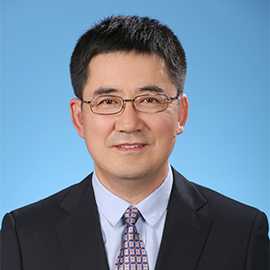
 Yongwei Wu
1 previous affiliation
- Tsinghua University2010–2023
- Full Professor · 2010–2023
Research Overview
Yongwei Wu focuses on distributed systems, grid computing infrastructure, and high-performance graph processing. Early work established foundational middleware and execution management protocols for large-scale grid environments. More recently, the research trajectory has shifted toward optimizing temporal graph engines and streaming graph neural network systems for dynamic, real-time applications.
Research Trajectory
Yongwei Wu’s research began in the early 2000s with a focus on grid computing and the integration of heterogeneous distributed resources. As the first author of Grid Computing Pool and Its Framework (2003), Wu proposed an architecture designed to interface multiple mathematical computing tools over a grid network. By implementing a Grid Computing Engine Interface (GCEI), the work demonstrated how widespread computational devices could be aggregated into a virtual supercomputer to improve resource utilization and service quality. This foundational interest in grid architecture evolved into leadership roles in major infrastructure projects. Serving as the principal investigator, Wu directed the development of core middleware components in Execution Management in ChinaGrid Supporting Platform (2006). This research addressed the complexities of job scheduling across heterogeneous environments, enabling coordinated access to underlying resources for both legacy program jobs and hyper-service jobs.
Moving into the 2010s, Wu’s focus expanded to address the security, deployment, and data consistency challenges inherent in scaling cluster and grid computing. In Automatically constructing trusted cluster computing environment (2011), Wu led the design of a Trusted Cluster Computing (TCC) methodology. This system was engineered to dynamically deploy user-specified applications while mitigating the risks of malicious code execution or data leakage on distributed nodes. Concurrently, Wu contributed to optimizing data grid performance. As the second author of Optimizing write operation on replica in data grid (2011), Wu helped develop metadata management algorithms that allowed write requests to be processed at the nearest site rather than the latest replica. This approach balanced significant write performance improvements with the complexities of maintaining replica consistency across the grid.
By the mid-2010s, the research trajectory adapted to the demands of big data analytics and distributed pattern analysis. Wu served as the senior author on Heads-Join: Efficient Earth Mover's Distance Similarity Joins on Hadoop (2016), addressing the prohibitive super-cubic computational costs of Earth Mover's Distance (EMD) similarity joins. Recognizing that existing metric distance algorithms were vulnerable to skewed data distributions, the proposed framework transformed data into the EMD space and utilized a multi-phase filtering strategy to efficiently distribute the workload across Hadoop clusters. During this period, Wu also participated as a middle author in broader systems research, including explorations of processing-in-memory (PIM) architectures for graph processing and flash-aware page swapping for mobile systems, reflecting an ongoing engagement with hardware-aware system optimizations.
In recent years, Wu has increasingly focused on the performance bottlenecks of graph neural networks (GNNs) and dynamic graph processing. As the principal investigator of T-GCN: A Sampling Based Streaming Graph Neural Network System with Hybrid Architecture (2022), Wu addressed the high training overhead and poor parallel scalability that plague streaming GNNs on multiple GPUs. The work introduced a novel sampling-based approach tailored specifically for streaming graphs, utilizing a hybrid architecture to significantly improve training efficiency for online learning and real-time scenarios.
Current Directions
The most recent papers in the evidence address the computational and architectural challenges of processing highly dynamic, temporal graphs. Recent work investigates high-efficiency sampling strategies and random walk engines designed specifically for graphs where structural changes—such as edge insertions and deletions—occur continuously.
For example, in TEA: A General-Purpose Temporal Graph Random Walk Engine (2023), Wu's group introduced a hybrid sampling approach to overcome the limitations of state-of-the-art static graph systems. This research tackles the high sampling complexity, massive index space requirements, and poor programmability that traditionally hinder temporal graph analysis. This direction indicates an ongoing focus on building scalable, general-purpose infrastructure capable of supporting complex, real-time analytics on evolving network topologies.
Profile updated
Loading new papers…
Loading research neighbors…
See something wrong? Report a mistake