

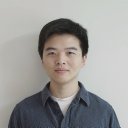
 Yongqiang Chen
· 3 previous affiliations
- Carnegie Mellon UniversitySince 2024
- Postdoc · Since 2024
- Postdoc · Since 2024
- Chinese University of Hong Kong2020–2024
- PhD student · 2020–2024
Research Overview
Yongqiang Chen focuses on the foundations of machine learning through the lens of causality, addressing core challenges in out-of-distribution generalization, model alignment, and interpretability. His trajectory spans from robust graph neural networks to causal representation learning, and his most recent work investigates how large language models can be integrated with causal reasoning to build autonomous AI scientists and improve experimental design.
Research Trajectory
Chen’s early research centered on the robustness and quality of graph neural networks (GNNs). In 2021, he participated in work on improving the input data quality for semi-supervised node classification by leveraging model outputs to adjust graph topology and node labels in Self-Enhanced GNN: Improving Graph Neural Networks Using Model Outputs. The following year, he led an investigation into the vulnerabilities of GNNs, analyzing why graph injection attacks can be provably more harmful than graph modification attacks and how they disrupt the homophily distribution of the original graph in Understanding and Improving Graph Injection Attack by Promoting Unnoticeability. Shifting toward out-of-distribution (OOD) generalization, he introduced a framework that leverages causal inference to identify invariant subgraphs, improving robust graph representation learning across unseen data distributions in Learning Causally Invariant Representations for Out-of-Distribution Generalization on Graphs.
In 2023, Chen deepened his focus on the research direction of Invariant Representation Learning Across Diverse Environments. He investigated the mechanics of feature learning, revealing that standard empirical risk minimization learns both robust and spurious features but prioritizes the latter. To address this, he developed an iterative feature augmentation strategy to force models to build richer feature libraries in Understanding and Improving Feature Learning for Out-of-Distribution Generalization. He also critically examined the de facto standard of environment augmentation in graph learning, proving that it cannot learn true invariance without specific assumptions. This led to the development of a framework using a biased assistant model to extract invariant subgraphs in Does Invariant Graph Learning via Environment Augmentation Learn Invariance?, and the formalization of minimal assumptions—such as variation sufficiency and consistency—required for feasible invariant graph learning in Rethinking Invariant Graph Representation Learning without Environment Partitions. Concurrently, he addressed the intrinsic conflicts between empirical risk and OOD objectives by framing the optimization dilemma through the lens of Pareto optimization in Pareto Invariant Risk Minimization: Towards Mitigating The Optimization Dilemma in Out-of-Distribution Generalization.
Moving into 2024, Chen explored the interpretability of graph models, identifying a fundamental approximation gap in how current methods identify important subgraphs. He introduced a new theoretical framework and sampling-based architecture to improve the faithfulness of graph explanations in How Interpretable Are Interpretable Graph Neural Networks?. During this period, he also began integrating large language models (LLMs) with causal reasoning. He collaborated on a framework that uses LLMs to extract high-level causal variables from unstructured data, which are then mapped using formal causal discovery algorithms, contributing to the broader area of Hybrid Causal Discovery with Large Language Models in Discovery of the Hidden World with Large Language Models.
By 2025, Chen’s work heavily emphasized the intersection of causality, LLM reasoning, and alignment. He synthesized much of his foundational OOD work in a broader overview of how causal relationships differ from statistical correlations, relevant to the area of Latent Environment Discovery for Invariant Learning, in Learning Causality for Modern Machine Learning. Addressing LLM safety, he identified a "faithfulness gap" in representation intervention and proposed a method to concentrate messy, non-linear harmful concepts into a linear subspace for easier removal in Does Representation Intervention Really Identify Desired Concepts and Elicit Alignment?. To tackle scalable oversight, he and his collaborators introduced a protocol that reframes multi-agent debate as a collaborative, non-zero-sum game to prevent models from prioritizing winning over truth in Towards Scalable Oversight with Collaborative Multi-Agent Debate in Error Detection.
Chen also expanded the application of LLMs in scientific and retrieval contexts. He proposed using LLMs as expert consultants to overcome cold-start problems in experimental design for causal discovery in Can Large Language Models Help Experimental Design for Causal Discovery?. In the research area of Distilling Reasoning Trajectories into Small Language Models, he developed a framework to align weak graph retrievers with the reasoning needs of LLMs, reducing token costs and overthinking in Weak-to-Strong GraphRAG: Aligning Weak Retrievers with Large Language Models for Graph-based Retrieval Augmented Generation. Additionally, he introduced a hierarchical tokenization framework to improve how LLMs process molecular structures in Hierarchical Graph Tokenization for Molecule-Language Alignment. Investigating fundamental reasoning failures, he examined the gap between the causal flow of human thought and the biases of written language, contributing to the direction of Narrative Order as a Shortcut for Causal Reasoning in On the Thinking-Language Modeling Gap in Large Language Models.
In 2026, Chen’s research advanced toward complex reasoning tasks and autonomous AI scientists. He formalized reasoning as the adaptive use of learned knowledge under OOD contexts in In-Context Adaptation. He also developed agents capable of foresight analysis using historical analogies and causal decomposition in Analogical Deep Research: Retrieving and Integrating Historical Analogies for Foresight Analysis. Finally, he introduced an AI scientist agent that utilizes a "causal scratchpad" to guide open-ended evolutionary program discovery in CausalEvolve: Towards Open-Ended Discovery with Causal Scratchpad.
Current Directions
The most recent papers in the evidence address the integration of large language models with causal reasoning to build robust, autonomous AI agents. Recent work investigates how LLMs can adapt to out-of-distribution contexts through in-context reasoning and how they can leverage causal structures—such as a "causal scratchpad"—to guide open-ended scientific discovery and evolutionary programming. Additionally, current research explores the use of historical analogies and causal decomposition for foresight analysis, as well as collaborative multi-agent protocols designed to ensure scalable oversight and reliable error detection in complex reasoning tasks.
Profile updated
Loading new papers…
Other researchers whose papers cluster into the same research directions — a proxy for overlapping technical interests and shared intellectual neighborhoods.
See something wrong? Report a mistake