

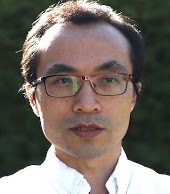
 Yongluan Zhou
· 6 previous affiliations
- University of CopenhagenSince 2017
- Professor · Since 2020
- Program Director (Head of Studies), MSc in Computer Science · Since 2019
- Current
- Associate Professor · 2017–2020
- University of Southern Denmark2008–2017
- Associate Professor · 2011–2017
- Assistant Professor · 2008–2011
- Postdoctoral Researcher · 2007–2008
- National University of Singapore2002–2007
- Research Assistant · 2006–2007
- Doctor of Philosophy (Ph.D.), Computer Science · 2002–2007
- Reseach Intern · 2005–2006
- Zhejiang University1999–2002
- Master's degree, Computer Science · 1999–2002
Research Overview
Yongluan Zhou focuses on distributed data management, continuous stream processing, and high-performance in-memory systems. Early work addressed dynamic load balancing and query allocation in sensor networks and streaming environments. More recently, the focus has expanded to encompass memory management optimization, hardware-accelerated data processing, and the reduction of computational overhead in large-scale analytical systems.
Research Trajectory
Yongluan Zhou’s research began in the mid-2000s with a primary focus on the architecture and optimization of distributed continuous query systems. As streaming data applications grew in prominence, a central challenge was maintaining system performance amid unpredictable data arrival rates and fluctuating server loads. Zhou led early efforts to address this through dynamic operator migration. In the first-author paper Dynamic Load Management for Distributed Continuous Query Systems (2005), Zhou formalized a performance ratio metric to evaluate and execute runtime query operator migration, providing a scalable solution for long-running continuous queries.
Following this foundational work in stream processing, Zhou expanded these optimization principles into the domain of wireless sensor networks. In these environments, energy efficiency and communication costs are primary constraints. Serving as the senior author on Similarity-aware query allocation in sensor networks with multiple base stations (2007), Zhou directed research into exploiting the structural similarities among queries. By allocating queries that required data from common sensor nodes to the same base stations, the work demonstrated significant reductions in total data communication costs across large-scale networks.
Moving into the 2010s, Zhou’s research broadened to encompass the storage and dissemination of complex, large-scale datasets, including semantic web data and privacy-preserving streams. As a co-author of SemStore: A Semantic-Preserving Distributed RDF Triple Store (2014), Zhou contributed to a novel approach for partitioning RDF data across computing clusters. Unlike prior systems that relied on fine-grained structural information, SemStore utilized a coarse-grained structure to better localize complex queries and improve scale-out performance. The following year, Zhou led work on the intersection of stream processing and data privacy. In Dissemination of anonymized streaming data (2015), Zhou proposed an infrastructure for streaming data marketplaces that integrated anonymization directly into the dissemination process, allowing brokers to serve clients with varying privacy constraints and urgency requirements efficiently.
In the latter half of the 2010s, the trajectory shifted toward system-level optimizations for big data frameworks, particularly focusing on memory management and parsing overhead in production environments. Zhou contributed to the research direction of Minimizing Metadata and Allocation Overhead in Memory Systems through participation in collaborative systems research. A key example is the co-authored paper Deca: A Garbage Collection Optimizer for In-Memory Data Processing (2018). This work addressed the severe garbage collection bottlenecks in systems like Spark and Flink by introducing a lifetime-based memory management framework that analyzed user-defined functions to optimize object allocation and teardown.
Continuing the theme of reducing systemic bottlenecks in data analytics, Zhou participated in research targeting raw data ingestion. In the co-authored paper Maxson: Reduce Duplicate Parsing Overhead on Raw Data (2020), the research team analyzed production workloads to identify massive redundancies in JSON parsing operations. The resulting system mitigated this overhead, reflecting a sustained interest in optimizing the execution time of large-scale data analytical systems.
Current Directions
Based on the most recent papers in the evidence, which date from 2018 to 2020, Zhou’s work investigates the fundamental bottlenecks of modern, large-scale data processing systems. Rather than focusing solely on query routing or network topologies as in earlier work, recent efforts address the computational and memory inefficiencies that arise when processing massive datasets in enterprise environments.
A major current theme involves mitigating the "memory management tax" in big data frameworks. This includes work in the broader area of Minimizing Metadata and Allocation Overhead in Memory Systems, where research focuses on bypassing traditional garbage collection limitations in in-memory systems like Spark and Flink. Additionally, recent collaborative work indicates an interest in hardware acceleration and parsing optimization, exploring how to reduce redundant CPU cycles spent on raw data formats (such as JSON) and surveying the use of GPUs to parallelize complex graph processing tasks.
Profile updated
Loading new papers…
Loading research neighbors…
See something wrong? Report a mistake