

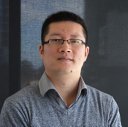
 Yongli Ren
· 1 previous affiliation
- RMIT UniversitySince 2016
- Associate Professor · Since 2023
- Current
- Assistant Professor · 2016–2022
Research Overview
Yongli Ren focuses on the development of advanced recommender systems, spatiotemporal data analysis, and the application of quantum computing to machine learning. His trajectory spans from addressing data sparsity in collaborative filtering to modeling complex human mobility patterns. Recently, his work investigates the integration of large language models into recommendation pipelines and the use of quantum annealing for combinatorial optimization in feature selection.
Research Trajectory
Ren’s early research established foundational methods for addressing data sparsity and contextual influence in recommender systems. In Lazy Collaborative Filtering for Data Sets With Missing Values, he developed an auto-adaptive imputation approach to identify key ratings and mitigate sparsity in neighborhood-based collaborative filtering. Expanding this focus to physical environments, he investigated how physical surroundings shape digital behavior in Analyzing Web behavior in indoor retail spaces. By analyzing extensive Wi-Fi logs from shopping malls, this work demonstrated predictable patterns in how individuals navigate physical and digital spaces, contributing to the broader research direction of Reconstructing Continuous Mobility from Sparse Spatiotemporal Data. Building on these insights, he introduced a tripartite graph model to capture the intricate links between moving, querying, and browsing behaviors in A Location-Query-Browse Graph for Contextual Recommendation.
His interest in spatiotemporal data naturally extended to the challenges of trajectory imputation and continuous time series modeling. With collaborators, he explored embedding techniques for human mobility in Multiple-level Point Embedding for Solving Human Trajectory Imputation with Prediction. To address the complexities of irregular and partially observed time series, his research engaged with the area of Continuous Time Latent Dynamics with Neural ODEs. This is exemplified by his participation in the development of SeqLink: A Robust Neural-ODE Architecture for Modelling Partially Observed Time Series, which combined neural ordinary differential equations (ODEs) with recurrent models to better handle extended time intervals and varying sparsity. He further advanced this methodology in ODEStream: A Buffer-Free Online Learning Framework with ODE-based Adaptor for Streaming Time Series Forecasting, focusing on real-time adaptation for streaming data.
In recent years, Ren has investigated the intersection of modern large language models (LLMs) and recommendation pipelines, alongside ongoing work in algorithmic fairness and multi-agent systems. Recognizing the limitations of traditional evaluation metrics for generative models, he proposed novel validation techniques in Metamorphic Evaluation of ChatGPT as a Recommender System, revealing inconsistencies in LLM recommendations when subjected to minor prompt variations. He subsequently addressed the severe position bias inherent in zero-shot LLM recommenders in Evaluating Position Bias in Large Language Model Recommendations, introducing an iterative selection strategy to stabilize ranking accuracy without fine-tuning. Concurrently, his research group has expanded the scope of recommendation fairness. In Session-Oriented Fairness-Aware Recommendation via Dual Temporal Convolutional Networks, they defined a novel framework to ensure individual items receive equitable accumulated exposure within single user sessions. Beyond recommendation, he has also contributed to cooperative multi-agent reinforcement learning, addressing centralized-decentralized mismatch through expressive value factorization in Multi-Agent Cross-Entropy Method with Monotonic Nonlinear Critic Decomposition.
A major emerging theme in Ren’s most recent trajectory is the application of quantum computing to machine learning and optimization problems. His lab has pioneered techniques to map complex recommendation tasks onto quantum architectures. In CRUISE on Quantum Computing for Feature Selection in Recommender Systems, they explored quantum approaches to navigate the combinatorial explosion of high-dimensional variable selection. To support the practical deployment of these algorithms, they developed methods for Estimating Quantum Execution Requirements for Feature Selection in Recommender Systems Using Extreme Value Theory. This line of inquiry culminated in Performance-Driven QUBO for Recommender Systems on Quantum Annealers, which leverages counterfactual analysis and quadratic unconstrained binary optimization to directly optimize feature selection for recommendation quality. Additionally, his team has utilized reinforcement learning to automate the design of the quantum circuits themselves, introducing a framework that jointly optimizes gate placement and parameter initialization in Hybrid Action Reinforcement Learning for Quantum Architecture Search.
Current Directions
The most recent papers in the evidence indicate a dual focus on adapting foundation models for robust recommendation and leveraging quantum computing for combinatorial optimization. Ren is actively investigating the vulnerabilities of large language models when deployed as zero-shot recommenders, developing prompting strategies and metamorphic testing frameworks to mitigate position bias and improve reliability. Simultaneously, his group is advancing the integration of quantum annealing into machine learning workflows. This includes formulating performance-driven quadratic unconstrained binary optimization (QUBO) models for feature selection and employing reinforcement learning to automate quantum architecture search, aiming to achieve highly compact and efficient quantum circuits.
Profile updated
Loading new papers…
Other researchers whose papers cluster into the same research directions — a proxy for overlapping technical interests and shared intellectual neighborhoods.
See something wrong? Report a mistake