

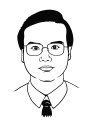
 Yonghong Tian
· 1 previous affiliation
- Peking UniversitySince 2013
- Full Professor · Since 2013
2 other authors named Yonghong Tian: Yonghong Tian (7 papers), Yonghong Tian (1 paper)
Research Overview
Yonghong Tian focuses on neuromorphic computing, multimedia learning, and computational neuroscience, developing biologically inspired architectures for efficient machine perception. His trajectory spans early work in digital information systems to recent advancements in spiking neural networks and event-based vision. Currently, he investigates ultra-low-latency neuromorphic systems and the integration of event streams with traditional modalities for robust, high-speed visual understanding.
Research Trajectory
Early in his career, his research explored human dynamics and information access, such as modeling online social interactions to improve intelligent services in Quantitatively evaluating the influence of online social interactions in the community-assisted digital library. Over time, his focus shifted toward biologically inspired computational models, particularly Spiking Neural Networks (SNNs), which offer energy-efficient, event-driven paradigms for deep learning.
A major challenge in training deep SNNs is the degradation problem caused by discrete binary activations and complex spatial-temporal dynamics. To address this, he and his collaborators introduced spike-element-wise architectures in Deep Residual Learning in Spiking Neural Networks, advancing the research direction of Residual Learning for Deep Spiking Neural Networks. Building on this intersection of biological plausibility and modern deep learning, he participated in developing Spikformer: When Spiking Neural Network Meets Transformer, which models sparse visual features to contribute to the broader area of Spike Driven Self Attention for Energy Efficient Transformers. To support the growing neuromorphic community, his group also contributed to SpikingJelly: An open-source machine learning infrastructure platform for spike-based intelligence, providing a full-stack toolkit for processing neuromorphic datasets, optimizing parameters, and deploying SNNs.
Concurrently, his work expanded into hybrid visual perception, integrating asynchronous event streams with standard video frames to overcome the limitations of traditional cameras in high-speed or low-light scenarios. He developed a streaming object detector in SODFormer: Streaming Object Detection With Transformer Using Events and Frames. This hybrid approach was further extended to high-speed hyperspectral imaging. In Towards Ultra High-Speed Hyperspectral Imaging by Integrating Compressive and Neuromorphic Sampling, his team combined a coded aperture snapshot spectral imager with a spike camera to reconstruct high-speed hyperspectral videos. Similarly, Event-Enhanced Snapshot Mosaic Hyperspectral Frame Deblurring utilized neuromorphic event cameras to guide spectral information recovery and address blurring issues in snapshot mosaic cameras.
A parallel theme in his trajectory involves decoding biological neural activity to understand the intrinsic correlations between sensory stimulation and brain states. To model the intricate dynamics of the visual cortex, his lab proposed methods for learning latent factors from visual neural activity. This includes Time-Dependent VAE for Building Latent Factor from Visual Neural Activity with Complex Dynamics and the subsequent Time-Evolving Dynamical System for Learning Latent Representations of Mouse Visual Neural Activity. Both works disentangle stimulus-driven signals from internal brain states, contributing to the research direction of Internal State Modulation of Sensory Neural Activity.
In recent years, his research has continued to push the boundaries of SNN efficiency and event-based vision. His lab developed Bio-Vision-Inspired Spiking Neural Networks for Object Detection with Event Cameras, which mimics the noise-filtering and multi-scale processing mechanisms of the human retina. To overcome the memory-intensive nature of training deep SNNs, his group introduced an automated pipeline in Towards Lossless Memory-efficient Training of Spiking Neural Networks via Gradient Checkpointing and Spike Compression. Further optimizing inference latency, Efficiently Training Time-to-First-Spike Spiking Neural Networks from Scratch rethought parameter initialization and pooling, advancing work in the area of Information Preserving Downsampling for Temporal and Spiking Signals.
His expertise in neuromorphic sensors has also been applied to novel view synthesis and autofocus mechanisms. EA3D: Event-Augmented 3D Diffusion for Generalizable Novel View Synthesis fused sparse RGB images with continuous event data to generate 3D views under fast motion, while Spike Camera Autofocus via Frequency-Domain Spectral-Centroid Migration introduced a frequency-domain autofocus method for spike cameras that tracks the outward shift of spectral energy. Beyond vision and SNNs, his recent trajectory includes contributions to multi-task reinforcement learning, such as the hierarchical knowledge-sharing framework in TaskLoom: Weaving Knowledge Across Tasks in World Models, and neuro-symbolic reasoning, demonstrated by BioProAgent: Neuro-Symbolic Grounding for Constrained Scientific Planning, which grounds large language model planning within deterministic finite state machines for safe execution in scientific lab environments. His group has also developed Aligned Delta-Triplane Transformers as Occupancy World Models, introducing a compact 4D world model that aligns historical triplanes with ego-motion compensation to forecast residual 3D scene occupancy changes for autonomous driving. Expanding further into computational biology, Tian supervised RipplePLM: Structural and Property Decoupling for Protein Mutation Effect Generation, which decouples direct and distal structural contacts while injecting biochemical property tokens to generate natural-language descriptions of protein point mutations.
Current Directions
The most recent papers in the evidence indicate a dual focus on optimizing neuromorphic computing architectures and expanding the capabilities of event-based vision systems. A primary direction involves pushing the efficiency limits of Spiking Neural Networks, utilizing techniques like Time-to-First-Spike (TTFS) coding and lossless spike compression to achieve ultra-low latency and memory-efficient training. Concurrently, recent work investigates hybrid visual perception, combining event cameras and spike cameras with traditional modalities to solve complex tasks such as high-speed hyperspectral imaging, generalizable 3D novel view synthesis, and frequency-domain autofocus. Beyond perception, their latest research explores autonomous systems and AI for science, developing occupancy world models for autonomous driving, neuro-symbolic frameworks for scientific planning, and mutation-aware language models for generating protein functional descriptions.
Profile updated
Loading new papers…
Other researchers whose papers cluster into the same research directions — a proxy for overlapping technical interests and shared intellectual neighborhoods.
See something wrong? Report a mistake