

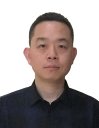
 Yongheng Wang
· 5 previous affiliations
- Researcher · Since 2019
- Zhejiang LabSince 2019
- Researcher · Since 2019
- Current
- Researcher
- Zhejiang UniversitySince 2019
- Researcher · Since 2019
- Hunan University2008–2018
- Associate Professor · 2008–2018
- Postdoc · 2007–2008
- Doctor's Degree, Computer Science · 2002–2006
Research Overview
Yongheng Wang focuses on the optimization, evaluation, and domain-specific application of large-scale neural architectures, with a particular emphasis on multimodal systems and self-supervised learning. Wang’s work addresses critical challenges in model maintenance and efficiency, including the editing of Multimodal Large Language Models (MLLMs), the refinement of knowledge distillation (KD) protocols, and the adaptation of vision transformers to specialized scientific datasets. By developing rigorous benchmarks and investigating the geometric properties of feature representations, Wang contributes to the broader effort of making complex AI models more interpretable, adaptable, and performant across diverse modalities.
Research Trajectory
Wang’s research trajectory is characterized by an initial focus on the internal mechanics and editability of large-scale models, followed by an exploration of fundamental training efficiencies and, more recently, the application of these techniques to non-natural image domains. In 2023, Wang participated in foundational research regarding the malleability of multimodal systems. This work addressed the "black box" nature of large models by investigating how specific knowledge can be updated or corrected without retraining the entire architecture from scratch. This period established a focus on the intersection of vision and language, particularly the difficulties inherent in maintaining consistency across different data modalities during model editing.
By 2024, Wang’s focus shifted toward the structural aspects of model training, specifically through the lens of knowledge distillation. This work moved away from high-level model behavior toward the underlying mathematical alignment of feature spaces. By analyzing how "student" models inherit information from "teacher" models, Wang contributed to a more nuanced understanding of feature geometry, arguing that simple alignment of feature vectors is often insufficient for performance gains. This transition reflects an increasing interest in the fundamental optimization strategies that allow smaller, more efficient models to approximate the capabilities of larger counterparts.
Most recently, in 2026, Wang’s work has extended into the application of Global Context and Long Range Dependencies in Vision Transformers within the field of astronomy. This shift represents an evolution from general-purpose AI methodology to the curation and benchmarking of models for highly specialized scientific tasks. This phase of research emphasizes the importance of Automated Provenance Tracking for Verifiable Data Pipelines, as the transition from natural images to astronomical data requires rigorous dataset curation and new evaluation metrics to ensure the transferability of self-supervised representations.
Current Directions
Wang’s current research is centered on the scalability and transferability of self-supervised learning (SSL) frameworks. A primary concern is the lack of comprehensive benchmarks for applying state-of-the-art computer vision techniques to specialized fields like astronomy, where data characteristics differ significantly from the standard ImageNet-style datasets. This work involves not only the technical adaptation of Vision Transformers (ViTs) but also the systematic evaluation of how pre-training on unlabeled scientific data can reduce the computational burden of downstream tasks, such as galaxy classification or red-shift estimation.
Furthermore, Wang continues to explore the boundaries of model efficiency. This involves investigating how the geometric regularization of features during distillation can lead to more robust student models. By focusing on the direction and norm of feature vectors, Wang’s current work seeks to move beyond traditional loss functions to find more effective ways of capturing the "knowledge" embedded in high-dimensional neural spaces. This direction aligns with broader industry and academic needs for deploying high-performance models on resource-constrained hardware.
The integration of these themes suggests a long-term interest in the "verifiability" of AI-driven scientific discovery. Just as researchers in oncology seek to bridge the gap between visual pathology and genomics—a challenge explored in the context of Predicting Molecular Signatures from Tissue Morphology—Wang’s work in astronomy seeks to bridge the gap between raw telescopic data and high-level morphological classification through robust, self-supervised feature extraction.
Representative Work
Wang’s contributions are best exemplified by work on model editing, feature alignment in distillation, and scientific benchmarking. In the study Can We Edit Multimodal Large Language Models?, Wang was part of a team that addressed the complexities of updating MLLMs. The research introduced the MMEdit benchmark, which provides a structured framework for evaluating how well a model can incorporate new information or correct errors across both text and image inputs. Wang’s involvement in this project helped establish new metrics for assessing the success of multimodal edits, revealing that existing single-modal editing techniques often fail to maintain cross-modal consistency.
In the area of model compression, Wang contributed to Improving Knowledge Distillation via Regularizing Feature Direction and Norm. This paper critiques the standard practice of minimizing the L2 distance between teacher and student features. Wang and colleagues demonstrated that such simple alignment does not necessarily correlate with improved classification accuracy. Instead, the work proposes a regularization scheme that treats the direction and the norm of feature vectors as distinct components of knowledge. This methodological refinement provides a more principled approach to distillation, ensuring that the student model captures the essential discriminative characteristics of the teacher's feature space.
Wang’s recent work, Benchmarking Self-Supervised Vision Transformers in Astronomy, shifts the focus to domain-specific benchmarking. In this study, Wang participated in the curation of large-scale, unlabeled astronomical datasets to test the efficacy of self-supervised pre-training. The findings indicate that pre-training ViTs on astronomical data significantly boosts performance on downstream tasks while drastically reducing the number of training epochs required. This work is significant for its empirical demonstration of representation transferability in a field where labeled data is often scarce and expensive to obtain.
While the available evidence of Wang’s research is currently concentrated in these three areas, the trajectory suggests a consistent focus on the rigorous evaluation of modern neural architectures. Whether through the creation of new benchmarks for multimodal editing or the mathematical analysis of feature alignment, Wang’s work emphasizes the need for a deeper understanding of how large models process and retain information across different domains and training regimes.
Profile updated
Loading new papers…
Loading research neighbors…
See something wrong? Report a mistake