

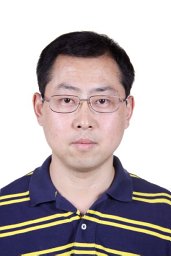
 Yongfei Zhang
· 2 previous affiliations
- Beihang UniversitySince 2005
- Full Professor · 2022–2042
- Associate Professor · 2014–2022
- Assistant Professor · 2011–2014
- Doctor, Pattern Recognition and Intelligent Systems · 2005–2011
- University of Missouri2007–2009
- Visiting research Scholar, Video transmission · 2007–2009
Research Overview
Yongfei Zhang focuses on video compression, multimedia transmission, and computer vision, with a particular emphasis on person re-identification and efficient neural architectures. His trajectory spans foundational work in rate-distortion optimization for video streaming to recent advancements in synthetic data generation and vision transformer optimization. Currently, he investigates data-efficient training frameworks and token reduction strategies for fine-grained visual recognition.
Research Trajectory
Yongfei Zhang’s early research concentrated on the challenges of multimedia transmission over complex networks, specifically addressing packet scheduling and resource allocation to maintain video quality under dynamic conditions. He developed models to predict the quality degradation caused by lost video packets, introducing a content-and-deadline-aware scheduling scheme in Fine-Granularity Transmission Distortion Modeling for Video Packet Scheduling Over Mesh Networks. This work jointly considered content priority, queuing delays, and network transmission conditions. Building on this foundation, he formulated unequal loss protection as a constrained optimization problem in Rate-distortion optimized unequal loss protection for video transmission over packet erasure channels, utilizing particle swarm optimization to allocate protection based on packet priority and channel dynamics. He further extended these predictive approaches in Delay-Bounded Priority-Driven Resource Allocation for Video Transmission Over Multihop Networks, where he modeled packet delay bound violation probabilities to better manage priority-driven scheduling at intermediate network routers.
As High Efficiency Video Coding (HEVC) emerged as a standard, Zhang shifted his focus toward optimizing the encoding process itself, balancing the trade-offs between computational complexity, bitrate, and perceptual quality. He proposed a region-based bit allocation strategy in Region-based intra-frame rate-control scheme for High Efficiency Video Coding, which classified coding tree units (CTUs) by complexity to reduce perceptual fluctuation and flicker artifacts at low bitrates. Continuing this line of inquiry, he developed refined frame rate estimation techniques in Content-adaptive parameters estimation for multi-dimensional rate control, dynamically adjusting model coefficients based on video complexity and channel conditions. His work also addressed hardware-level implementation challenges; in Motion estimation using maximum sub-image and sub-pixel phase correlation on a DSP platform, his group designed a fast, accurate motion estimation algorithm utilizing median filtering and Fourier preconditions to maintain high signal-to-noise ratios in complex imaging scenarios.
Recognizing the computational bottleneck of HEVC's quad-tree partitioning, Zhang began integrating deep learning into video coding pipelines. He introduced a convolutional neural network (CNN) approach in Texture-Classification Accelerated CNN Scheme for Fast Intra CU Partition in HEVC, which leveraged heterogeneous texture characteristics to bypass exhaustive rate-distortion optimization searches. This contribution aligns with the broader research direction of Predictive Block Partitioning for Efficient Video Encoding. He subsequently synthesized the state of the field in Recent Advances on HEVC Inter-Frame Coding: From Optimization to Implementation and Beyond, providing a comprehensive review of techniques designed to reduce complexity for real-time applications.
In recent years, Zhang’s research has expanded significantly into computer vision, with a distinct focus on person re-identification (ReID) and the optimization of Vision Transformers (ViTs). A major theme of this recent work is overcoming the data dependency of ReID models. He participated in the development of UnrealPerson: An Adaptive Pipeline Towards Costless Person Re-Identification, a framework that generates high-quality, controllable synthetic images to provide instance-level annotations without the cost of manual labeling. This work contributes to the areas of Automated Ground Truth Synthesis in Virtual Environments and Saturation Limits of Synthetic Data Scaling.
Simultaneously, Zhang has investigated the architectural limitations of ViTs in fine-grained visual tasks. In PHA: Patch-Wise High-Frequency Augmentation for Transformer-Based Person Re-Identification, he and his collaborators demonstrated that the intrinsic self-attention mechanisms of ViTs tend to dilute crucial high-frequency components, such as clothing texture details. To counter this, they proposed an augmentation method to preserve these features, advancing the broader areas of Wavelet Based Frequency Awareness in Neural Networks and Low-Pass Filtering Bias in Self-Attention Mechanisms.
Most recently, Zhang has focused on improving the efficiency and training paradigms of these vision models. He contributed to Spatially-Regularized Entropy for Discriminative Token Merging in Fine-Grained Re-Identification, which introduced a training-free token merging framework guided by "Spatial-Entropic Mass" to reduce computational costs while preserving subtle distinguishing details. He also participated in designing Learning What to Generate: A Reinforcement Learning-based Closed-Loop Augmentation Framework for Person Re-identification, a system that shifts from heuristic data generation to a closed-loop reinforcement learning approach, allowing the generative model to dynamically adapt based on feedback from the ReID network.
Current Directions
The most recent papers in the evidence indicate a strong ongoing focus on the intersection of generative data augmentation and efficient transformer architectures for fine-grained visual recognition. Zhang is currently investigating closed-loop synthesis pipelines that utilize reinforcement learning to dynamically adapt training data generation. By listening to feedback from the recognition model, these systems can synthesize specific edge cases or features that address the model's current weaknesses, resulting in highly data-efficient training paradigms.
Additionally, his recent work addresses the computational overhead of Vision Transformers in high-resolution, fine-grained tasks like person re-identification. This involves developing sophisticated token reduction and merging strategies that rely on spatial and entropic cues. The goal of these architectures is to significantly reduce floating-point operations without sacrificing the high-frequency spatial details necessary to distinguish between visually similar instances.
Profile updated
Loading new papers…
Other researchers whose papers cluster into the same research directions — a proxy for overlapping technical interests and shared intellectual neighborhoods.
See something wrong? Report a mistake