

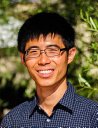
 Yong Sheng Soh
· 3 previous affiliations
- National University of SingaporeSince 2021
- Assistant Professor · Since 2021
- Researcher · 2018–2022
- California Institute of Technology2012–2018
- PhD student · 2012–2018
Research Overview
Yong Sheng Soh focuses on mathematical optimization, semidefinite programming, and the theoretical foundations of machine learning. His work explores the performance and limitations of convex relaxations for complex data processing tasks, bridging algebraic geometry with high-dimensional optimization. Recently, his research investigates distributionally robust optimization, optimal transport, and the integration of group symmetries into neural architectures.
Research Trajectory
Soh’s early research included applied optimization in telecommunications, such as modeling Energy Efficient Heterogeneous Cellular Networks. He subsequently concentrated on the theoretical properties of convex optimization in data science, exploring how to design structured penalties in Learning Semidefinite Regularizers.
By 2021, his work advanced the area of Scalable Semidefinite Programming for High Dimensional Optimization. He introduced A Non-commutative Extension of Lee-Seung's Algorithm for Positive Semidefinite Factorizations, generalizing non-negative matrix factorization to understand the expressiveness of semidefinite programs and the limitations of quantum resources. Concurrently, he developed a systematic framework using real algebraic geometry for the inverse eigenvalue problem, contributing to the research direction of Tightening Convex Relaxations with Redundant Constraints and The Moment-Sum-of-Squares Hierarchy in A note on convex relaxations for the inverse eigenvalue problem.
A parallel theme in his trajectory involves integrating algebraic symmetries into machine learning. He contributed to the broader area of Bridging Discrete and Continuous Equivariance in Neural Networks with Group Invariant Dictionary Learning. Building on this, his research group investigated machine learning under symmetry constraints, proposing methods for Conjugation Invariant Learning with Neural Networks to handle data structures independent of basis changes, with natural applications in multi-reference alignment and cryo-electron microscopy.
By 2024, Soh’s focus on convex relaxations yielded theoretical guarantees for notoriously difficult non-convex problems. He established deterministic linear inequalities guaranteeing exact solutions in Exactness Conditions for Semidefinite Relaxations of the Quadratic Assignment Problem. Extending these principles to the area of Relational Optimal Transport for Incomparable Data Spaces, he and his collaborators developed Semidefinite Relaxations of the Gromov-Wasserstein Distance, providing a polynomial-time algorithm capable of certifying global optimality. He also generalized matrix factorization techniques to broader symmetric cones in Multiplicative updates for symmetric-cone factorizations. In the domain of deep learning theory, he explored the geometric foundations of unsupervised penalties, characterizing optimal regularizers via Hellinger distance in The Star Geometry of Critic-Based Regularizer Learning.
Moving into 2025 and 2026, his work continues to bridge continuous relaxations and discrete structures. He analyzed the capacity of convex relaxations to recover hidden graph structures in The Lovász Theta Function for Recovering Planted Clique Covers and Graph Colorings. He also investigated robust learning frameworks in Optimal Regularization Under Uncertainty: Distributional Robustness and Convexity Constraints. Returning to the theme of symmetries, he formalized algorithmic recipes using non-abelian Fourier analysis in Dictionary learning under symmetries via group representations, advancing the research direction of Sample Efficiency through Geometric Equivariance. Finally, he broadened his analytical scope to network dynamics, modeling public sentiment evolution in Evaluating Policy Effects Through Opinion Dynamics and Network Sampling.
Current Directions
The most recent papers in the evidence address the intersection of robust optimization, structural recovery in graphs, and symmetry-aware learning. Recent work investigates how classical convex relaxations, such as the Lovász theta function, can be leveraged to recover hidden combinatorial structures like planted clique covers in noisy graphs. Additionally, Soh is exploring distributionally robust optimization, focusing on how convexity constraints and uncertainty shape optimal regularization strategies. His ongoing research also continues to refine representation learning under group symmetries, utilizing non-abelian Fourier analysis to develop sample-efficient, invariant dictionary learning frameworks for applications in computer vision and structural biology. Finally, recent modeling efforts extend to network science, quantifying how network sampling and opinion dynamics influence the evaluation of policy effects.
Profile updated
| Title | Venue | Year |
|---|---|---|
| Evaluating Policy Effects Through Opinion Dynamics and Network Sampling | IEEE Trans. Network Science & Engineering | 2026 |
| Fairness-Guaranteed Online Power Allocation Policies for EV Fast Charging Stations | arXiv | 2026 |
| Optimal Regularization Under Uncertainty: Distributional Robustness and Convexity Constraints | arXiv | 2025 |
| Sum-of-Squares Hierarchy for the Gromov Wasserstein Problem | arXiv | 2025 |
| Exactness Conditions for Semidefinite Relaxations of the Quadratic Assignment Problem | arXiv | 2024 |
| Semidefinite Relaxations of the Gromov-Wasserstein DistanceGitHub resource | NeurIPS | 2024 |
| The Star Geometry of Critic-Based Regularizer Learning | NeurIPS | 2024 |
| Dictionary learning under symmetries via group representations | Applied and Computational Harmonic Analysis | 2023 |
| A novel modelling approach of integrated taxi and transit mode and route choice using city-scale emerging mobility data | Transportation | 2023 |
| The Lovász Theta Function for Recovering Planted Clique Covers and Graph Colorings | SIAM J. Optim | 2023 |
| Paper | Venue | Year |
|---|---|---|
| Semidefinite Relaxations of the Gromov-Wasserstein DistanceGitHubtbng/ | NeurIPS | 2024 |
Loading new papers…
Other researchers whose papers cluster into the same research directions — a proxy for overlapping technical interests and shared intellectual neighborhoods.
See something wrong? Report a mistake