

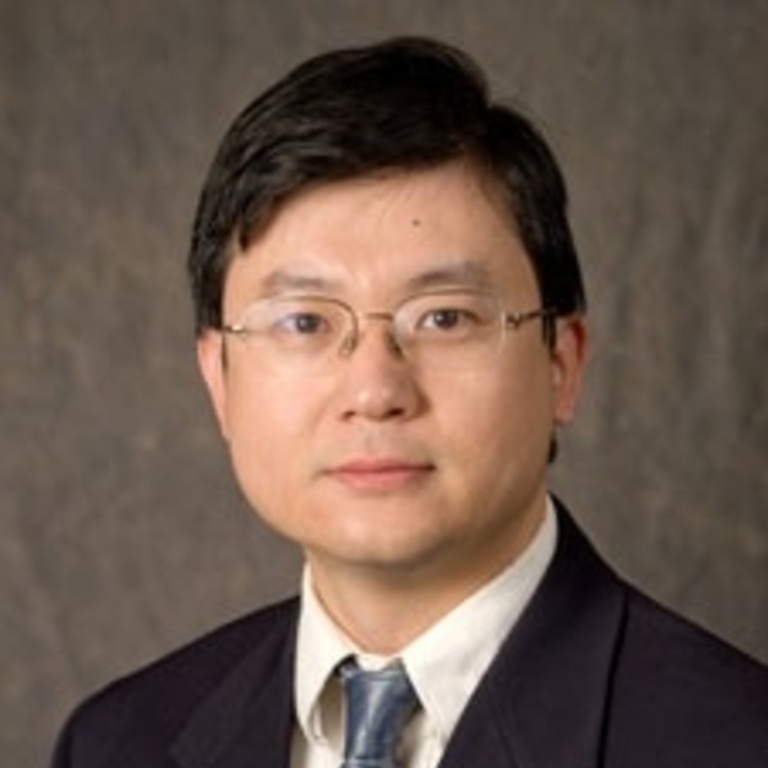
 Yong Chen
· 2 previous affiliations
- University of IowaSince 2003
- Full Professor · Since 2003
- University of Michigan1998–2023
- PhD student · 1998–2023
5 other authors named Yong Chen: Yong Chen (436 papers), Yong Chen (Beijing University of Post and Telecommunication · 14 papers), Yong Chen (Geely (China) · 13 papers), Yong Chen (University of Pennsylvania · 9 papers), Yong Chen (0 papers)
Research Overview
Yong Chen focuses on the intersection of industrial engineering, applied statistics, and machine learning, with a primary emphasis on industrial data analytics, process monitoring, and quality and reliability engineering. His work addresses the challenges of modeling complex systems characterized by high-dimensional, non-stationary, and irregularly sampled data. By integrating traditional statistical methods with modern deep learning architectures, he develops frameworks for multi-modal data fusion, functional regression, and state-aware forecasting in industrial and clinical contexts.
Research Trajectory
Since joining the University of Iowa in 2003, Chen’s research has evolved from foundational industrial statistics toward the integration of advanced computational methods for complex data structures. His early work in quality and reliability engineering established a basis for monitoring and diagnosing industrial processes, often employing Negative Binomial Models for Overdispersed Count Data to account for the variability inherent in discrete event data, such as failure rates or defect counts.
As industrial systems became increasingly digitized, Chen’s focus shifted toward the challenges of large-scale data analytics. This transition involved exploring One-Shot and Communication-Efficient Distributed Learning, a critical area for industrial environments where data is often siloed across different machines or facilities. By developing methods that minimize the communication overhead between local nodes and central servers, his work has contributed to the scalability of machine learning models in resource-constrained industrial networks.
In the early 2020s, Chen expanded his methodological scope to include deep learning-based signal processing and image reconstruction. This period was marked by a focus on multi-modal fusion techniques, particularly in the domain of medical imaging. By leveraging complementary information from different acquisition modalities, he addressed the trade-offs between imaging speed and reconstruction quality, a persistent challenge in both clinical diagnostics and high-precision industrial sensing.
Current Directions
Chen’s recent research focuses on the development of robust deep learning frameworks for functional data and complex time-series forecasting. A significant portion of this work involves treating data as continuous entities rather than discrete vectors, allowing for more accurate modeling of physical processes that are sampled irregularly or contain significant noise.
One major current direction is the application of Neural Controlled Differential Equations (NCDEs) to function-on-function regression. This approach allows for the modeling of dynamic relationships between input and output functions, providing a more flexible alternative to traditional grid-based methods. By incorporating Mixture-of-Experts (MoE) architectures, Chen’s recent frameworks achieve adaptive routing, where different sub-models specialize in different regions of the functional space, thereby improving both accuracy and computational efficiency.
Additionally, Chen is exploring the integration of deep reinforcement learning with probabilistic graphical models. This work aims to solve the "combinatorial explosion" problem in multivariate forecasting by using reinforcement learning to estimate latent states in Hidden Markov Processes. This direction reflects a broader interest in "state-aware" forecasting, where the model explicitly accounts for transitions between hidden operational states (e.g., normal operation vs. various fault states) to provide more interpretable and reliable predictions.
His broader machine learning interests also encompass emerging paradigms in model optimization and reasoning. This includes research into Scaling Class Specific Prototypes for Large Scale Classification, which simplifies decision boundaries in high-cardinality classification tasks, and The Quality Bottleneck of Teacher Generated Synthetic Data, which focuses on improving the logical consistency of model outputs by supervising the intermediate steps of a reasoning process.
Representative Work
The following papers represent key contributions to multi-modal fusion, functional regression, and state-aware forecasting.
In Deep-Learning-Based Multi-Modal Fusion for Fast MR Reconstruction, Chen and his collaborators addressed the problem of long acquisition times in Magnetic Resonance (MR) imaging, which often lead to motion artifacts. The research proposed a multi-modal fusion framework that combines fully sampled T1-weighted images (T1WI) with under-sampled T2-weighted images (T2WI). By utilizing the structural similarities and complementary information between these modalities, the framework enables the reconstruction of high-quality T2 images from significantly reduced k-space data. This work demonstrates the utility of cross-modal attention and fusion in improving the efficiency of complex imaging processes.
Chen’s work on functional data analysis is exemplified by FAME: Adaptive Functional Attention with Expert Routing for Function-on-Function Regression. This paper introduces the Functional Attention with a Mixture-of-Experts (FAME) framework, designed to handle regression tasks where both predictors and responses are functions. The framework utilizes bidirectional Neural Controlled Differential Equations to process continuous-time signals, making it robust to irregular sampling. The inclusion of an expert routing mechanism allows the model to adaptively assign different functional components to specialized sub-networks, achieving state-of-the-art performance in complex regression scenarios while maintaining robustness against noise.
In the area of multivariate time-series analysis, Chen participated in the development of DRL-STAF: A Deep Reinforcement Learning Framework for State-Aware Forecasting of Complex Multivariate Hidden Markov Processes. This research addresses the limitations of traditional Hidden Markov Models (HMMs) in capturing nonlinear observation patterns and the lack of interpretability in standard deep learning forecasting models. The DRL-STAF framework uses deep reinforcement learning to perform state estimation, effectively managing the complexity of hidden state transitions in high-dimensional systems. This approach provides a scalable solution for forecasting in environments characterized by non-stationarity and cross-sequence dependencies, such as complex industrial manufacturing lines or multi-sensor monitoring systems.
Profile updated
Loading new papers…
Other researchers whose papers cluster into the same research directions — a proxy for overlapping technical interests and shared intellectual neighborhoods.
See something wrong? Report a mistake