

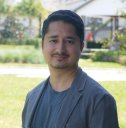
 Yogesh S Rawat
· 4 previous affiliations
- University of Central FloridaSince 2017
- Associate Professor · Since 2025
- Assistant Professor · 2019–2025
- Postdoc · 2017–2019
- National University of Singapore2012–2017
- PhD student · 2012–2017
- Mentor Graphics2009–2012
- SMTS · 2009–2012
- Indian Institute of Technology BHU2005–2009
- Bachelor of Technology (B.Tech.), Computer Science and Engineering · 2005–2009
Research Overview
Yogesh S Rawat focuses on computer vision and multimodal learning, with an emphasis on video understanding and robust artificial intelligence. His early work explored capsule networks for action detection and video segmentation, gradually evolving toward large-scale robustness analysis and self-supervised learning. Currently, he investigates foundation models, spatio-temporal grounding, and the resilience of visual systems to real-world distribution shifts.
Research Trajectory
His early research explored how contextual information improves visual recognition. In 2016, he co-developed ConTagNet: Exploiting User Context for Image Tag Recommendation, a deep neural network that predicts multiple image tags by combining visual content with the context of image capture.
By 2018, his focus shifted toward video understanding, specifically leveraging capsule networks for complex spatio-temporal tasks. He contributed to VideoCapsuleNet: A Simplified Network for Action Detection (2018), which introduced a 3D capsule architecture capable of jointly performing pixel-wise action segmentation and classification, contributing to the broader area of Incremental Tube Construction for Real-Time Action Localization. Building on this paradigm, he introduced CapsuleVOS: Semi-Supervised Video Object Segmentation Using Capsule Routing (2019), utilizing a dynamic zooming module and recurrent memory to handle occlusions and small objects efficiently. This trajectory culminated in multimodal applications with Visual-Textual Capsule Routing for Text-Based Video Segmentation (2020), which aligned video and language features to generate pixel-level masks from natural language queries, advancing the research direction of Resolving Referential Ambiguity in Vision-Language Models.
Around 2023, his work expanded to address the robustness and foundational methodologies of video representation learning. He co-authored Self-Supervised Learning for Videos: A Survey (2023), categorizing pretext, generative, and contrastive approaches in the field. Concurrently, his group investigated the vulnerabilities of visual models. In PRAT: PRofiling Adversarial aTtacks (2023), they developed a framework to identify the specific algorithms used to generate adversarial images, contributing to the broader area of Hybrid CNN-Transformer Architectures for Global-Local Vision. This interest in model resilience was further formalized in A Large-Scale Robustness Analysis of Video Action Recognition Models (2023), which stress-tested state-of-the-art architectures against 90 types of real-world distribution shifts.
In recent years, his research has heavily emphasized the adaptation of vision-language foundation models for specialized video tasks, spatio-temporal grounding, and robust biometrics. To reduce the reliance on expensive frame-level annotations, his lab developed novel weakly supervised frameworks. Contextual Self-paced Learning for Weakly Supervised Spatio-Temporal Video Grounding (2025) integrated temporal consistency and large language models to decompose complex queries, while STPro: Spatial and Temporal Progressive Learning for Weakly Supervised Spatio-Temporal Grounding (2025) employed a curriculum-based strategy to master simple actions before tackling crowded environments. Similarly, Stable Mean Teacher for Semi-supervised Video Action Detection (2025) introduced an error-recovery module to improve the temporal consistency of pseudo-labels in data-scarce settings. Together, these frameworks advance the research direction of Efficient Spatio-Temporal Action Localization.
His 2025 output also demonstrates a sustained focus on the limitations of foundation models. Addressing the area of Overcoming Static Bias in Video Understanding, Punching Bag vs. Punching Person: Motion Transferability in Videos revealed that multimodal models struggle to transfer high-level motion concepts across different contexts. To improve zero-shot capabilities, he contributed to T2L: Efficient Zero-Shot Action Recognition with Temporal Token Learning, advancing work in the direction of Temporal Grounding for Static Vision Language Models. Furthermore, LR0.FM: Low-Res Benchmark and Improving robustness for Zero-Shot Classification in Foundation Models (2025) evaluated and mitigated the severe performance degradation of models like CLIP when processing low-resolution inputs.
Beyond standard video understanding, his recent work applies multimodal reasoning to complex planning, biometrics, and scientific domains. CoSPlan: Corrective Sequential Planning via Scene Graph Incremental Updates (2025) tested the ability of vision-language models to detect and correct errors in multi-step visual planning tasks. In biometrics, he explored identity disentanglement in DIFFER: Disentangling Identity Features via Semantic Cues for Clothes-Changing Person Re-ID (2025) and stress-tested silhouette-based systems in RobustGait: Robustness Analysis for Appearance Based Gait Recognition (2025). Finally, demonstrating the versatility of these architectures, he collaborated on MolVision: Molecular Property Prediction with Vision Language Models (2025), integrating 2D molecular images with textual representations to enhance property prediction.
Current Directions
The most recent papers in the evidence indicate a strong focus on adapting vision-language foundation models for complex, real-world video and multimodal tasks. A primary theme is overcoming the limitations of current architectures, such as their reliance on static biases, their fragility to low-resolution or corrupted inputs, and their difficulty in transferring motion concepts across novel contexts. To address these challenges, recent work investigates parameter-efficient fine-tuning, temporal token learning, and progressive, weakly supervised training strategies that reduce the need for dense annotations. Additionally, this research extends into specialized domains, applying multimodal reasoning to multi-step visual planning, robust biometric identification (such as clothes-changing person re-identification and gait recognition), and molecular property prediction.
Profile updated
Loading new papers…
Other researchers whose papers cluster into the same research directions — a proxy for overlapping technical interests and shared intellectual neighborhoods.
See something wrong? Report a mistake