

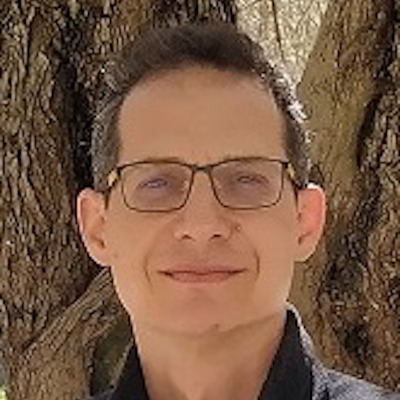
 Yoav Katz
· 5 previous affiliations
- IBM · Since 2002
- IBMSince 2014
- Manager, Language Model Utilization and Evaluation · Since 2025
- Manager, IBM Debating Technologies · 2019–2025
- Software Architect - IBM Debating Technologies · 2014–2019
- IBM Research AICurrent
- Current
- IDF1995–2002
- Software Engineer · 1995–2002
- MS student · 1999–2001
- 1991–1995
Research Overview
Yoav Katz focuses on natural language processing, model fine-tuning dynamics, and the development of accessible machine learning systems. His trajectory spans early work on entity disambiguation and autonomous debating architectures to extensive investigations into weight-space fusion and intermediate training strategies. Recently, his research addresses the evaluation of general-purpose agents and modular data preparation for generative language models.
Research Trajectory
In 2019, Katz participated in the development of ultra-fast, context-free wikification tools. This work contributed to the research direction of Statistical Priors for Named Entity Disambiguation and the broader area of Adaptive Model Cascades for Efficient Inference, utilizing Wikipedia's redirect network to achieve significant speedups while routing ambiguous terms to heavier neural models through novel confidence scoring. This approach was detailed in Fast End-to-End Wikification. He also contributed to systems for combining grammatical error corrections, as presented in Learning to combine Grammatical Error Corrections.
In 2021, he was part of the large-scale research effort behind Project Debater, described in An autonomous debating system, which demonstrated the capacity of computational argumentation technologies to engage in competitive debates with humans.
By 2022, his focus expanded to the dynamics of model fine-tuning and the creation of accessible machine learning tools. He directed research on fusing the weights of multiple fine-tuned models to create superior base models at minimal computational cost, presented in Fusing finetuned models for better pretraining. He also collaborated on distributed multitask fine-tuning methods, co-authoring ColD Fusion: Collaborative Descent for Distributed Multitask Finetuning, which enables multiple contributors to iteratively improve a base language model without sharing private datasets. Additionally, he oversaw the creation of Label Sleuth: From Unlabeled Text to a Classifier in a Few Hours, an open-source, no-code system designed to make natural language processing accessible to non-experts by guiding them through the labeling and classifier creation process.
In 2023, Katz continued to investigate the underlying mechanics of fine-tuning and model selection. He guided a systematic analysis of intertraining schemes to determine the value of intermediate models for target datasets in Where to start? Analyzing the potential value of intermediate models. He also co-authored research demonstrating that fine-tuned language models optimized for high performance reside in well-defined regions in weight space, as explored in Knowledge is a Region in Weight Space for Fine-tuned Language Models. Further work that year included an experimental study on zero-shot topical text classification with large language models. This research, Zero-shot Topical Text Classification with LLMs - an Experimental Study, evaluated performance across a large benchmark collection and contributed to the areas of Zero-Shot Text Classification via Natural Language Inference and Modeling Label Dependencies in Multi-Label Learning.
Current Directions
The most recent papers in the evidence address the infrastructure and evaluation methodologies required for modern generative AI and general-purpose agents. Katz has led the development of modular, customizable libraries for textual data preparation and evaluation, addressing the escalating complexity of system prompts and model-specific formats in Unitxt: Flexible, Shareable and Reusable Data Preparation and Evaluation for Generative AI. Additionally, his recent collaborative work investigates the systematic evaluation of general-purpose agents. In General Agent Evaluation, he and his co-authors propose unified protocols and conceptual principles to fairly assess systems that perform tasks in unfamiliar environments without relying on domain-specific engineering.
Profile updated
Loading new papers…
Other researchers whose papers cluster into the same research directions — a proxy for overlapping technical interests and shared intellectual neighborhoods.
See something wrong? Report a mistake