

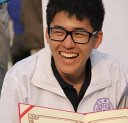
 Yixuan Jia
· 2 previous affiliations
- University of MichiganSince 2020
- PhD student · Since 2023
- MS student · 2020–2022
- Tsinghua University2014–2018
- Undergrad student · 2014–2018
Research Overview
Yixuan Jia focuses on generative modeling, data assimilation, and probabilistic methods for robotics and medical imaging. His early research explored materials science and microfluidics before transitioning to advanced machine learning applications. Currently, his work investigates the theoretical foundations and practical deployment of diffusion models for complex dynamical systems and computer vision.
Research Trajectory
The earliest work in the provided evidence centers on the physical sciences and microfluidic technologies. In 2017, collaborative research included the Preparation Of WS2 Nanosheets By One-step Hydrothermal Method, which detailed a modified approach using sodium cholate as a surfactant to synthesize few-layer tungsten disulfide nanosheets. The following year, he led a comprehensive review titled Progress of Inertial Microfluidics in Principle and Application. This work detailed the fundamental principles and force analyses required to manipulate biological particles without external fields, contributing to the research direction of Passive Hydrodynamic Trapping and Inertial Particle Focusing and the broader field of Non-Invasive Precision Manipulation of Biological Cells.
Following these early investigations, the trajectory of the research shifted significantly toward computational methods, robotics, and machine learning, with a strong emergence of publications in 2025. In the domain of robotics and spatial awareness, he co-developed ROMAN: Open-Set Object Map Alignment for Robust View-Invariant Global Localization. This system utilizes open-set object maps—incorporating shape, semantics, and gravity priors into a graph-theoretic framework—to maintain localization accuracy across drastically different viewpoints. This work intersects with the research areas of Fusing 2D Semantic Features with 3D Geometric Representations and Visual Place Recognition Across Extreme Appearance Changes. Addressing related challenges in robotics, he introduced Distribution Estimation for Global Data Association via Approximate Bayesian Inference (2025). By proposing the Stein and Langevin CLIPPER algorithms, this research allows systems to maintain multiple hypotheses in ambiguous or repetitive environments rather than committing to a single potentially flawed match, directly advancing the research direction of Resolving Perceptual Aliasing in Visual Localization.
In parallel, his 2025 research applied advanced neural architectures to medical imaging. He developed Shorter SPECT scans using self-supervised coordinate learning to synthesize skipped projection views, introducing SpeRF, a deep learning method inspired by neural radiance fields. By predicting missing views from sparse measurements without external training data, the method aims to reduce scan times and patient discomfort while maintaining clinical accuracy, leveraging the area of Implicit Neural Representations as Continuous Coordinate Mappings.
Simultaneously, a major theme emerged around data assimilation (DA) and generative models. With collaborators, he presented FlowDAS: A Stochastic Interpolant-based Framework for Data Assimilation (2025), which models step-by-step transitions to produce stable, physically consistent state estimates for complex system dynamics. Building on this foundation in 2026, he proposed ForcingDAS: Unified and Robust Data Assimilation via Diffusion Forcing. This unified framework utilizes a single diffusion model to learn joint-trajectory priors rather than step-by-step transitions, improving robustness and accuracy on complex real-world weather data where observations are incomplete.
The most recent phase of his trajectory focuses deeply on the theoretical properties and optimization of diffusion models. In 2026, he contributed to Evaluating the Representation Space of Diffusion Models via Self-Supervised Principles, which introduced the Invariant Contamination Ratio (ICR), a label-free metric designed to evaluate representation quality and detect when a model begins memorizing training data. He also co-developed MCLR: Improving Conditional Modeling via Inter-Class Likelihood-Ratio Maximization and Unifying Classifier-Free Guidance with Alignment Objectives. This work proposed a training objective that integrates the benefits of Classifier-Free Guidance directly into the model by maximizing inter-class separation, providing theoretical proofs linking the two concepts. Finally, his participation in video generation research included Data-Forcing Distillation: Restoring Diversity and Fidelity in Few-Step Video Generation (2026), which detailed a post-training technique to mitigate mode collapse and over-saturation in student models by pulling them toward diverse, high-fidelity data distributions.
Current Directions
The most recent papers in the evidence indicate a concentrated focus on the theoretical advancement and practical deployment of generative AI, specifically diffusion models. Current work investigates how to optimize the representation space and sampling efficiency of these models, addressing critical bottlenecks such as mode collapse in few-step video generation and the computational overhead of conditional modeling. Additionally, there is an ongoing emphasis on applying these advanced generative frameworks to complex dynamical systems. This is particularly evident in recent efforts to design robust data assimilation techniques capable of handling incomplete observations and temporal drift in challenging domains like weather forecasting and physical state estimation.
Profile updated
Loading new papers…
Other researchers whose papers cluster into the same research directions — a proxy for overlapping technical interests and shared intellectual neighborhoods.
See something wrong? Report a mistake