

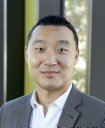
 Yisong Yue
· 9 previous affiliations
- California Institute of TechnologySince 2014
- Full Professor · Since 2020
- Assistant Professor · 2014–2020
- Asari AISince 2023
- Advisor · Since 2023
- CaineXSince 2025
- Advisor · Since 2025
- Latitude AI2023–2025
- Principal Scientist · 2023–2025
- Argo AI2022–2023
- Principal Researcher · 2022–2023
- Walt Disney (Switzerland)2013–2014
- Researcher · 2013–2014
- Carnegie Mellon University2010–2013
- Postdoctoral Researcher · 2010–2013
- Cornell University2005–2010
- Research Assistant · 2006–2010
- Ph.D., Computer Science · 2005–2010
- Bachelor of Science, Computer Science · 2001–2005
Research Overview
Yisong Yue focuses on machine learning, Bayesian optimization, and artificial intelligence for autonomous systems and scientific discovery. His early work developed foundational algorithms for preference learning and diversified information retrieval, later expanding into safe control frameworks for robotics. Currently, his research addresses agentic optimization, large language model reasoning, and generative models for complex inverse problems.
Research Trajectory
Yue’s early research focused on optimizing information retrieval and interactive learning systems. He developed a support vector machine approach to directly optimize mean average precision in A support vector method for optimizing average precision, addressing the computational bottlenecks of existing ranking techniques. Recognizing that search queries are often ambiguous, he subsequently extended structural SVMs to explicitly train models to diversify search results in Predicting diverse subsets using structural SVMs. This interest in interactive learning led to foundational contributions in bandit problems. With collaborators, he formulated The K-armed Dueling Bandits Problem, shifting the multi-armed bandit framework from absolute rewards to pairwise comparisons—a key development for systems that learn from user preferences. He continued to advance online learning for retrieval by proposing an algorithm for optimizing feature-rich submodular utility models in Linear Submodular Bandits and their Application to Diversified Retrieval, demonstrating its effectiveness in personalized news recommendation.
Moving into the late 2010s, his focus expanded significantly into Bayesian optimization and safe control for physical systems. In the domain of sequential decision-making, his group addressed the challenge of enforcing safety constraints during exploration in Stagewise Safe Bayesian Optimization with Gaussian Processes. To accelerate expensive black-box optimization tasks, such as cosmological inference and materials design, he co-developed a principled framework that leverages lower-accuracy data sources in A General Framework for Multi-fidelity Bayesian Optimization with Gaussian Processes, contributing to the broader research direction of Cost-Normalized Acquisition for Multi-Fidelity Optimization.
Concurrently, Yue made substantial contributions to autonomous robotics by bridging machine learning with control theory. In Neural Lander: Stable Drone Landing Control Using Learned Dynamics, his team utilized spectral normalization to learn complex aerodynamic ground effects, creating a highly accurate and provably stable quadrotor controller. This work advanced the area of Lipschitz Regularization for Stable Neural Networks. He extended these aerodynamic models to multi-agent systems in Neural-Swarm2: Planning and Control of Heterogeneous Multirotor Swarms using Learned Interactions, enabling drones to fly in extreme proximity by modeling downwash and other interactions. Further addressing model uncertainty in physical systems, he helped introduce a data-driven episodic learning framework in Learning for Safety-Critical Control with Control Barrier Functions. This research demonstrated how to maintain safety despite inaccurate physics models, a core advancement in the area of Learning Safety-Critical Residuals for Control Barrier Functions.
In recent years, Yue’s trajectory has encompassed generative AI, large language models (LLMs), and complex optimization under uncertainty. He explored how to guide powerful generative models with limited experimental data in Steering Generative Models with Experimental Data for Protein Fitness Optimization, showing that discrete diffusion models can outperform traditional reinforcement learning in searching massive protein design spaces. Continuing with diffusion models, his lab developed a gradient-free algorithm for solving inverse problems in Split Gibbs Discrete Diffusion Posterior Sampling, achieving strong performance in DNA sequence design and image restoration.
Returning to preference learning but in a multi-objective context, he formalized a framework for optimizing latent preferences over conflicting design choices in Preferential Multi-Objective Bayesian Optimization, contributing to the area of Gaussian Process Preference Learning from Pairwise Comparisons. To ensure these complex decision-making pipelines remain reliable, he also developed frameworks for learning uncertainty sets informed by downstream losses in End-to-End Conformal Calibration for Optimization Under Uncertainty. Most recently, his work has tackled the post-training and evaluation of LLMs. In Actor-Curator: Scalable Policy-driven Curriculum Learning for RL Post-Training, he proposed an automated curriculum learning framework that dynamically selects training problems for LLMs. He also introduced new methodologies for evaluating LLM coding agents on real-world repository-level tasks in Evaluating Agentic Optimization on Large Codebases. Furthering the study of strategic agent behavior, Yue co-authored work examining how reinforcement learning with verifiable rewards guides language models through emerging bargaining strategies in Instructing LLMs to Negotiate using Reinforcement Learning with Verifiable Rewards, and investigated prompt enrichment for mathematical modeling in Programmatic Context Augmentation for LLM-based Symbolic Regression. In multimodal representation learning, they contributed to Simmer: A Scalable Pretraining Recipe for Video-Text Encoders, which pairs diversified synthetic captions with multi-vector contrastive objectives. Addressing vision-language-action architectures for robotic manipulation, Yue's group applied information-theoretic analysis to latent interface selection in The Layer Mystery of VLA: An Information-Theoretical Analysis of VLA Latent Interface. At the intersection of generative modeling and scientific discovery, his team introduced Flow Annealing Posterior Sampling for Function-Space Regression and Inverse Problems to unify stochastic-process regression and PDE inverse problems, while also mapping design tradeoffs in On the Design Space of Discrete Diffusion Online Adaptation for Molecular Optimization to guide online molecular fine-tuning under limited oracle budgets.
Current Directions
The most recent papers in the evidence indicate a strong focus on agentic optimization, large language model reasoning, and the application of generative models to scientific inverse problems. Recent work investigates how to effectively post-train large foundation models using reinforcement learning, developing scalable curriculum learning frameworks that dynamically select training problems to optimize policy performance. Additionally, Yue is actively developing benchmarks to evaluate how well LLM coding agents can optimize entire, real-world codebases under realistic constraints.
Alongside agentic systems, his current research addresses complex optimization and design spaces using advanced generative architectures. This includes developing plug-and-play guidance techniques for discrete diffusion models to solve inverse problems in biological sequence design and image restoration. Furthermore, he continues to advance robust decision-making by designing end-to-end conformal calibration methods that ensure neural network uncertainty estimates are directly optimized for downstream safety and performance.
Profile updated
Loading new papers…
Other researchers whose papers cluster into the same research directions — a proxy for overlapping technical interests and shared intellectual neighborhoods.
See something wrong? Report a mistake