

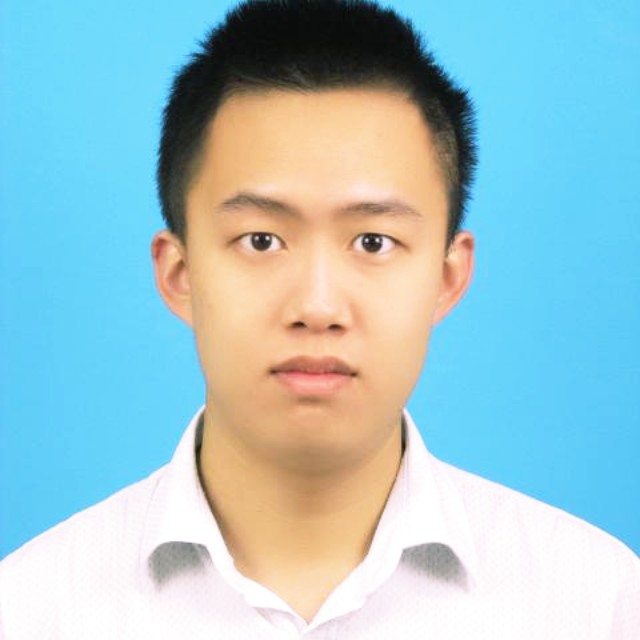
 Yiqing Wang
· 5 previous affiliations
- Duke UniversitySince 2023
- Research Assistant · Since 2023
- Doctor of Philosophy - PhD, Biomedical Engineering · 2023
- United Imaging Intelligence (China)Since 2026
- Research Intern · Since 2026
- Shanghai Jiao Tong University2019–2023
- Bachelor's degree, Major in Biomedical Engineering, Minor in Computer Science · 2019–2023
- Intern · 2022–2023
- Image Medraw Technology Co., Ltd2022–2023
- Research Intern · 2022–2023
- Summer Intern · 2022
Research Overview
Yiqing Wang focuses on the development of deep learning methodologies for biomedical data processing, with particular emphasis on medical image segmentation, multi-modal disease diagnosis, and the application of vision-language models (VLMs) to clinical datasets. Her work integrates computational techniques from high-performance computing and computer vision to address challenges in organ segmentation and the synthesis of heterogeneous clinical metadata. Currently a Ph.D. candidate at Duke University within the Vision and Image Processing (VIP) Lab, her research trajectory reflects a transition from general system optimization and algorithmic calibration toward specialized multi-modal architectures for medical visual understanding.
Research Trajectory
The evolution of Wang’s research began with a focus on foundational computational problems and algorithmic robustness. During her undergraduate studies at Shanghai Jiao Tong University, where she pursued a major in Biomedical Engineering and a minor in Computer Science, her work addressed the reliability of performance metrics in machine learning. In Master Your Metrics with Calibration, the research investigated the sensitivity of precision-based metrics, such as the F1-score and AUC-PR, to shifts in class priors. By introducing a closed-form calibration method, the work provided a means to maintain metric invariance across varying data distributions, a critical requirement for evaluating models on imbalanced clinical datasets.
Parallel to these efforts in algorithmic reliability, Wang contributed to research in natural language processing and cross-linguistic modeling. Her participation in Research on Tibetan-Chinese cross-linguistic summarization involved the use of round-trip translation strategies to construct datasets for end-to-end cross-lingual abstract generation. This period of work established a technical foundation in handling structured and unstructured data across different linguistic and semantic domains.
As her focus shifted toward high-performance computing (HPC) and system efficiency, Wang led the development of scheduling frameworks for heterogeneous hardware. In INSPIRIT: Optimizing Heterogeneous Task Scheduling through Adaptive Priority in Task-based Runtime Systems, she proposed a lightweight framework designed to maximize hardware utilization in systems mixing CPUs and GPUs. By replacing manual tuning with an adaptive priority system based on the "inspiring potential" of tasks—defined by the number of subsequent tasks they unlock—the framework achieved significant performance gains in task-based runtime systems. This interest in computational efficiency extended to sparse matrix operations, as seen in her contribution to LOw-cOst yet High-Performant Sparse Matrix-Matrix Multiplication on Arm SME Architectures, which explored optimized kernels for emerging ARM architectures.
Current Directions
Upon joining Duke University, Wang’s research converged on the intersection of medical imaging and large-scale vision-language modeling. Her current work addresses the limitations of standard contrastive learning paradigms in medicine, which often rely on simplistic "one image, one label" mappings. This shift is characterized by a move toward Hierarchical Modeling for Nested and Clustered Data, where clinical information is treated as a multi-layered semantic structure rather than a flat category.
A primary focus of her recent work is the alignment of medical images with multi-granular clinical text. This involves developing frameworks that can interpret medical visual data through varying levels of descriptive detail, from broad anatomical categories to fine-grained pathological explanations. These efforts aim to improve the robustness of medical visual understanding by incorporating domain-specific priors and structured semantic knowledge directly into the training process.
Furthermore, Wang is investigating risk-integrated alignment strategies for medical diagnosis. This research involves elevating clinical metadata into structured knowledge using retrieval-augmented generation (RAG) and fine-tuned clinical language models. By explicitly incorporating clinical risk factors and metadata into the visual representation learning process, her work seeks to develop end-to-end pipelines for multi-modal subtype diagnosis, particularly in ophthalmology and radiology. This approach often utilizes Iterative Generative Refinement for Visual Reconstruction principles to improve the precision of diagnostic outputs.
Representative Work
The following papers represent key contributions to the fields of vision-language modeling, system optimization, and algorithmic calibration.
In Boosting Medical Visual Understanding From Multi-Granular Language Learning, Wang (as co-first author) introduced the Multi-Granular Language Learning (MGLL) framework. This work addresses the "one-to-one" limitation of standard vision-language models like CLIP by aligning medical images with multiple labels and varying levels of clinical detail. The framework serves as a plug-and-play upgrade for existing models, significantly enhancing their ability to capture fine-grained clinical features and improving performance across diverse medical visual understanding tasks.
The paper INSPIRIT: Optimizing Heterogeneous Task Scheduling through Adaptive Priority in Task-based Runtime Systems details a first-author contribution to high-performance computing. The INSPIRIT framework automates the prioritization of tasks in heterogeneous environments, ensuring that critical-path tasks are executed early to prevent hardware idling. The research demonstrates that adaptive, potential-based scheduling can outperform expert-tuned static priorities, providing a scalable solution for complex computational workloads.
Wang’s work on metric reliability is exemplified by Master Your Metrics with Calibration. This research provides a mathematical foundation for interpreting model performance when the underlying class distribution shifts. By developing a calibration method that renders precision-based metrics invariant to these shifts, the work allows for a more accurate assessment of model quality in real-world scenarios where data distributions are non-stationary.
In the domain of sparse computation, Wang participated in the development of LOw-cOst yet High-Performant Sparse Matrix-Matrix Multiplication on Arm SME Architectures. This work focuses on the implementation of efficient sparse matrix-matrix multiplication (SpGEMM) on ARM Scalable Matrix Extension (SME) architectures. The research contributes to the broader effort of optimizing fundamental linear algebra operations for modern hardware, which is essential for scaling deep learning models in resource-constrained environments.
Finally, her contribution to Research on Tibetan-Chinese cross-linguistic summarization explored the application of round-trip translation (RTT) to mitigate error propagation in cross-lingual tasks. By training an end-to-end framework on a constructed Tibetan-Chinese dataset, the study demonstrated improvements in summarization performance, highlighting the importance of data augmentation and translation strategies in low-resource linguistic contexts.
While the provided corpus includes earlier publications in areas such as metallurgy and soil science, Wang’s primary academic trajectory is defined by her recent and ongoing contributions to biomedical engineering and computational science. Her work continues to bridge the gap between high-level vision-language reasoning and the practical requirements of clinical diagnostic systems, often employing Cascaded Architectures for Efficient Object Detection and other structured approaches to handle the complexity of medical data.
Profile updated
Loading new papers…
Other researchers whose papers cluster into the same research directions — a proxy for overlapping technical interests and shared intellectual neighborhoods.
See something wrong? Report a mistake