

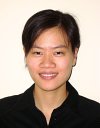
 Yiping Ke
· 4 previous affiliations
- Nanyang Technological UniversitySince 2014
- Associate Professor · Since 2021
- Assistant Professor · 2014–2021
- Scientist · 2012–2014
- Chinese University of Hong Kong2008–2010
- Research Assistant Professor · 2008–2010
- PhD student · 2003–2008
Research Overview
Yiping Ke focuses on machine learning and artificial intelligence, with specific emphasis on graph representation learning, graph neural networks, and domain adaptation. Her trajectory spans early work in data mining and correlation search to advanced deep learning architectures for complex structural data. Currently, her research investigates large language model integration with graph structures, brain network analysis, and cross-domain sequential recommendation.
Research Trajectory
Ke’s initial research addressed the computational challenges of mining associations in large databases. She introduced Quantitative Correlated Patterns (QCPs) in Mining quantitative correlated patterns using an information-theoretic approach, utilizing mutual information to capture attribute dependencies at a fine granularity. Expanding this methodology to structural data, she formalized Correlated Graph Search (CGS) in Correlation search in graph databases, applying Pearson's correlation to graph occurrences to better capture underlying dependencies in scientific domains.
Transitioning into deep learning, a major theme emerged in her work in the area of Test Time Adaptation for Distribution Shift. In Deep Nonlinear Feature Coding for Unsupervised Domain Adaptation, she and her collaborators developed a framework that combined marginalized stacked denoising autoencoders with Maximum Mean Discrepancy to minimize distribution discrepancies while encoding data nonlinearity. This evolved into more granular alignment techniques within the research direction of Subdomain Alignment for Fine-Grained Domain Adaptation. For example, the TMDA framework presented in Subdomain Adaptation With Manifolds Discrepancy Alignment improved transfer performance by representing subdomains as low-dimensional manifolds and aligning local subdomain discrepancies rather than relying solely on global alignment.
By 2024, Ke’s work on structural data advanced significantly with Union Subgraph Neural Networks. This research enhanced the expressiveness of standard Graph Neural Networks (GNNs) beyond the 1-dimensional Weisfeiler-Leman test by injecting neighbor-connectivity information extracted from union subgraphs. Concurrently, she contributed to the broader area of Dense Spatial Awareness in Vision-Language Foundation Models. This included ProxyCLIP: Proxy Attention Improves CLIP for Open-Vocabulary Segmentation, a training-free framework that improved CLIP's localization by integrating proxy attention from vision foundation models. She further refined dense vision-language inference in ClearCLIP: Decomposing CLIP Representations for Dense Vision-Language Inference, demonstrating that removing residual connections in CLIP's final layer and utilizing self-self attention could yield highly accurate open-vocabulary segmentation without fine-tuning.
In 2025, her research group pushed the boundaries of graph reasoning by integrating large language models (LLMs) and addressing complex structural topologies. In NOCL: Node-Oriented Conceptualization LLM for Graph Tasks without Message Passing, she introduced a framework that compresses node attributes into compact concepts, allowing LLMs to process graph structures efficiently and achieve zero-shot generalization without traditional message passing. She also tackled the limitations of the homophily assumption in standard GNNs with Directed Homophily-Aware Graph Neural Network and Divergent Paths: Separating Homophilic and Heterophilic Learning for Enhanced Graph-level Representations. The latter introduced DivGNN, an architecture that explicitly separates homophilic and heterophilic structural signatures to improve graph-level representations across diverse datasets.
Applying these structural insights to neuroscience and healthcare, Ke led the development of AIDFusion in Multi-Atlas Brain Network Classification through Consistency Distillation and Complementary Information Fusion, a framework for classifying neurological disorders using multi-atlas brain networks. This was complemented by BrainOOD: Out-of-distribution Generalizable Brain Network Analysis, which investigated the robustness of these models under distributional shifts. Additionally, she explored cross-domain applications in ABXI: Invariant Interest Adaptation for Task-Guided Cross-Domain Sequential Recommendation, utilizing Low-Rank Adaptation to separate domain-invariant user interests from domain-specific noise.
Her most recent collaborations span diverse multi-modal and applied AI domains. She participated in simplifying unsupervised video domain adaptation in Return of Frustratingly Easy Unsupervised Video Domain Adaptation, which isolated motion from background noise using a temporal-static subtraction architecture. In the domain of computational chemistry, she contributed to RetrOrchestrator: A Multi-Step Retrosynthesis Agent Dynamically Orchestrating Single-Step Transition Models, addressing the complex sequencing of chemical reactions. Finally, she continued her foundational work on structural representations with Unsupervised multi-view feature selection via attentive hierarchical bipartite graphs with optimizable graph filter.
Current Directions
Based on her most recent papers, Ke’s current research investigates the intersection of graph foundation models, large language models, and robust applied AI. A primary focus is scaling graph reasoning by moving beyond traditional message-passing paradigms. Recent work explores how LLMs can be adapted to process complex graph topologies—such as molecular structures and citation networks—by conceptualizing node attributes to drastically reduce token lengths and enable zero-shot generalization.
Alongside LLM integration, she continues to refine graph neural network architectures to handle heterophilic and directed graphs, ensuring models can accurately learn from networks where connected nodes do not necessarily share similar features. In applied domains, her recent efforts emphasize out-of-distribution generalization and multi-modal data fusion, particularly in the context of brain network analysis for neurological diagnostics and multi-step agent orchestration for chemical retrosynthesis. Finally, she maintains an active focus on cross-domain adaptation, developing parameter-efficient methods to transfer knowledge and disentangle invariant features in sequential recommendation systems and video understanding.
Profile updated
Loading new papers…
Other researchers whose papers cluster into the same research directions — a proxy for overlapping technical interests and shared intellectual neighborhoods.
See something wrong? Report a mistake