

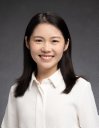
 Yingwei Zhang
· 2 previous affiliations
- Chinese Academy of SciencesSince 2015
- Associate Professor · Since 2023
- Assistant Professor · 2021–2023
- PhD student · 2015–2021
- Shandong Normal University2011–2015
- MS student · 2011–2015
Research Overview
Yingwei Zhang focuses on physiological signal processing, human-computer interaction, and machine learning for healthcare applications. His trajectory spans from wearable sensor systems for cognitive and motor assessment to robust gesture recognition using surface electromyography. Most recently, his work addresses large-scale foundation models for brain signals and noise-robust federated learning architectures.
Research Trajectory
Yingwei Zhang’s early research addressed foundational machine learning challenges, particularly in optimizing online learning systems. In 2018, he led the development of an active online sequential learning approach, detailed in Less annotation on active learning using confidence-weighted predictions. This work introduced a method to actively select query-annotated and confidence-weighted samples to update classifiers, significantly reducing computational complexity and the need for manual annotation.
Beginning in 2019, his focus expanded into human-computer interaction and applied healthcare, specifically leveraging wearable sensors for objective clinical assessments. He introduced a Wearable Sensors Based Automatic Box and Block Test System to measure unilateral gross manual dexterity, providing an alternative to computationally heavy camera-based solutions for detecting age-related functional decline. Building on this interest in aging and cognitive health, he proposed a fine-grained domain adaptation method in Bridging Cross-Tasks Gap for Cognitive Assessment via Fine-Grained Domain Adaptation to allow cognitive assessment models to adapt to new data distributions. He further developed CogSYS, a system for detecting mild cognitive impairment by analyzing hand motor function under a dual-task paradigm, as presented in What can "drag & drop" tell? Detecting mild cognitive impairment by hand motor function assessment under dual-task paradigm. To ensure these technologies were practical for real-world use, he conducted field studies on user-acceptable forms of AI in healthcare, designing digital variants of the clinical Trail Making Test in Human-centered intelligent healthcare: explore how to apply AI to assess cognitive health.
In parallel with his cognitive assessment research, Zhang extensively investigated surface electromyography (sEMG) for gesture recognition. Recognizing that sEMG signals are temporally nonstationary and spatially complex, he developed a method using multivariate empirical mode decomposition in Learning Effective Spatial-Temporal Features for sEMG Armband-Based Gesture Recognition. He subsequently addressed the practical hardware challenges of sEMG interfaces, such as varying electrode configurations. In A Feature Adaptive Learning Method for High-Density sEMG-Based Gesture Recognition, he introduced an ensemble learning method capable of supporting continuous changes in the number of active electrodes. To tackle the sensitivity of sEMG signals to user-dependent factors like skin impedance, he proposed a framework in Dual layer transfer learning for sEMG-based user-independent gesture recognition that leverages signal correlations among different users to maintain high recognition precision across new individuals.
More recently, Zhang’s work has scaled to complex brain signal analysis and distributed learning frameworks. In 2024, he introduced an effective connectivity-based multi-view feature learning method for dementia diagnosis using fNIRS signals, detailed in Effective Connectivity-Based Multi-View Feature Learning Method for Dementia Diagnosis with FNIRS Signal. That same year, he oversaw research into privacy-preserving collaborative model training, proposing a noise-robust framework in FedES: Federated Early-Stopping for Hindering Memorizing Heterogeneous Label Noise. This work adaptively updates local models based on their specific noise rates, contributing to the broader research areas of Adaptive Aggregation Weights for Heterogeneous Federated Learning and The Warm-up Phase in Learning with Noisy Labels.
Continuing his focus on physiological monitoring, Zhang collaborated on SleepSMC: Ubiquitous Sleep Staging via Supervised Multimodal Coordination. This framework uses supervised contrastive learning to transfer complex relationships learned from full clinical setups to simple, single-sensor devices for home use, advancing research directions such as Unobtrusive and Remote Vital Sign Estimation and Cross-Modal Distillation of Privileged Information. Most recently, he participated in the development of a 1.9-billion-parameter model detailed in Uni-NTFM: A Unified Foundation Model for EEG Signal Representation Learning. By incorporating neuroscience principles like decoupled neural coding and sparse functional modularity, this work intersects with the areas of Sparse Modular Routing for Efficient Model Scaling and Dual-Stream Fusion of Temporal and Spectral Features.
Current Directions
The most recent papers in the evidence indicate a strong focus on scaling machine learning architectures for complex physiological data. A primary theme is the development of foundation models for brain signals, utilizing neuroscience principles—such as decoupled neural coding and geometric topology—to create unified representations for downstream clinical and affective computing tasks.
In parallel, ongoing research addresses the practical deployment of healthcare AI in distributed and resource-constrained environments. This includes designing noise-robust federated learning frameworks that adapt to heterogeneous label noise across clients, ensuring that collaborative models do not overfit to corrupted data. Additionally, recent work explores cross-modal distillation techniques to achieve clinical-grade accuracy on unobtrusive, single-sensor wearable devices, bridging the gap between high-fidelity hospital equipment and ubiquitous home health monitoring.
Profile updated
Loading new papers…
Other researchers whose papers cluster into the same research directions — a proxy for overlapping technical interests and shared intellectual neighborhoods.
See something wrong? Report a mistake