

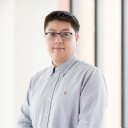
 Yinghui Wu
· 5 previous affiliations
- Case Western Reserve UniversitySince 2019
- Associate Professor · Since 2021
- Assistant Professor · 2019–2021
- Washington State University2014–2019
- Assistant Professor · 2014–2019
- Research Scientist · 2011–2014
- University of Edinburgh2007–2011
- Research Assistant · 2010–2011
- PhD, Computer Science · 2007–2010
- Peking University2004–2007
- BEc (Double Major), Economics · 2004–2007
Research Overview
Yinghui Wu focuses on the intersection of data management, knowledge engineering, and graph data analytics. His work addresses the fundamental challenges of managing, querying, and ensuring the quality of large-scale relational and temporal data, with a particular emphasis on domain-specific applications in materials science, cyber-security, and renewable energy systems. By integrating techniques from database theory, machine learning, and information quality, he develops frameworks for scalable graph mining, explainable artificial intelligence, and automated scientific discovery.
Research Trajectory
The evolution of Wu’s research reflects a transition from traditional data mining and causal analysis toward the formalization of graph-based data dependencies and the development of specialized AI infrastructure for scientific domains. In the early 2010s, his work was primarily concerned with the scalability of mining operations in large-scale network environments. This period was characterized by efforts to identify critical patterns in high-volume data streams, such as alert sequences in data centers, where the goal was to isolate root causes among complex causal relations.
By the early 2020s, Wu’s focus shifted toward the formal foundations of graph data quality. He extended classical database concepts, such as functional dependencies, to the more complex domain of temporal and evolving graphs. This work aimed to characterize topological and value constraints that persist or change over time, providing a theoretical basis for anomaly detection and predictive analysis in dynamic networks. This period also saw an increased focus on the social and ethical dimensions of graph queries, specifically addressing how to maintain diversity and group fairness in subgraph search results.
In recent years, Wu has increasingly applied these graph-based methodologies to "AI for Science" (AI4Science). This trajectory is marked by the development of platforms for materials science data management and the creation of digital twin models for renewable energy infrastructure. His current work explores the boundaries of model performance in the presence of experimental noise and the use of large language models (LLMs) to facilitate serendipitous discovery within scientific knowledge graphs. This evolution demonstrates a move toward more integrated systems that handle the entire lifecycle of scientific data, from ingestion and cleaning to explainable inference and discovery.
Current Directions
Wu’s current research agenda is organized around several key themes that address the limitations of contemporary AI and data management systems. A significant portion of his recent work focuses on Explaining Predictions in Graph Neural Networks, seeking to move beyond "black-box" models by providing queryable, view-based explanations for graph classification and analysis tasks. This is particularly relevant in high-stakes domains like cyber-security and drug discovery, where understanding the rationale behind a model's prediction is as critical as the prediction itself.
In the realm of data discovery and integration, Wu is investigating Multi-Objective Optimization Beyond Scalarization. This direction challenges the standard practice of optimizing for a single performance metric, instead proposing frameworks that discover "skyline" datasets—those that provide an optimal trade-off across multiple user-defined measures such as accuracy, fairness, and computational efficiency. This work is closely linked to the problem of Learning from Incomplete Multi-View Data, where he develops methods to impute missing data in complex systems, such as photovoltaic fleets, by leveraging spatial and temporal dependencies.
Furthermore, Wu is exploring the fundamental limits of machine learning in scientific contexts, specifically The Performance Ceiling of Experimental Noise. This research acknowledges that in fields like chemistry and materials science, the quality of experimental data often imposes a hard limit on model accuracy. Relatedly, his work in Solvent-Aware Molecular Property Prediction seeks to incorporate environmental context into molecular modeling, moving away from gas-phase approximations toward more realistic chemical simulations. Finally, he is addressing the "reconstruction bottleneck" in edge computing through Inference Directly on Compressed Tensor Factors, aiming to enable efficient LLM deployment without the memory overhead of full decompression.
Representative Work
In Towards scalable critical alert mining, Wu and his collaborators addressed the problem of identifying root-cause alerts in data center monitoring software. The study formalized the critical alert mining problem as a task to find a subset of alerts that maximize the coverage of triggered abnormal events. This work established an early foundation for his interest in causal relations and scalable mining over large-scale event sequences.
Wu’s contributions to graph data theory are exemplified by Temporal Graph Functional Dependencies - Technical Report. As the senior author, he introduced Temporal Graph Functional Dependencies (TGFDs), a class of dependencies designed to capture inconsistencies in evolving graphs. By generalizing functional dependencies to sequences of graph snapshots induced by time intervals, this work provided a formal mechanism for enforcing both topological and value constraints in dynamic networks, with direct applications in anomaly detection.
In the domain of scientific data infrastructure, Wu led the development of the CRUX platform, described in CRUX: Crowdsourced Materials Science Resource and Workflow Exploration. This work addresses the isolation of data resources in materials science by providing a crowdsourced platform for workflow exploration. The system uses graph patterns to allow researchers to declare parameterized workflows and automatically recommends resources with quality guarantees, supported by data provenance and knowledge-based assembly.
Addressing the intersection of data retrieval and social responsibility, Diversified Subgraph Query Generation with Group Fairness investigates the bi-criteria optimization of diversity and fairness in graph search. As senior author, Wu formalized the problem of generating subgraph queries that satisfy cardinality requirements across different groups, proving the complexity of the task and developing approximation algorithms to ensure that search results are both representative and equitable.
Wu’s work on renewable energy systems is represented by Spatio-Temporal Denoising Graph Autoencoders with Data Augmentation for Photovoltaic Timeseries Data Imputation. This research introduced the STD-GAE framework to recover missing power data in photovoltaic fleets. By exploiting spatial coherence and domain-specific value dependencies, the framework significantly improved imputation accuracy compared to standard methods, demonstrating the utility of graph-based denoising in real-world sensor networks.
More recently, Wu has explored the potential of generative AI in scientific discovery. In Assessing LLMs for Serendipity Discovery in Knowledge Graphs: A Case for Drug Repurposing, he served as senior author on a study evaluating whether LLMs can identify unexpected but valuable connections in knowledge graphs. The research specifically examined drug repurposing, testing the ability of models to move beyond predictable fact retrieval to find "serendipitous" insights that could lead to new therapeutic applications.
Wu also participated in broader collaborative efforts to build scalable research computing frameworks, such as the Common Research Analytics and Data Lifecycle Environment (CRADLE), which handles petabyte-scale spatiotemporal datasets in materials science. His work in explainability includes the development of GVEX, a paradigm for generating graph views as explanations for GNNs, and the MODis framework for discovering skyline datasets that optimize multiple model-performance measures. In the area of computer vision for science, his recent work has evaluated how optimal segmentation architectures vary systematically by imaging modality, providing a framework for cross-modal evaluation in materials microscopy.
Profile updated
Loading new papers…
Other researchers whose papers cluster into the same research directions — a proxy for overlapping technical interests and shared intellectual neighborhoods.
See something wrong? Report a mistake