

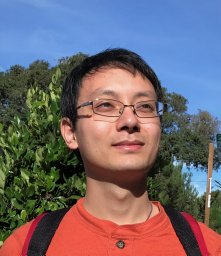
 Yingbo Zhou
· 7 previous affiliations
- SalesForce.comSince 2017
- Research Scientist · Since 2017
- RecursiveSince 2026
- Founding Member · Since 2026
- Salesforce (United States)2018–2025
- Senior Research Director · 2022–2025
- Research Director · 2019–2022
- Lead Research Scientist · 2018–2019
- eBay (United States)2016–2017
- Research Scientist · 2016–2017
- Research Scientist · 2015–2016
- PhD, Computer Science · 2010–2015
- Furnas Research Fellow · 2014
- IBM2013
- Graduate Intern · 2013
- Hong Kong Polytechnic University2008–2010
- M.Sc., Computer Science · 2008–2010
1 other author named Yingbo Zhou: Yingbo Zhou (Fudan University · 50 papers)
Research Overview
Yingbo Zhou focuses on natural language processing, large language model adaptation, and code generation. His early work explored machine learning fundamentals and continual learning before shifting toward parameter-efficient tuning and cross-lingual transfer. Recently, his research addresses multi-agent systems, long-context reasoning, and the evaluation of language models in complex, multi-turn software engineering tasks.
Research Trajectory
Zhou’s early research addressed foundational problems in computer vision and machine learning scalability. He initially developed techniques for biometric security, introducing region-based matching schemes to improve Human Identification Using Palm-Vein Images. Expanding into broader machine learning methodologies, he subsequently designed a scalable framework for high-dimensional data in Parallel Feature Selection Inspired by Group Testing, utilizing randomized tests to identify relevant features efficiently.
By the mid-2010s, his focus shifted toward deep learning representations and the stability of neural architectures. He investigated the theoretical underpinnings of sparse distributed representations in Why Regularized Auto-Encoders learn Sparse Representation?. Building on this interest in architectural dynamics, he addressed the stability-plasticity dilemma in continual learning. With collaborators, he proposed Learn to Grow: A Continual Structure Learning Framework for Overcoming Catastrophic Forgetting, which dynamically expands neural architectures to retain prior knowledge while adapting to sequential tasks.
In the early 2020s, Zhou’s trajectory moved decisively into natural language processing, with a particular emphasis on parameter-efficient adaptation for large language models. He became highly active in the research direction of Bridging the Cross-lingual Transfer Gap. In this area, his group demonstrated that tuning a minimal fraction of parameters could outperform full model updates, as detailed in Prompt-Tuning Can Be Much Better Than Fine-Tuning on Cross-lingual Understanding With Multilingual Language Models. He continued to advance prompt-tuning methodologies for low-resource scenarios, analyzing the trade-offs between tuning models versus prompts in Few-shot Unified Question Answering: Tuning Models or Prompts?. To further optimize adaptation, he introduced SharPT: Shared Latent Space Prompt Tuning, a method that learns a shared skill latent space across source tasks to generate task-specific soft prompts efficiently.
Alongside parameter efficiency, Zhou explored techniques to improve the reasoning capabilities and reliability of language models. He investigated neuro-symbolic integration in HPE: Answering Complex Questions over Text by Hybrid Question Parsing and Execution, which parses complex queries into structured expressions for hybrid execution. To mitigate hallucinations and enforce instruction faithfulness, he formalized text generation as a future-constrained problem in Unlocking Anticipatory Text Generation: A Constrained Approach for Faithful Decoding with Large Language Models. He also addressed model safety through inference-time interventions, developing an ensemble approach to steer outputs away from toxic styles in Parameter-Efficient Detoxification with Contrastive Decoding. Returning to cross-lingual challenges, he led the creation of the massive XSGD dataset to facilitate aligned representations for conversational AI, as presented in Efficiently Aligned Cross-Lingual Transfer Learning for Conversational Tasks using Prompt-Tuning.
Concurrently, Zhou contributed to the development of foundational large language models, particularly those optimized for code generation and extended contexts. He participated in the training of CodeGen: An Open Large Language Model for Code with Multi-Turn Program Synthesis, which advanced open-source program synthesis. He also contributed to the stage-wise training of models capable of processing extensive sequences, detailed in the XGen-7B Technical Report.
Most recently, Zhou’s work has concentrated on the intersection of language models, software engineering, and multi-agent systems. He has been active in the broader area of Mapping Natural Language to Source Code Semantics, contributing to CodeXEmbed: A Generalist Embedding Model Family for Multilingual and Multi-task Code Retrieval to unify diverse programming languages into a single retrieval framework. He also applied code ranking to the grueling task of software issue localization in SWERank: Software Issue Localization with Code Ranking. To rigorously evaluate LLMs on repository-level reasoning, his group introduced CLOVER: A Test Case Generation Benchmark with Coverage, Long-Context, and Verification, highlighting the performance degradation models suffer as context length increases.
His latest research critically examines the limitations of LLMs in dynamic and multi-step environments. In MAS-ProVe: Understanding the Process Verification of Multi-Agent Systems, he co-authored a systematic study revealing that process verifiers in multi-agent workflows are highly sensitive to context and struggle to resolve fundamentally unsolvable problems. Similarly, he explored the fragility of instruction-following models over extended interactions in LLMs Get Lost In Multi-Turn Conversation, documenting how models make premature assumptions that lead to significant performance decay as conversations progress.
Current Directions
The most recent papers in the evidence indicate a strong focus on the rigorous evaluation and deployment of large language models in complex, multi-turn, and repository-scale environments. Zhou is actively investigating the limitations of current LLMs when processing long contexts or engaging in extended conversations, particularly identifying how models lose track of information or fail to recover from early reasoning errors. Additionally, his recent work addresses the practical application of AI to software engineering, exploring how generalist embedding models and multi-agent verification systems can be optimized for tasks like code retrieval, test case generation, and fine-grained defect localization.
Profile updated
Loading new papers…
Other researchers whose papers cluster into the same research directions — a proxy for overlapping technical interests and shared intellectual neighborhoods.
See something wrong? Report a mistake