

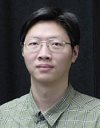
 Ying Wu
· 6 previous affiliations
- Northwestern UniversitySince 2001
- Full Professor · Since 2012
- Associate Professor · 2007–2012
- Assistant Professor · 2001–2007
- Ph.D, Electrical and Computer Engineering · 1997–2001
- Microsoft Research (Seattle)1999–2000
- Research Intern · 1999–2000
- Microsoft (United States)1999–2000
- Research Intern · 1999–2000
- Tsinghua University1994–1997
- M.S., Automation · 1994–1997
- Undergrad student · 1990–1994
3 other authors named Ying Wu: Ying Wu (4 papers), Ying Wu (3 papers), Ying Wu (1 paper)
Research Overview
Ying Wu focuses on computer vision, machine learning, and image processing, with a particular emphasis on articulated motion capture, visual tracking, and deep representation learning. Wu’s work has evolved from developing model-based algorithms for high-dimensional state space estimation to designing deep architectures for fine-grained image similarity, multi-task learning, and unsupervised depth completion. This trajectory reflects a broader shift in the field from classical geometric and probabilistic modeling toward discriminative and generative deep learning frameworks.
Research Trajectory
The early phase of Wu’s research, beginning in the late 1990s, was centered on the problem of capturing articulated human motion, specifically the hand. This work addressed the challenges of high-dimensional state spaces and the computational complexity of nonlinear programming in vision-based interfaces. In Capturing Articulated Human Hand Motion: A Divide-and-Conquer Approach, Wu proposed a two-step iterative algorithm to decouple hand motion, providing a convergence proof for a method that sought to overcome the local minima common in analysis-by-synthesis approaches. This interest in high-dimensional data led to an exploration of Deep Generative Networks for Non-linear Manifold Learning, as Wu recognized that natural hand articulation is highly constrained and lies on lower-dimensional manifolds. By Capturing Natural Hand Articulation, the focus shifted toward learning these natural constraints to reduce dimensionality and improve tracking efficiency.
By the mid-2000s, Wu’s research expanded into general visual tracking and object detection. This period was characterized by a move toward collaborative and ensemble-based methods to handle complex scenarios such as occlusion and target coalescence. Wu investigated how multiple trackers could interact to resolve ambiguities and how inconsistent measurements from multiple sources could be integrated using algebraic criteria for consistency. This work also touched upon the theoretical foundations of detector ensembles, seeking optimal strategies for integrating part-detectors to handle appearance variations.
In the late 2000s and early 2010s, the research transitioned toward spatio-temporal pattern recognition and large-scale image retrieval. Wu developed methods for efficient action detection in video and addressed the problem of tracking low-resolution targets by preserving metrics in high-resolution feature spaces. As mobile technology proliferated, Wu applied these techniques to mobile product search, focusing on automatic query object extraction to handle background clutter and viewpoint variations. This period marked the beginning of Wu’s engagement with deep learning, specifically for capturing fine-grained image similarity and learning similarity metrics directly from data rather than relying on hand-crafted features.
In recent years, Wu’s work has increasingly focused on the robustness and interpretability of deep models. This includes addressing "destructive interference" in multi-task learning environments and developing unsupervised methods for depth completion and denoising. Wu has also contributed to the study of Probabilistic Data Imputation with Generative Diffusion Models, applying these concepts to the restoration of incomplete sensor data. The most recent work involves the analysis of Large Vision-Language Models (LVLMs), specifically investigating their reliance on visual input and the interpretability of their reasoning processes.
Current Directions
Wu’s current research agenda is defined by three primary pillars: generative modeling, multi-task optimization, and the interpretability of complex vision systems.
A significant portion of recent work involves Score-Based Generative Modeling with Langevin Dynamics. This direction moves away from traditional GANs and VAEs toward learning score functions to model complex data distributions more stably. This is closely linked to efforts in Scaling 3D Generative Models to Large Vocabularies, which aims to move 3D generation beyond category-specific silos toward open-domain capabilities.
Wu also continues to explore the nuances of human perception through Label Distribution Learning for Subjective Human Perception. Rather than regressing to a single mean opinion score, this approach models the full distribution of human judgments to better capture the inherent subjectivity in tasks like image quality assessment or aesthetic evaluation.
Furthermore, Wu has participated in interdisciplinary applications of temporal modeling, such as Longitudinal Molecular Profiling for Adaptive Cancer Therapy. This work applies the principles of dynamic analysis and evolutionary tracking—honed in the context of computer vision—to the genomic alterations of tumors, moving toward a more adaptive approach to oncology.
Representative Work
The following papers illustrate the technical evolution of Wu’s research, from early articulated motion capture to modern deep learning architectures.
In Capturing Articulated Human Hand Motion: A Divide-and-Conquer Approach, Wu addressed the problem of hand motion capture as a large-scale nonlinear programming task. The paper introduced a divide-and-conquer strategy that decoupled the degrees of freedom of the hand, allowing for a more tractable iterative solution. This work provided an early mathematical framework for handling the high-dimensional state spaces inherent in human-computer interaction.
Building on this, Capturing Natural Hand Articulation moved toward a data-driven approach by learning the natural constraints of hand movement. By demonstrating that natural articulation resides on a lower-dimensional manifold, Wu was able to significantly reduce the search space for model-based tracking, improving both robustness and computational efficiency.
In the domain of spatio-temporal analysis, Discriminative subvolume search for efficient action detection introduced a method called naive-Bayes based mutual information maximization (NBMIM). This approach addressed the efficiency of searching for action patterns in 3D video volumes and provided a way to tolerate intra-pattern variations, advancing the state of the art in multi-class action categorization.
Wu’s transition to deep learning is exemplified by Learning Fine-Grained Image Similarity with Deep Ranking. This paper proposed a multiscale network structure and an efficient triplet sampling algorithm to learn similarity metrics directly from images. This model outperformed traditional methods based on hand-crafted features by capturing both between-class and within-class differences more effectively.
Addressing the complexities of modern neural architectures, A Modulation Module for Multi-task Learning with Applications in Image Retrieval investigated the problem of destructive interference between weakly relevant tasks. Wu proposed a modulation module that allows for more flexible parameter sharing, ensuring that joint training boosts rather than undermines the performance of individual tasks.
More recently, Unsupervised Depth Completion and Denoising for RGB-D Sensors tackled the limitations of physical depth sensors. By developing an unsupervised framework, Wu bypassed the need for onerous ground-truth data collection, providing a method that adapts to different sensor mechanisms and improves the geometric structure of depth maps for robotic applications.
Wu also participated in recent research regarding the interpretability of Large Vision-Language Models (LVLMs). In Where do Large Vision-Language Models Look at when Answering Questions?, the study extended heatmap visualization techniques to open-ended visual question answering, providing insights into how these complex models utilize visual versus textual information.
Profile updated
Loading new papers…
Other researchers whose papers cluster into the same research directions — a proxy for overlapping technical interests and shared intellectual neighborhoods.
See something wrong? Report a mistake