

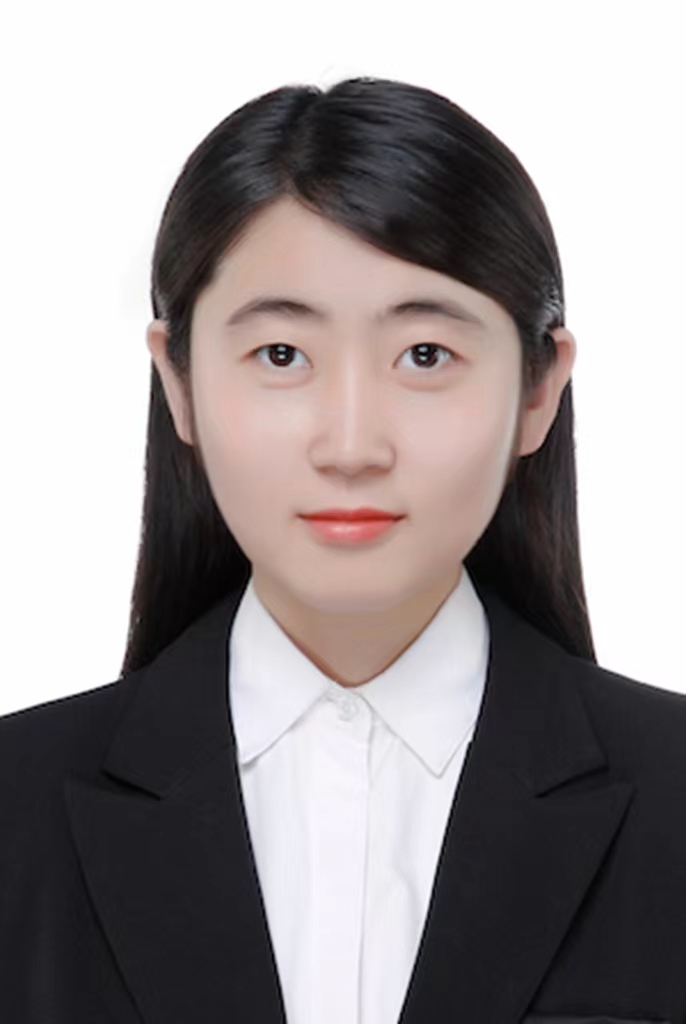
 Ying Li
· 4 previous affiliations
- National University of SingaporeSince 2025
- Postdoc · Since 2025
- Current
- University of Hong Kong2022–2025
- PhD student · 2022–2025
- MS student · 2019–2022
- Shandong University2015–2019
- Undergrad student · 2015–2019
20 other authors named Ying Li: Ying Li (Northwestern Polytechnical University · 346 papers), Ying Li (62 papers), Ying Li (Soochow University · 22 papers), Ying Li (Peking University · 12 papers), Ying Li (Kunmimg University of Science and Technology · 11 papers), and 15 more
Research Overview
Ying Li focuses on Bayesian nonparametrics, Bayesian deep learning, and scalable latent variable models. Their recent trajectory emphasizes overcoming computational bottlenecks in high-dimensional Gaussian processes and generative models through variational inference and normalizing flows. Currently, Li investigates non-stationary kernel designs for complex dynamical systems and multi-view data representations.
Research Trajectory
Li’s early research applied deep generative models to challenges in wireless communications, specifically focusing on massive multiple-input multiple-output (MIMO) systems. In 2021, as first author of Digital Twin-Aided Learning to Enable Robust Beamforming: Limited Feedback Meets Deep Generative Models, Li led the development of a digital twin-aided approach designed to learn channel probability distributions directly from data. This work bypassed traditional Gaussian assumptions, enabling robust risk-neutral beamforming in frequency division duplex systems constrained by limited feedback.
By 2023, Li’s focus had shifted toward fundamental challenges in Bayesian machine learning, particularly the training dynamics and scalability of generative models. A major area of investigation was the persistent issue of posterior collapse in Variational Autoencoders (VAEs), where the learned posterior distribution fails to capture meaningful data information and collapses to the prior. In Overcoming Posterior Collapse in Variational Autoencoders Via EM-Type Training, Li introduced a theoretical interpretation for alternating Expectation-Maximization-type training schemes, providing a principled framework to mitigate this collapse and improve the capacity of the learned posterior.
Concurrently, Li began extensive work on scaling Gaussian Process State-Space Models (GPSSMs) for high-dimensional dynamical systems. Traditional GPSSMs typically employ separate Gaussian processes for each latent state dimension, leading to prohibitive computational complexity and parameter proliferation. As a key contributor to Towards Efficient Modeling and Inference in Multi-Dimensional Gaussian Process State-Space Models, Li helped design an architecture that replaced the "one GP per dimension" paradigm with a single shared Gaussian process integrated with multiple normalizing flows. This approach significantly reduced the parameter count while effectively capturing complex inter-dimensional dependencies.
In 2024 and 2025, Li’s research heavily emphasized scalable Bayesian nonparametrics, culminating in significant advancements for Random Feature Latent Variable Models (RFLVMs). These models are highly effective for uncovering patterns in high-dimensional, non-Gaussian data, but historically suffered from severe scalability limits due to their reliance on Monte Carlo sampling. In the first-author work Scalable Random Feature Latent Variable Models, published in IEEE TPAMI, Li developed a deterministic variational Bayesian inference (VBI) framework to replace sampling. This required overcoming substantial mathematical hurdles, notably the lack of explicit probability density functions for Dirichlet process mixing weights, ultimately enabling RFLVMs to scale to massive datasets.
Continuing the focus on expressive latent variable models, Li co-authored Multi-View Oriented GPLVM: Expressiveness and Efficiency in 2025. This research introduced a highly flexible, non-stationary kernel designed to capture complex correlations across multiple data modalities, such as video and audio. By leveraging a novel spectral-kernel duality alongside a specialized two-step sampling technique, the work achieved improvements in both representation learning quality and computational speed.
Most recently, Li has participated in collaborative efforts to further refine kernel architectures for multi-output scenarios. In the 2026 paper Revisiting Nonstationary Kernel Design for Multi-Output Gaussian Processes, Li contributed to the design of a low-rank nonstationary kernel that efficiently models input-dependent variations across related variables, establishing a generalized spectral-kernel duality that is more parameter-efficient than prior state-of-the-art methods.
Current Directions
Recent work investigates the intersection of non-stationary kernel design and high-dimensional dynamical systems. The most recent papers in the evidence address the limitations of stationary Gaussian processes when applied to complex, real-world data streams that exhibit shifting operational conditions. By leveraging generalized spectral-kernel dualities and transformed Gaussian processes, this ongoing research aims to build scalable, multi-output models that maintain rigorous uncertainty quantification without succumbing to prohibitive computational costs. Additionally, there is a sustained focus on extending these efficient Bayesian frameworks to multi-view learning environments, enabling models to better synthesize and represent heterogeneous data modalities.
Profile updated
Loading new papers…
Other researchers whose papers cluster into the same research directions — a proxy for overlapping technical interests and shared intellectual neighborhoods.
See something wrong? Report a mistake