

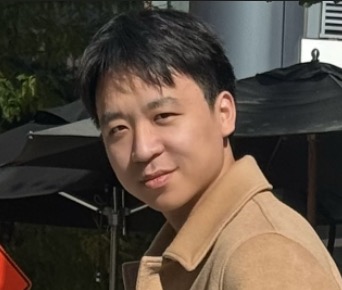
 Yiming Zeng
· 5 previous affiliations
- ByteDance (China)Since 2026
- Research Scientist · Since 2026
- University of ConnecticutSince 2024
- PhD student · 2024–2027
- Current
- UPMC Hillman Cancer Center2023–2024
- AI Researcher · 2023–2024
- University of Pittsburgh2021–2024
- Researcher · 2023–2024
- Master of Science, Information Science, General · 2021–2023
- Baidu (China)2021
- Software Engineer · 2021
3 other authors named Yiming Zeng: Yiming Zeng (5 papers), YIMING ZENG (Huawei Technologies (China) · 3 papers), Yiming Zeng (XMotors.ai · 1 paper)
Research Overview
Yiming Zeng focuses on large language model training, instruction-based text editing, and neural code generation. His early work explored multi-agent frameworks for complex reasoning and tool use. Currently, his research investigates dynamic parameter generation and syntax-aware diffusion models to improve the precision and structural integrity of language models across diverse domains.
Research Trajectory
Yiming Zeng’s research trajectory began with an emphasis on improving the reasoning and execution capabilities of large language models through multi-agent architectures. In 2024, he collaborated on Infant Agent: A Tool-Integrated, Logic-Driven Agent with Cost-Effective API Usage. This hierarchical framework was designed to help language models solve complex engineering and logic problems by decoupling high-level cognitive planning from low-level execution. By implementing a smart memory retrieval system, the framework significantly improved performance on software engineering benchmarks while drastically reducing API costs. This work contributed to the research direction of Emergent Self-Correction through Reinforcement Learning and advanced the area of Scaling Tool Use Beyond the Cognitive Bandwidth Bottleneck.
In 2025, his focus expanded to the precise modification of generated text and code. He developed Bridging the Editing Gap in LLMs: FineEdit for Precise and Targeted Text Modifications, introducing a specialized model fine-tuned for instruction-driven text editing. To support this, he and his collaborators released InstrEditBench, a large-scale benchmark dataset designed to evaluate and train models across diverse domains, including code, LaTeX, and databases. This focus on precise modifications intersects with the broader area of Surgical Code Transformation with Structured Edit Representations.
Around the same time, he participated in research applying multi-agent systems to vision-language tasks. He contributed to PromptSculptor: Multi-Agent Based Text-to-Image Prompt Optimization, a system that automates the refinement of text-to-image prompts. By breaking down the optimization process into specialized agents, the system transforms vague user inputs into detailed prompts, improving the fidelity of image generation and reducing the manual effort required for prompt engineering.
Continuing his work on model efficiency and text editing, he introduced HyperEdit: Unlocking Instruction-based Text Editing in LLMs via Hypernetworks. This framework utilizes a hypernetwork to generate request-specific parameters dynamically, combined with a difference-aware regularization loss. This approach allows smaller models to outperform significantly larger counterparts in editing precision, advancing work in the area of Parameter Synthesis for Dynamic Model Adaptation.
Expanding these structural insights into software engineering, he developed TreeDiff: AST-Guided Code Generation with Diffusion LLMs. This research replaces standard random token masking with a strategy guided by Abstract Syntax Trees (ASTs). By prioritizing the corruption and recovery of critical structural elements like control flow and logic, the framework achieves notable improvements in code correctness and maintains high stability during long-form generation.
Current Directions
The most recent papers in the evidence address the precision, efficiency, and structural integrity of generative models. Recent work investigates how dynamic parameter generation can facilitate instruction-based text editing without requiring massive increases in model size. Additionally, his research explores syntax-aware diffusion frameworks for code generation, utilizing abstract syntax trees to enforce logical and structural constraints. He also continues to investigate multi-agent systems, applying specialized agent pipelines to optimize prompts for text-to-image synthesis and to manage complex reasoning tasks.
Profile updated
Loading new papers…
Other researchers whose papers cluster into the same research directions — a proxy for overlapping technical interests and shared intellectual neighborhoods.
See something wrong? Report a mistake