

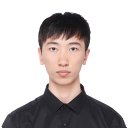
 Yilang Zhang
· 4 previous affiliations
- Morgan Stanley (United States)Since 2026
- Researcher · Since 2026
- University of Minnesota2021–2026
- Research Assistant · 2021–2026
- Teaching Assistant · 2024
- Intern · 2025
- Fudan University2016–2021
- Research Assistant · 2020–2021
- Undergrad student · 2016–2020
- Teaching Assistant · 2018–2019
Research Overview
Yilang Zhang focuses on mathematical optimization, meta-learning, and the efficient adaptation of large-scale neural networks. His trajectory spans from early work in signal processing and compressed sensing to foundational contributions in bilevel optimization and sharpness-aware minimization. Currently, his research addresses parameter-efficient fine-tuning methods and scalable architectures for foundation models.
Research Trajectory
Zhang's early research involved applications in computer vision, including collaborative work on Dense Color Constancy with Effective Edge Augmentation (2019), which utilized dual-channel log-chrominance histograms and self-attention mechanisms for illuminant estimation. He subsequently shifted focus toward fundamental algorithmic improvements in convex optimization. In Accelerating Frank-Wolfe with Weighted Average Gradients (2021), he introduced a method to mitigate the zigzagging behavior of the standard Frank-Wolfe algorithm by replacing the gradient per subproblem with a weighted average, establishing convergence guarantees for various weight combinations.
Expanding into signal processing, Zhang addressed challenges in medical imaging and signal recovery. He developed DEMO: A Flexible Deartifacting Module for Compressed Sensing MRI (2022), designed to eliminate sparse outliers and improve the reconstruction of magnetic resonance images from partial k-space measurements. Concurrently, he explored the intersection of Bayesian inference and deep learning in Uncertainty Modeling in Generative Compressed Sensing (2022). This work adaptively expands the range of pre-trained generators during reconstruction to recover signals that fall outside the original training distribution.
A significant portion of Zhang's trajectory centers on meta-learning and bilevel optimization. He tackled the scalability bottlenecks of gradient-based inner-loop optimization in Scalable Bayesian Meta-Learning through Generalized Implicit Gradients (2023), cross-fertilizing implicit differentiation with probabilistic Bayesian frameworks. Continuing this theme, he investigated how to rapidly adapt extracted priors to new tasks. In Meta-Learning With Versatile Loss Geometries for Fast Adaptation Using Mirror Descent (2024), he proposed learning nonlinear preconditioners to capture complex loss geometries beyond simple quadratic approximations.
Further advancing the flexibility of meta-learned priors, Zhang developed frameworks capable of modeling highly complex distributions. Meta-Learning Universal Priors Using Non-Injective Change of Variables (2024) introduced a method utilizing non-injective transformations to boost accuracy in few-shot learning, contributing to the broader research direction of Meta-Gradients for Adaptive and Continual Learning and the area of Policy Adaptation via Latent Space Search. He also bridged the gap between flexible black-box models and interpretable probabilistic priors in Meta-Learning Priors Using Unrolled Proximal Networks (2024), advancing the field of Deep Unrolling of Iterative Optimization Algorithms.
In 2025, Zhang's focus expanded to improving model generalization through flat minima search techniques. He identified that stochastic noise in Sharpness-Aware Minimization (SAM) often creates "friendly adversaries" that misrepresent true sharpness. To resolve this, he proposed VASSO: Variance Suppression for Sharpness-Aware Minimization, which uses an exponentially moving average of gradients to stabilize adversarial steps. He further explored this optimization landscape in Preconditioned Sharpness-Aware Minimization: Unifying Analysis and a Novel Learning Algorithm, which unifies the theoretical analysis of preconditioned SAM methods.
Most recently, Zhang has made substantial contributions to the parameter-efficient fine-tuning of large foundation models. He addressed the optimization dynamics of Low-Rank Adaptation (LoRA) in RefLoRA: Refactored Low-Rank Adaptation for Efficient Fine-Tuning of Large Models (2025). By mathematically refactoring trainable matrices to balance weight updates, this work flattens the loss landscape and accelerates convergence, aligning with the research direction of Implicit Balancing for Stable Low Rank Optimization and the area of Riemannian Optimization for Low-Rank Factorization. He extended this efficiency in ScaLoRA: Optimally Scaled Low-Rank Adaptation for Efficient High-Rank Fine-Tuning (2026), which analytically calculates optimal column-wise scaling to progressively accumulate high-rank updates without expensive singular value decompositions, contributing to the broader area of Low-Rank Weight Decomposition for Efficient Model Adaptation.
Continuing to refine optimization techniques, Zhang returned to the computational bottlenecks of gradient-based meta-learning in Binomial Gradient-Based Meta-Learning for Enhanced Meta-Gradient Estimation (2026), utilizing the binomial theorem to improve the scalability of meta-gradient estimation. Concurrently, he investigated the fundamental mechanisms of network depth scaling. In ANCRe: Adaptive Neural Connection Reassignment for Efficient Depth Scaling (2026), he demonstrated that the layout of residual connections exponentially impacts convergence rates, proposing a lightweight framework to parameterize and learn residual connectivities directly from data.
Current Directions
The most recent papers in the evidence indicate a strong focus on the efficient adaptation and scaling of large foundation models. Recent work investigates parameter-efficient fine-tuning techniques, specifically addressing the optimization dynamics and representational limits of Low-Rank Adaptation (LoRA). By developing methods to balance weight updates and analytically scale adapter matrices, this research seeks to achieve high-rank performance without sacrificing computational efficiency. Additionally, current directions explore the fundamental optimization properties of neural network architectures, investigating how adaptive, data-driven reassignment of residual connections can improve convergence rates and better utilize deep network layers.
Profile updated
Loading new papers…
Other researchers whose papers cluster into the same research directions — a proxy for overlapping technical interests and shared intellectual neighborhoods.
See something wrong? Report a mistake