

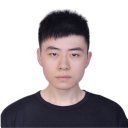
 Yikai Wang
· 2 previous affiliations
- Tsinghua UniversitySince 2017
- Postdoc · Since 2022
- PhD student · 2017–2022
- Xi'an Jiaotong University2013–2017
- Undergrad student · 2013–2017
2 other authors named Yikai Wang: Yikai Wang (Meta (United States) · 52 papers), Yikai Wang (Carnegie Mellon University · 4 papers)
Research Overview
Yikai Wang focuses on 3D computer vision, generative modeling, and multimodal representation learning. His trajectory spans early work in efficient multimodal fusion to recent advancements in text-to-3D generation, dynamic 4D reconstruction, and structured scene generation. Currently, he investigates scalable architectures for high-fidelity 3D mesh generation and the integration of video diffusion models for complex scene synthesis.
Research Trajectory
Wang's early research concentrated on efficient neural network architectures and multimodal representation learning. In 2020, he introduced Resolution Switchable Networks for Runtime Efficient Image Recognition, proposing a method to train a single convolutional neural network capable of dynamically switching image resolutions during inference to accommodate varying computational constraints. Concurrently, he participated in developing parameter-free multimodal fusion frameworks, contributing to Deep Multimodal Fusion by Channel Exchanging. This work addressed the trade-off between inter-modal fusion and intra-modal processing by dynamically exchanging channels between sub-networks, advancing the broader research direction of Shared Weights and Modality Specific Normalization. He later expanded on this self-adaptive fusion mechanism in Channel Exchanging Networks for Multimodal and Multitask Dense Image Prediction (2023), demonstrating its applicability across dense image prediction tasks.
Around 2023, Wang's focus shifted toward generative modeling for 3D and 4D computer vision. He was part of the team that developed ProlificDreamer: High-Fidelity and Diverse Text-to-3D Generation with Variational Score Distillation, which introduced a particle-based variational framework to resolve over-saturation and over-smoothing issues prevalent in standard score distillation sampling. Building on the capabilities of diffusion models, his subsequent work explored temporal dynamics and spatial structures. He led the development of DimensionX: Create Any 3D and 4D Scenes from a Single Image with Controllable Video Diffusion (2024), a framework that decouples spatial and temporal factors to generate photorealistic 3D and 4D scenes from single images. This interest in dynamic scene reconstruction continued with Vidu4D: Single Generated Video to High-Fidelity 4D Reconstruction with Dynamic Gaussian Surfels (2024), which utilized a novel initialization strategy to mitigate non-rigid motion artifacts and texture flickering in text-to-4D generation.
A significant portion of Wang's recent trajectory addresses the structural quality and efficiency of 3D assets. In MeshAnything V2: Artist-Created Mesh Generation With Adjacent Mesh Tokenization (2024), he proposed a method to halve the sequence length required for autoregressive mesh generation, allowing models to produce complex structures with up to 1,600 faces. This contribution significantly advanced the area of Efficient Tokenization for Autoregressive Mesh Generation as well as the broader field of Generative 3D Modeling with Artist-Like Topology. He further improved the physical realism of generated assets in MeshGen: Generating PBR Textured Mesh with Render-Enhanced Auto-Encoder and Generative Data Augmentation (2025), a pipeline designed to synthesize high-fidelity meshes with physically based rendering textures while avoiding baked-in lighting artifacts.
Parallel to his work on static meshes, Wang continued to refine dynamic 4D representations. He presented Video4DGen: Enhancing Video and 4D Generation through Mutual Optimization (2025), establishing a mutual optimization loop between 2D video generation and 4D reconstruction. This approach leverages Dynamic Gaussian Surfels to ensure temporal consistency, contributing to the research direction of Feed-Forward Acceleration of 3D Generation and Editing. He also investigated foundational geometric challenges, overseeing research on unsupervised non-rigid point cloud shape correspondence in Equivariant Local Reference Frames With Optimization for Robust Non-Rigid Point Cloud Correspondence (2025).
In his most recent work, Wang has explored complex scene composition and the alignment of diffusion models. He guided the research in SceneTransporter: Optimal Transport-Guided Compositional Latent Diffusion for Single-Image Structured 3D Scene Generation (2026), reframing scene generation as a global assignment problem to enforce strict mappings between image patches and 3D parts. He also contributed to PanoWorld-X: Generating Explorable Panoramic Worlds via Sphere-Aware Video Diffusion (2026), which utilizes spherical geometry priors to generate physically consistent, 360-degree panoramic videos controlled by 3D movement trajectories. Additionally, he collaborated on BranchGRPO: Stable and Efficient GRPO with Structured Branching in Diffusion Models (2026), addressing the alignment of diffusion models with human preferences to capture aesthetic nuances and complex temporal consistency.
Current Directions
The most recent papers in the evidence indicate a strong focus on structured 3D scene generation, dynamic 4D reconstruction, and the alignment of generative models. Wang is actively investigating methods to enforce geometric consistency and compositional accuracy in 3D generation, utilizing techniques such as optimal transport to prevent artifacts like blended objects and fragmented geometry. His work also addresses the synthesis of explorable, 360-degree panoramic environments by integrating spherical geometry priors into video diffusion models. Furthermore, he is exploring reinforcement learning strategies to better align diffusion models with human preferences, ensuring high aesthetic quality and temporal stability in generated videos and dynamic scenes.
Profile updated
Loading new papers…
Other researchers whose papers cluster into the same research directions — a proxy for overlapping technical interests and shared intellectual neighborhoods.
See something wrong? Report a mistake