

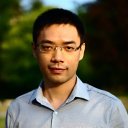
 Yihui Ren
· 3 previous affiliations
- Brookhaven National LaboratorySince 2018
- Researcher · Since 2018
- Virginia Tech2015–2018
- Postdoc · 2015–2018
- University of Notre Dame2011–2015
- PhD student · 2011–2015
Research Overview
Yihui Ren focuses on deep learning methodologies for scientific data, unsupervised domain adaptation, and the development of foundation models for particle physics. Their trajectory spans from network centrality and traffic modeling to adapting generative and vision models for specialized sensor data like event-based cameras and time projection chambers. Recent work investigates scalable self-supervised architectures and efficient representation learning for high-energy physics and mixed-signal circuit design.
Research Trajectory
Ren's early research explored complex network dynamics and scientific data simulation. In Betweenness Centrality and Its Applications from Modeling Traffic Flows to Network Community Detection, Ren introduced a first-principles method for traffic prediction using a cost-based generalization of the radiation model, alongside algorithms for network deconstruction. Concurrently, they led the development of datasets for particle physics, such as the Simulated sPHENIX outer layer TPC data in central Au-Au collisions at sqrt[s] = 200 GeV, which provided training data for convolutional autoencoders used in detector analysis.
The focus subsequently expanded to unsupervised image-to-image translation and domain adaptation, particularly addressing the gap between simulated and real-world scientific data. Ren guided the development of UVCGAN v2: An Improved Cycle-Consistent GAN for Unpaired Image-to-Image Translation, which improved generative adversarial networks for unsupervised mapping between data domains. This research contributed to the broader area of Test Time Adaptation for Distribution Shift. Applying these techniques to physics, they developed Unsupervised Domain Transfer for Science: Exploring Deep Learning Methods for Translation between LArTPC Detector Simulations with Differing Response Models. This work presented a task-agnostic method to mitigate domain shift in Liquid Argon Time Projection Chamber data, advancing the research direction of Generalizing from Synthetic Data to the Real World.
In 2025, Ren investigated event-based cameras (EBCs), which capture sparse, asynchronous data streams rather than traditional frames. They developed EvRT-DETR: Latent space adaptation of image detectors for event-based vision, an adaptation framework that transforms standard image-based detection transformers into event-based models by modifying their frozen latent representation space. Continuing in this domain, they oversaw IE2Video: Adapting Pretrained Diffusion Models for Event-Based Video Reconstruction, which proposed a hybrid capture paradigm combining sparse RGB keyframes with continuous event streams to reconstruct full video using adapted diffusion models.
A major theme in Ren's recent trajectory is the creation of foundation models for high-energy and nuclear physics. To address the lack of large-scale training data, they led the release of TPCpp-10M: Simulated proton-proton collisions in a time projection chamber for AI foundation models, a dataset of 10 million simulated events designed for self-supervised learning. Ren also participated in evaluating these architectures in Track finding and particle identification performance with particle physics foundation models, demonstrating that foundation models can effectively perform complex pattern recognition tasks like reconstructing charged particles. This effort culminated in FM4NPP: A Scaling Foundation Model for Nuclear and Particle Physics, where they introduced a self-supervised training method tailored for the sparse, spatially distributed nature of detector data, showing robust scaling and task-agnostic representation learning.
Parallel to the physics foundation models, Ren has contributed to model efficiency and automated hardware design. They collaborated on LSVD: Loss-Aware Low-Rank Approximation for Efficient Low-Precision Vision-Language Models, which proposed a curvature-weighted singular value decomposition framework to compress vision-language models for resource-constrained deployment. In the research area of Automated Hardware Synthesis from High Level Specifications, they directed AutoSizer: Automatic Sizing of Analog and Mixed-Signal Circuits via Large Language Model (LLM) Agents, introducing a reflective meta-optimization framework that uses language models to navigate the high-dimensional design spaces of analog circuits. Finally, they contributed to Refined Grid Sampling for Efficient Implicit Neural Representations of Large-Scale Scientific Data, which developed a stratified sampling strategy to accelerate the training of implicit neural representations for high-dimensional physical fields, intersecting with the research direction of Spectral Bias in Coordinate Neural Networks.
Current Directions
Recent work investigates the scaling and deployment of large machine learning models across specialized scientific and engineering domains. The most recent papers address the development of self-supervised foundation models tailored for the sparse, three-dimensional data structures found in particle physics detectors, aiming to improve data-efficient adaptation for downstream tasks like track finding. Concurrently, this research explores optimization techniques for complex systems, including loss-aware low-rank approximations for compressing vision-language models and the use of large language model agents to automate the sizing of analog and mixed-signal circuits. A unifying theme in these current directions is the drive to make high-capacity neural architectures more efficient and adaptable to strict physical and computational constraints.
Profile updated
Loading new papers…
Other researchers whose papers cluster into the same research directions — a proxy for overlapping technical interests and shared intellectual neighborhoods.
See something wrong? Report a mistake