

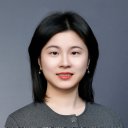
 Yifang Wang
· 6 previous affiliations
- Florida State UniversitySince 2025
- Assistant Professor · Since 2025
- Northwestern University2022–2025
- Post-Doctoral Fellow · 2022–2025
- Northwestern Innovation Institute2022–2025
- Affiliated Post-Doctoral Fellow · 2022–2025
- Doctor of Philosophy - PhD, CSE · 2018–2022
- Zhejiang Lab2020–2021
- Visiting Scholar · 2020–2021
- Zhejiang University2014–2020
- Visiting Scholar · 2019–2020
- Undergrad student · 2014–2018
Research Overview
Yifang Wang focuses on visual analytics, human-computer interaction, and the application of multimodal data to complex domains. Early work explored immersive urban analytics and interactive systems for cloud performance monitoring. More recently, the research has shifted toward health informatics, leveraging wearable sensors and knowledge-enhanced artificial intelligence to support personalized dietary and health tracking.
Research Trajectory
The evolution of Wang's research begins with the design of novel visualization techniques for spatial and urban data. In 2017, Wang contributed to Exploring the design space of immersive urban analytics, which proposed a theoretical model for characterizing visualizations in immersive head-mounted devices. This work established a typology for combining 2D and 3D visualizations—distinguishing between linked, embedded, and mixed views—to provide critical three-dimensional context for urban visual analytics.
By 2020, Wang's focus expanded to the visual analysis of complex computing infrastructure, contributing to the research direction of Interpretable Anomaly Detection. In CloudDet: Interactive Visual Analysis of Anomalous Performances in Cloud Computing Systems, Wang collaborated on a visual analytics system designed to help cloud operators interpret large-scale performance data. The system addressed the limitations of purely automated methods by integrating an unsupervised anomaly detection algorithm with interactive visualizations, allowing human operators to better understand and diagnose anomalous system behaviors.
In 2023, Wang participated in a comprehensive methodological survey that intersects with the broader area of Standardized Protocols for Aggregating Scientific Evidence. The paper, Computational Approaches for Traditional Chinese Painting: From the "Six Principles of Painting" Perspective, analyzed over ninety research papers through the lens of classical artistic principles. This work categorized existing computational techniques applied to cultural heritage and proposed a framework to guide future preservation and analysis efforts.
Subsequent work has increasingly focused on public health, personal well-being, and the integration of multimodal sensor data. In 2024, Wang was part of a team that developed A Visual Analytics System for Exploring Children's Physical and Mental Health Profiles with Multimodal Data. This research addressed the challenges of managing large-scale data by combining demographic context with motion sensor data to uncover underlying factors affecting children's health outcomes. Building on this theme of AI-assisted health monitoring, Wang contributed to DietGlance: Dietary Monitoring and Personalized Analysis at a Glance with Knowledge-Empowered AI Assistant in 2025. This project aligns with work in the area of Grounding Language Models with External Knowledge Retrieval. The system utilizes smart glasses and multimodal sensing alongside a knowledge-enhanced large language model to automate food logging and provide personalized nutritional analysis, moving beyond the limitations of manual dietary tracking.
Current Directions
The most recent papers in the evidence indicate a strong focus on health informatics and AI-driven personal health management. Current work investigates the intersection of multimodal sensing—such as wearable cameras and motion sensors—with complex contextual data to evaluate physical and mental well-being. A major theme in this recent research is the deployment of knowledge-enhanced large language models to automate complex tracking tasks, such as dietary monitoring, to provide holistic and personalized health interventions.
Profile updated
Loading new papers…
Other researchers whose papers cluster into the same research directions — a proxy for overlapping technical interests and shared intellectual neighborhoods.
See something wrong? Report a mistake