

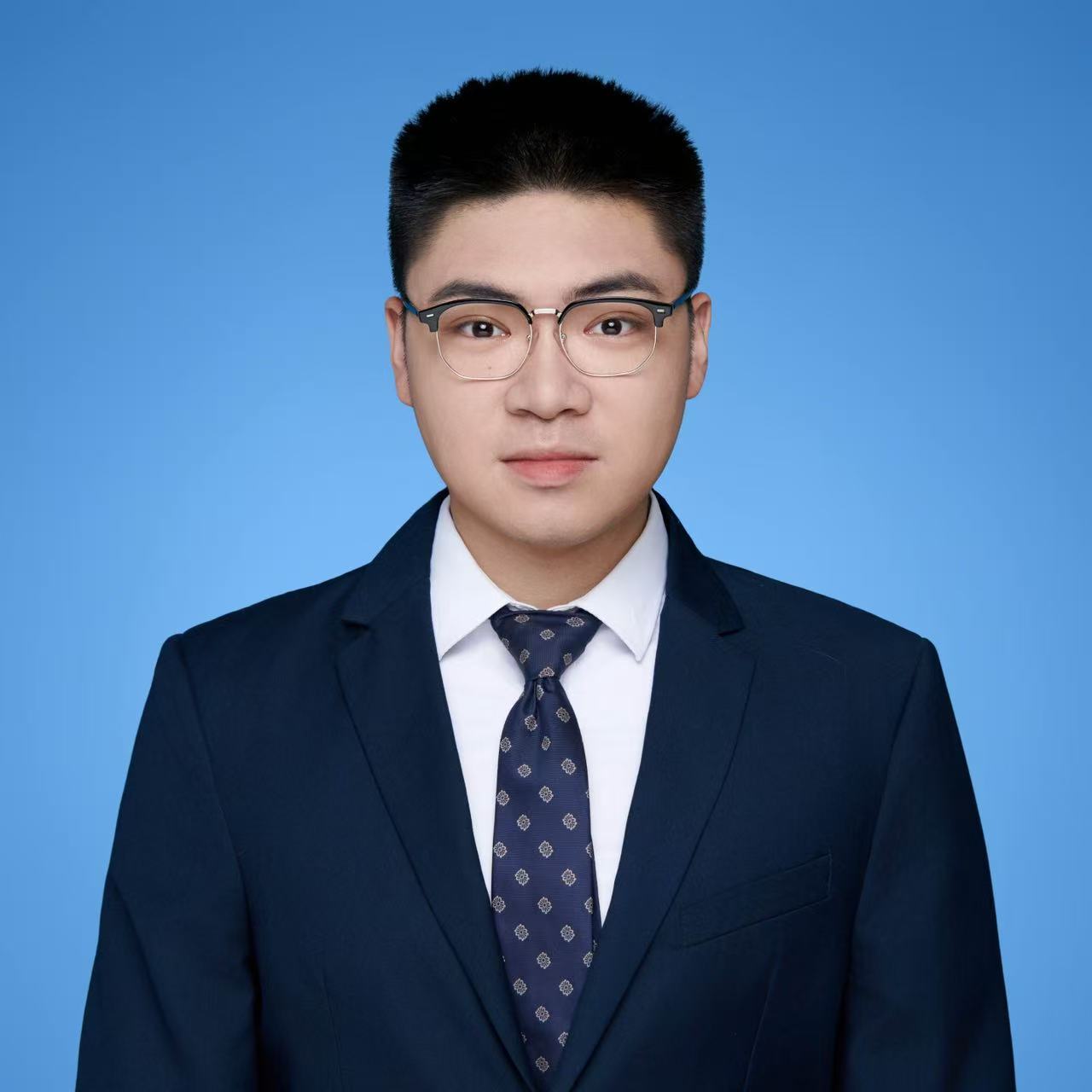
 Yifan Wu
· 3 previous affiliations
- Chinese University of Hong KongSince 2025
- MS student · 2025–2027
- Current
- Fudan University2024–2025
- Intern · 2024–2025
- Shanghai University2019–2024
- Undergrad student · 2019–2024
11 other authors named Yifan Wu: Yifan Wu (Peking University · 40 papers), Yifan Wu (Microsoft (United States) · 18 papers), Yifan Wu (The Hong Kong University of Science and Technology (Guangzhou) · 17 papers), Yifan Wu (Meta (United States) · University of Pennsylvania · 14 papers), Yifan Wu (Carnegie Mellon University · 8 papers), and 6 more
Research Overview
Yifan Wu focuses on robust machine learning, specifically addressing out-of-distribution detection, unsupervised anomaly detection, and learning under noisy labels. His trajectory spans from generating synthetic outliers for visual defect recognition to refining data attribution methods. Most recently, his work investigates influence functions and dynamic gradient clipping to improve model reliability in the presence of corrupted training data.
Research Trajectory
The early phase of Wu's research centered on visual anomaly detection, particularly the challenge of identifying defects without access to anomalous training samples. He participated in developing the Multi-Level Structure Anomaly Detection (MLSAD) framework in Unsupervised Learning of Multi-level Structures for Anomaly Detection (2021). This work addressed the inherent "chicken-and-egg" problem of unsupervised detection by utilizing an entropy-regularized PatchGAN to generate synthetic, structurally broken anomalies. This methodology advanced research areas such as Learning Anomaly Boundaries with Synthetic Outliers and Learning Visual Anomaly Detection through Procedural Defect Synthesis, while also contributing to the broader direction of Refining Anomaly Boundaries with Synthetic Hard Negatives. During this period, he also contributed to robust representation learning for demographic tasks, exploring group-aware contrastive learning in Robust age estimation model using group-aware contrastive learning (2022).
By 2023, Wu's focus expanded to out-of-distribution (OOD) detection, aiming to reduce the field's reliance on specific, external outlier datasets. He introduced Outlier Exposure by Simple Transformations (OEST) in OEST: Outlier Exposure by Simple Transformations for Out-of-Distribution Detection, a framework that exposes outliers by composing simple data augmentations and evaluating them via energy scores. He further refined this energy-based approach in Revisiting Energy-Based Model for Out-of-Distribution Detection (2024), addressing the mismatch between crafted outliers and true OOD data by leveraging "peripheral-distribution" samples to enhance model generalizability.
Returning to the domain of anomaly detection, Wu developed the GRAD framework in Generating and Reweighting Dense Contrastive Patterns for Unsupervised Anomaly Detection (2024). This approach utilized a specialized diffusion model to generate "prior-less" anomaly patterns alongside a self-supervised reweighting mechanism, improving the identification of complex logical anomalies without relying on pre-trained ImageNet features. His work in complex visual environments also includes guiding the development of the Visual and Semantic Separation Network (VSSNet) in Camouflaged Object Detection via Complementary Information-Selected Network Based on Visual and Semantic Separation (2024), which adaptively combines low-level visual and high-level semantic cues to segment objects concealed within intricate surroundings.
Concurrently, Wu began addressing the pervasive challenge of label noise in deep supervised learning. In Active Negative Loss: A Robust Framework for Learning with Noisy Labels (2024), he and his collaborators systematically investigated the limitations of existing noise-robust loss functions, noting that methods like Mean Absolute Error often pay equal attention to clean and noisy samples, thereby slowing convergence.
This focus on data quality and model robustness deepened in his subsequent work. He contributed to the area of Data Attribution in Non-Convex Loss Landscapes and the related field of Quantifying Training Data Contribution for Model Denoising through Towards Robust Influence Functions with Flat Validation Minima (2025). This research demonstrated that optimizing for flat validation minima, combined with second-order estimation approaches, significantly improves the reliability of influence functions when debugging noisy training data across vision and text tasks. Continuing the thread of label noise, he co-developed dynamic gradient constraints in Optimized Gradient Clipping for Noisy Label Learning (2025), replacing fixed clipping thresholds with an optimized approach that adapts to the variable distribution of gradients from clean and noisy samples throughout the training process.
Current Directions
The most recent papers in the evidence address the challenge of training robust models in the presence of corrupted or noisy data. Recent work investigates the dynamics of gradient clipping, moving away from static thresholds to adaptive mechanisms that respond to the shifting distributions of clean and noisy samples during training. Additionally, current research explores the reliability of influence functions for data attribution. By optimizing for flat validation minima, this work seeks to improve how models track and mitigate the influence of problematic training data across complex generative and discriminative tasks.
Profile updated
| Paper | Venue | Year |
|---|---|---|
| Optimized Gradient Clipping for Noisy Label LearningGitHubxichenye0930/ | AAAI | 2025 |
Loading new papers…
Other researchers whose papers cluster into the same research directions — a proxy for overlapping technical interests and shared intellectual neighborhoods.
See something wrong? Report a mistake