

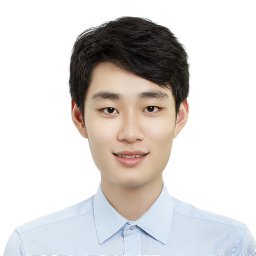
 Yifan Wang
· 8 previous affiliations
- Robert Bosch (Germany)Since 2026
- Research Intern · Since 2026
- Research Intern · 2020–2026
- Chinese Academy of Sciences2020–2026
- Research Intern · 2020–2026
- Research Intern · 2020–2026
- Research Intern · 2025
- Doctor of Philosophy - PhD, Computer Science · 2024
- ShanghaiTech University2020–2024
- Bachelor's degree, Computer Science · 2020–2024
- Undergrad student · 2022–2023
24 other authors named Yifan Wang: Yifan Wang (University of International Business and Economics · 111 papers), Yifan Wang (Tsinghua University · 60 papers), Yifan Wang (Dalian University of Technology · 44 papers), Yifan Wang (Purdue University West Lafayette · 10 papers), Yifan Wang (Shanghai Jiao Tong University · 8 papers), and 19 more
Research Overview
Yifan Wang focuses on computer vision, machine learning, and the intersection of cognitive science with artificial intelligence. His early work explored affective computing and emotion recognition by integrating facial and contextual cues in visual scenes. More recently, his research addresses the interpretability of vision transformers and the development of generative foundation models for clinical electroencephalography data.
Research Trajectory
Yifan Wang’s research initially centered on affective computing, investigating how machine learning models can better perceive human emotional states by incorporating broader contextual information. Traditional emotion recognition algorithms often focus exclusively on facial expressions, neglecting the background context necessary for accurate social perception. In 2024, he collaborated on the development of the VEATIC: Video-based Emotion and Affect Tracking in Context Dataset, a large-scale collection of video clips designed to overcome the limitations of face-only datasets. This work provided a foundation for continuous affect tracking, advancing the area of Expanding the Temporal Receptive Field in Video Models and the related field of Multimodal Fusion for Robust Affective Understanding. Concurrently, he helped develop Region-Based Emotion Recognition via Superpixel Feature Pooling, proposing a pipeline that fuses facial and contextual information in visual scenes without relying on standard object detection frameworks.
During this same period, his interest in cognitive science extended to the modeling of brain signals. He participated in efforts to apply self-supervised learning to electroencephalography (EEG) data, addressing the challenge of leveraging abundant unlabeled medical data. This resulted in EEGFormer: Towards Transferable and Interpretable Large-Scale EEG Foundation Model, which sought to move beyond single-task pretraining to improve generalization across diverse clinical applications. This research contributed to the broader area of Self Supervised Foundation Models for Neural Decoding and Universal Neural Decoders for Heterogeneous Electrode Configurations.
In 2025, his work expanded into complex visual reasoning, 3D scene rendering, and medical imaging. He explored the intersection of forward and inverse rendering in Ouroboros: Single-step Diffusion Models for Cycle-consistent Forward and Inverse Rendering. This research utilized cycle-consistent diffusion models to deconstruct photographs into constituent physical properties—such as normals, albedo, and irradiance—and synthesize realistic images from those components. He also contributed to VisReason: A Large-Scale Dataset for Visual Chain-of-Thought Reasoning, which aimed to teach multimodal large language models a human-like, global-to-local reasoning process using 3D spatial cues to reduce hallucinations. In the medical domain, he co-developed OTSurv: A Novel Multiple Instance Learning Framework for Survival Prediction with Heterogeneity-Aware Optimal Transport, applying optimal transport techniques to handle the inherent heterogeneity of medical data in survival analysis.
Alongside his applied work in vision and healthcare, he has actively investigated the architecture and interpretability of deep learning models. He was involved in optimizing Mixture-of-Experts (MoE) architectures in Route Experts by Sequence, not by Token. This research introduced a parameter-free modification that shifts the expert routing budget from the token level to the sequence level, allowing models to dynamically allocate more computation to difficult tokens, aligning with work in Dynamic Expert Allocation in Sparse Transformers. To better understand the internal mechanics of these complex architectures, he introduced Discovering Influential Neuron Path in Vision Transformers. By developing a metric called the Joint Attribution Score, he mapped the specific sequences of neurons across layers that drive model decisions. The finding that Vision Transformers rely on a sparse set of semantically clustered neurons opened new pathways for efficient model pruning, advancing the research direction of Navigating Combinatorial Explosion in Architectural Search Spaces.
Current Directions
Recent work investigates the high-fidelity generative synthesis of clinical data, specifically focusing on building reliable foundation models for brain signals. The most recent paper in the evidence, Let EEG Models Learn EEG, introduces a generative framework that treats EEG synthesis as a continuous dynamical process rather than a sequence of discrete denoising steps. By integrating conditional flow matching with a Transformer backbone and applying principled constraints, this approach significantly reduces generation error. The resulting synthetic data has been shown to improve the performance of downstream clinical classifiers, reflecting an ongoing commitment to developing robust, interpretable machine learning systems for cognitive and medical applications.
Profile updated
Loading new papers…
Other researchers whose papers cluster into the same research directions — a proxy for overlapping technical interests and shared intellectual neighborhoods.
See something wrong? Report a mistake