

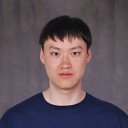
 Yifan Sun
· 4 previous affiliations
- Carnegie Mellon UniversitySince 2021
- PhD student · 2024–2030
- Research Assistant · Since 2021
- Current
- MS student · 2021–2023
- Software Engineer, Automation Runtime Systems · 2023
- Zoox2022
- Software Engineer, Motion Planning & Control · 2022
- Xi'an Jiaotong University2016–2020
- Undergrad student · 2016–2020
9 other authors named Yifan Sun: Yifan Sun (Zhejiang University · 174 papers), Yifan Sun (36 papers), Yifan Sun (Renmin University of China · 32 papers), Yifan Sun (University of Illinois Urbana-Champaign · 17 papers), Yifan Sun (Zhejiang University · 4 papers), and 4 more
Research Overview
Yifan Sun focuses on intelligent decision-making, safe reinforcement learning, and motion control for complex robotic systems. Early work addressed trajectory planning for industrial manipulators in dynamic environments, while more recent research emphasizes high-probability safety guarantees in reinforcement learning and the development of comprehensive safety benchmarks for humanoid robots.
Research Trajectory
Sun’s early research addressed the physical constraints of industrial robots operating in dynamic and confined spaces. As first author on Hybrid Task Constrained Planner for Robot Manipulator in Confined Environment (2023), Sun developed a motion planning framework for redundant robot arms. By optimizing trajectories across both configuration and null spaces, this work enabled robots to navigate cramped environments while avoiding the local optima that typically hinder incremental planners.
Recognizing that traditional control methods often require strong priors that are difficult to obtain in the real world, Sun’s trajectory expanded into safe reinforcement learning (RL). A core challenge in applying RL to physical systems is that exploration frequently leads to safety violations. To address this, Sun co-authored Learn With Imagination: Safe Set Guided State-wise Constrained Policy Optimization (2023), introducing an algorithm designed to generate optimal policies with zero training violations by leveraging safe sets. As the literature on constrained RL grew, the lack of standardized evaluation became a bottleneck for the field. Sun contributed to the development of GUARD: A Safe Reinforcement Learning Benchmark (2023), providing a unified framework to compare diverse safe RL algorithms across various tasks, thereby facilitating more rigorous progress in safety-critical AI.
Building on this foundational work in state-wise constraints, Sun’s research progressed toward stronger theoretical guarantees for applications like autonomous driving and robotic locomotion. In Absolute State-wise Constrained Policy Optimization: High-Probability State-wise Constraints Satisfaction (2024), Sun and collaborators addressed the limitations of enforcing constraints only in expectation. The proposed ASCPO algorithm explicitly bounds the variance of maximum costs, ensuring that robots satisfy safety constraints at every step with high probability in model-free settings.
Most recently, Sun has investigated the intersection of autonomous decision-making and human interaction. In Calibrating AI Trust in Complementary Human-AI Collaboration (2025), Sun explored how human trust in AI evolves under performance uncertainty, proposing theoretical models to help humans appropriately rely on AI teammates when direct performance transparency is lacking. Concurrently, Sun has continued to address the control of highly nonlinear systems, such as legged robots, through participation in work like Continual Learning and Lifting of Koopman Dynamics for Linear Control of Legged Robots (2025), which approximates complex dynamics using data-driven linear models to enable proven linear control techniques.
Current Directions
The most recent papers in the evidence address the safe deployment of complex, high-dimensional robotic systems, particularly humanoid and bimanual robots. This includes developing modular safety benchmarks designed specifically for humanoid autonomy and teleoperation, addressing the unique physical risks these structures pose in complex environments. Additionally, current work investigates neuro-symbolic frameworks for bimanual manipulation tasks, combining data-driven perception with hierarchical symbolic reasoning to improve data efficiency and reliability in logistics scenarios. Finally, there is an emerging focus on the human elements of robotics, specifically modeling and calibrating human trust in AI to enable more effective and complementary human-robot collaboration.
Profile updated
| Title | Venue | Year |
|---|---|---|
| Dexterous Safe Control for Humanoids in Cluttered Environments via Projected Safe Set Algorithm | arXiv | 2025 |
| Calibrating AI Trust in Complementary Human-AI Collaboration | IEEE International Conference on Robotics & Automation Workshop on Public Trust in Autonomous Systems | 2025 |
| SPARK: Safe Protective and Assistive Robot Kit | arXiv | 2025 |
| Continual Learning and Lifting of Koopman Dynamics for Linear Control of Legged Robots | L4dc | 2025 |
| Learn With Imagination: Safe Set Guided State-wise Constrained Policy Optimization | Openreview | 2025 |
| GUARD: A Safe Reinforcement Learning Benchmark | Openreview | 2024 |
| Absolute State-wise Constrained Policy Optimization: High-Probability State-wise Constraints Satisfaction | arXiv | 2024 |
| Hybrid Task Constrained Incremental Planner for Robot Manipulators in Confined Environments | ACC | 2024 |
| Absolute Policy Optimization: Enhancing Lower Probability Bound of Performance with High Confidence | ICML | 2024 |
| State-wise Constrained Policy Optimization | arXiv | 2023 |
Loading new papers…
Other researchers whose papers cluster into the same research directions — a proxy for overlapping technical interests and shared intellectual neighborhoods.
See something wrong? Report a mistake