

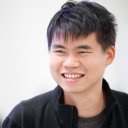
 Yifan Mai
· 5 previous affiliations
- Stanford UniversitySince 2022
- Research Engineer · Since 2022
- Master of Science (M.S.), Computer Science · 2013–2014
- Bachelor of Science (BS), Computer Science · 2010–2014
- Section Leader · 2013
- Stanford CRFMCurrent
- Current
- Google (United States)2019–2022
- Software Engineer · 2019–2022
- Coursera2014–2019
- Senior Software Engineer · 2014–2019
- Counsyl (United States)2013
- Software Engineering Intern · 2013
Research Overview
Yifan Mai focuses on the holistic evaluation of foundation models, developing comprehensive benchmarking frameworks to assess the capabilities, limitations, and risks of large-scale AI systems. His trajectory spans the creation of standardized evaluation protocols across text, multimodal, and domain-specific models, alongside investigations into AI safety and model robustness. Currently, his work addresses the reliability of autonomous agents and the methodological challenges of automated evaluation.
Research Trajectory
Work begins with foundational contributions to the holistic evaluation of AI systems. In 2022, he participated in developing Holistic Evaluation of Language Models, a comprehensive framework designed to standardize the assessment of language models across dozens of scenarios and metrics. This effort sought to move beyond simple accuracy metrics to surface crucial trade-offs in model behavior, providing a more transparent understanding of the capabilities and risks inherent in large language models.
Building on this foundation, the evaluation methodology was extended to new modalities. He contributed to Holistic Evaluation of Text-to-Image Models (2023), which introduced the HEIM benchmark to quantify aspects like aesthetics, originality, reasoning, and bias in image generation. This effort advanced the broader area of Modular Architectures for Decoupled AI Evaluation by identifying twelve distinct axes of model performance. This multimodal expansion continued with VHELM: A Holistic Evaluation of Vision Language Models (2024). By aggregating datasets to assess dimensions such as visual perception, fairness, and robustness, this work addressed critical gaps in standardized evaluation protocols and contributed to the research direction of Multilingual Alignment for Vision Language Models. Alongside these large-scale frameworks, he also explored domain-specific applications of benchmarking infrastructure, such as evaluating model performance on computer science educational materials in Using Benchmarking Infrastructure to Evaluate LLM Performance on CS Concept Inventories: Challenges, Opportunities, and Critiques (2024).
In 2025, the trajectory expanded to address structural vulnerabilities, safety, and regional nuances in AI evaluation. He co-developed The Mighty ToRR: A Benchmark for Table Reasoning and Robustness, focusing on how consistently models handle tabular data across various representation formats. This benchmark goes beyond simple performance rankings to measure true robustness in table-related tasks. Addressing the critical need for policy-aligned safety metrics, he participated in creating AIR-BENCH 2024: A Safety Benchmark based on Regulation and Policies Specified Risk Categories. This work grounded safety evaluation in actual government regulations and corporate policies, revealing significant safety gaps in top-tier models regarding automated decision-making and regulated industry advice.
Methodological rigor in benchmarking became a central theme during this period. In Position: Language model developers should report train-test overlap (2025), he and his collaborators documented the widespread lack of transparency regarding data contamination, advocating for clearer reporting standards to ensure evaluation integrity. To combat the static nature of traditional evaluations, he contributed to AutoBencher: Towards Declarative Benchmark Construction (2025), a declarative framework that treats benchmark creation as an optimization problem to automatically discover novel model blind spots and safety vulnerabilities often missed by static evaluations. Further diversifying the scope of evaluation, he was part of the team behind SEA-HELM: Southeast Asian Holistic Evaluation of Language Models (2025). This suite captured deep linguistic and cultural nuances specific to Southeast Asian languages, demonstrating how targeted continued pre-training can elevate the regional performance of smaller models.
The most recent work in the trajectory reflects a dual focus on deep domain specialization and the meta-evaluation of AI agents. His work on Holistic evaluation of large language models for medical tasks with MedHELM (2026) brought the comprehensive HELM methodology to the highly sensitive healthcare domain. Simultaneously, he investigated the reliability of automated evaluation methods. In LLMs Judging LLMs: A Simplex Perspective (2026), he contributed to a novel geometric framework that accounts for the epistemic uncertainty of frontier models when they are used as judges, thereby significantly improving the reliability of LLM-based rankings. Finally, Talk, Evaluate, Diagnose: User-aware Agent Evaluation with Automated Error Analysis (2026) introduced the TED framework. By simulating interactions with diverse user personas and generating natural language grading notes, this work moved beyond binary success metrics to provide fine-grained diagnostic evaluation for autonomous systems.
Current Directions
Recent work investigates the methodological challenges of evaluating increasingly autonomous and specialized AI systems. A primary focus is the meta-evaluation of language models, specifically addressing the epistemic uncertainty and reliability issues that arise when using frontier models as automated judges. Additionally, current research explores the fine-grained diagnostic evaluation of autonomous agents, moving beyond binary success metrics to incorporate user-aware simulations and automated error analysis. This is complemented by ongoing efforts to adapt comprehensive benchmarking frameworks to high-stakes, specialized domains such as medicine, while continuing to advocate for structural integrity, dynamic benchmark generation, and transparency in model evaluation.
Profile updated
| Paper | Venue | Year |
|---|---|---|
| Holistic Evaluation of Text-to-Image ModelsGitHubstanford-crfm/ | NeurIPS | 2023 |
Loading new papers…
Other researchers whose papers cluster into the same research directions — a proxy for overlapping technical interests and shared intellectual neighborhoods.
See something wrong? Report a mistake