

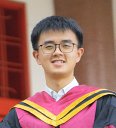
 Yi Wang
· 3 previous affiliations
- Hong Kong Polytechnic UniversitySince 2023
- Research Assistant Professor · Since 2023
- Current
- Nanyang Technological University2016–2023
- Research Fellow · 2021–2023
- Research Associate · 2016–2021
- Doctor of Philosophy - PhD, Information Technology · 2017–2021
- MS student · 2013–2016
- Undergrad student · 2009–2013
32 other authors named Yi Wang: Yi Wang (University of Hong Kong · 329 papers), Yi Wang (Dongguan University of Technology · 100 papers), Yi Wang (Shanghai Artificial Intelligence Laboratory · 39 papers), Yi Wang (The University of Texas at Austin · 15 papers), Yi Wang (Dalian University of Technology · 15 papers), and 27 more
Research Overview
Yi Wang focuses on computer vision, multimedia forensics, and multimodal interaction reasoning. His early work addressed image restoration and weakly supervised object detection, eventually expanding into the recovery of bitstream-corrupted media and memory forensics. Currently, his research emphasizes egocentric vision, open-world object detection, and pixel-level grounding for embodied artificial intelligence.
Research Trajectory
Wang's early research addressed foundational challenges in computer vision, particularly in image restoration and object detection under constrained supervision. In 2018, he developed a non-local adaptive attenuation-curve prior to tackle low contrast and color cast in maritime environments, detailed in Single Underwater Image Restoration Using Adaptive Attenuation-Curve Prior. Expanding into object detection, he introduced a self-training approach for estimating the center points and sizes of crowded objects using only point-level annotations in A Self-Training Approach for Point-Supervised Object Detection and Counting in Crowds. Concurrently, he investigated core architectural improvements for deep learning, proposing an adaptive technique to adjust regularization strength based on training loss in Convolutional Neural Networks With Dynamic Regularization. These vision techniques were also applied to practical transportation systems, leading to a cascaded architecture that leveraged vertex information for highly accurate license plate recognition in Rethinking and Designing a High-Performing Automatic License Plate Recognition Approach.
By 2023, Wang's focus expanded to include multimedia forensics and the recovery of severely degraded data, specifically addressing bitstream corruption. He contributed to a two-stage compensation and alignment framework designed to resolve unpredictable color casts and block shifts in encrypted bitstreams, as presented in Bitstream-Corrupted JPEG Images are Restorable: Two-stage Compensation and Alignment Framework for Image Restoration. This work was paralleled by efforts in video recovery, where he collaborated on establishing a comprehensive benchmark dataset and corruption model for realistic video loss in Bitstream-Corrupted Video Recovery: A Novel Benchmark Dataset and Method. In the domain of memory forensics, Wang pioneered methods that bridge computer vision and data recovery by converting raw memory block sequences into 2D binary images. This approach enabled the use of deep inception-attention networks for file-type and malware classification in Image Representation and Deep Inception-Attention for File-type and Malware Classification. He further refined this forensic technique by introducing a joint self-attention network to capture both intra-sector local features and inter-sector contextual information in Intra- and inter-sector contextual information fusion with joint self-attention for file fragment classification.
Returning to weakly supervised learning and multimodal understanding in 2024, Wang advanced techniques that reduce the reliance on dense annotations. He proposed a Transformer-based baseline utilizing token channel attention for density map estimation from image-level counts in Weakly-Supervised Crowd Counting with Token Attention and Fusion: A Simple and Effective Baseline. In vision-language tasks, his research addressed the limitations of bottom-up pipelines in weakly-supervised grounded image captioning. By developing a top-down framework, his work mitigated the tendency of models to overfit on independent object proposals, as detailed in Top-down framework for weakly-supervised grounded image captioning. He also explored temporal sentence grounding in video, utilizing pseudo-query features to bridge the domain gap between visual content and natural language queries in Temporal Sentence Grounding with Temporally Global Textual Knowledge. Additionally, he participated in research on exemplar-free online learning, contributing to F-OAL: Forward-only Online Analytic Learning with Fast Training and Low Memory Footprint in Class Incremental Learning, which advanced the broader research direction of Analytic Weight Updates for Incremental Learning.
In his most recent work, Wang has shifted toward embodied artificial intelligence and open-world perception. He co-authored a comprehensive review of methodologies for recognizing objects absent from initial training sets in Open World Object Detection: A Survey. Concurrently, his research has focused heavily on egocentric (first-person) interaction perception. To address the challenge of generating coherent textual and pixel-level responses to user queries, he helped develop a novel task and framework in ANNEXE: Unified Analyzing, Answering, and Pixel Grounding for Egocentric Interaction. Building upon this foundation, he subsequently led the development of an analysis-guided reinforcement learning framework designed to teach Multimodal Large Language Models (MLLMs) to reason about human-environment interactions and precisely locate objects at the pixel level, as presented in EARL: Towards a Unified Analysis-Guided Reinforcement Learning Framework for Egocentric Interaction Reasoning and Pixel Grounding.
Current Directions
The most recent papers in the evidence indicate a strong focus on egocentric interaction reasoning and open-world perception for embodied AI. Wang is actively investigating how Multimodal Large Language Models (MLLMs) can be adapted to understand first-person visual data, specifically targeting the ability to simultaneously reason about complex human-environment interactions and ground those interactions at the pixel level. This involves developing unified frameworks that leverage reinforcement learning to improve the spatial and contextual accuracy of MLLMs. Additionally, his recent survey work suggests an ongoing interest in open-world object detection, exploring how neural networks can incrementally expand their knowledge bases to recognize novel classes without relying on exhaustive initial training sets.
Profile updated
Loading new papers…
Other researchers whose papers cluster into the same research directions — a proxy for overlapping technical interests and shared intellectual neighborhoods.
See something wrong? Report a mistake