

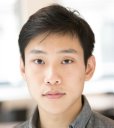
 Yi Sun
· 3 previous affiliations
- University of ChicagoSince 2020
- Assistant Professor · Since 2020
- Current
- Columbia University2016–2020
- Postdoc · 2016–2020
- PhD student · 2011–2016
9 other authors named Yi Sun: Yi Sun (Amazon (United States) · 9 papers), Yi Sun (Dalian University of Technology · 6 papers), Yi Sun (4 papers), Yi Sun (National University of Defense Technology · 2 papers), Yi Sun (University of Hong Kong · 1 paper), and 4 more
Research Overview
Yi Sun focuses on the intersection of probability, high-dimensional statistics, and machine learning, with a particular emphasis on the development of zero-knowledge proofs for verifiable and secure computation. His work spans the theoretical analysis of latent data geometry and stochastic optimization to the practical implementation of cryptographic protocols for large-scale neural network inference and image attestation.
Research Trajectory
Sun’s early research was grounded in the mathematical foundations of data representation, specifically the recovery of geometric structure from discrete, unweighted observations. In 2015, he investigated how the underlying Euclidean metric and probability density of a dataset could be reconstructed using only directed, unweighted graphs, such as k-nearest neighbor graphs. In Metric recovery from directed unweighted graphs, he demonstrated that random walks on these graphs converge to continuous drift-diffusion processes, allowing for the reconstruction of latent geometry through a PageRank-like estimator. This line of inquiry was extended in From random walks to distances on unweighted graphs, where he utilized stochastic calculus to analyze Laplace transformed hitting times (LTHT) as a robust alternative to expected hitting times for defining vertex similarity in large networks.
Around 2020, Sun’s focus shifted toward the theoretical underpinnings of modern machine learning training pipelines, particularly the role of data augmentation. He sought to move beyond empirical heuristics to provide a rigorous framework for how augmentation affects optimization. In Data augmentation as stochastic optimization, he recast data augmentation as a form of stochastic optimization for time-varying proxy losses. This work provided a unified language for understanding synthetic noise and label-preserving transformations alongside traditional optimization hyperparameters like learning rate and batch size. He further refined this in How Data Augmentation affects Optimization for Linear Regression, where he provably characterized the convergence of augmented gradient descent and the resulting minima for arbitrary augmentation schemes in convex settings.
During this period, Sun also participated in research regarding the robustness of deep learning models against evolving threats. He contributed to the development of the ImageNet-UA framework, which evaluates model performance against unforeseen adversarial attacks that differ from those encountered during training. This work highlighted the limitations of standard $L_p$-constrained defenses and advocated for strategies that generalize to a broader range of distortions, a theme explored in Evaluating Model Robustness Against Unforeseen Adversarial Attacks. These efforts align with broader interests in Fusing Global and Local Representations for Visual Tasks and Dense Motion Representations for High Fidelity Face Synthesis, where the precision of visual features is critical for maintaining model integrity under perturbation.
Current Directions
Since 2022, Sun has pivoted significantly toward the application of Zero-Knowledge Proofs (ZKPs) to machine learning, a field often termed "cryptographic machine learning." This shift addresses the growing need for trustless verification in the Machine-Learning-as-a-Service (MLaaS) paradigm. His work in this area focuses on Integer Quantization for Cryptographic Machine Learning, as ZKP systems operate over finite fields rather than the floating-point arithmetic standard in deep learning.
A primary contribution in this domain is ZK-IMG: Attested Images via Zero-Knowledge Proofs to Fight Disinformation. This system enables the generation of ZKPs for high-definition image transformations, allowing a user to prove that an image is a legitimate edit of a camera-attested original without revealing the source data. This research addresses the technical challenge of arithmetizing complex image processing operations to achieve millisecond-scale verification.
Sun has also led efforts to scale trustless inference to modern neural network architectures. In Scaling up Trustless DNN Inference with Zero-Knowledge Proofs, he presented a practical method for non-interactively verifying ImageNet-scale model inference. By leveraging ZK-SNARKs, this work allows consumers to verify that a service provider has executed a specific model correctly, mitigating risks associated with malicious or buggy providers. This trajectory extends to the auditing of the training process itself; he has contributed to protocols like ZKAUDIT, which allow providers to prove that models were trained on authorized data without revealing the underlying weights or datasets. These advancements often involve exploring Semantic Information in Binary Neural Activation Patterns and Dynamic Inference for Adaptive Computation to optimize the computational overhead of cryptographic proofs.
Parallel to his work in applied cryptography, Sun continues to contribute to pure mathematics and theoretical probability. His recent work in Probabilistic conformal blocks for Liouville CFT on the torus provides a probabilistic construction of toric Virasoro conformal blocks using Gaussian multiplicative chaos. This research links 2D conformal field theory with four-dimensional supersymmetric gauge theory, demonstrating a sustained engagement with the mathematical structures underlying high-dimensional systems.
Representative Work
Sun’s research is characterized by a transition from the geometry of data to the security of the models that process it. The following papers represent key milestones in this evolution:
- Metric recovery from directed unweighted graphs (2015): Establishes the feasibility of recovering latent Euclidean structure from unweighted graph data using random walk convergence.
- How Data Augmentation affects Optimization for Linear Regression (2021): Provides a theoretical characterization of how data augmentation schedules interact with optimization hyperparameters to influence model convergence.
- ZK-IMG: Attested Images via Zero-Knowledge Proofs to Fight Disinformation (2022): Introduces a practical system for verifying image authenticity through ZKPs, addressing the computational challenges of high-resolution image transformations.
- Scaling up Trustless DNN Inference with Zero-Knowledge Proofs (2024): Demonstrates the first practical application of ZK-SNARKs to verify ImageNet-scale neural network inference, enabling trustless MLaaS.
- Probabilistic conformal blocks for Liouville CFT on the torus (2026): Constructs toric Virasoro conformal blocks via Gaussian multiplicative chaos, bridging probabilistic tools with conformal field theory.
Sun's work is supported by multiple NSF grants and reflects a trajectory from foundational mathematics at MIT and Harvard to applied cryptographic innovation at the University of Chicago. His current focus on zero-knowledge applications suggests a continued commitment to making complex computational processes both verifiable and privacy-preserving.
Profile updated
Loading new papers…
Other researchers whose papers cluster into the same research directions — a proxy for overlapping technical interests and shared intellectual neighborhoods.
See something wrong? Report a mistake