

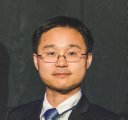
 Yi Mei
· 4 previous affiliations
- Victoria University of WellingtonSince 2015
- Professor · Since 2026
- Full Professor · Since 2015
- Associate Dean (Research) · 2023–2026
- RMIT University2012–2015
- Postdoc · 2012–2015
- Research Fellow · 2012–2014
- Chinese University of Hong Kong2010–2012
- Postdoc · 2010–2012
- Research Associate · 2010–2011
- PhD student · 2005–2010
1 other author named Yi Mei: Yi Mei (1 paper)
Research Overview
Yi Mei focuses on evolutionary computation, genetic programming, and automated algorithm design for complex combinatorial optimization problems. His trajectory spans the development of cooperative coevolution frameworks for large-scale routing to the integration of machine learning and genetic programming for explainable artificial intelligence. Currently, he investigates lifelong learning and neural combinatorial optimization to adapt solvers to dynamic, real-world environments.
Research Trajectory
Early work addressed the Capacitated Arc Routing Problem (CARP) and the challenges of scaling optimization methods to large instances. In Memetic Algorithm With Extended Neighborhood Search for Capacitated Arc Routing Problems, he and his collaborators introduced a memetic algorithm featuring a novel Merge-Split local search operator capable of navigating large step sizes in the search space. Recognizing the limitations of exact methods on NP-hard routing problems, he subsequently developed divide-and-conquer strategies for larger instances. This led to Cooperative Coevolution With Route Distance Grouping for Large-Scale Capacitated Arc Routing Problems, which proposed a route distance grouping scheme to decompose massive routing challenges into manageable sub-problems based on best-so-far solution data. Expanding on this decomposition paradigm, he participated in designing an automatic decomposition strategy in Cooperative Co-Evolution With Differential Grouping for Large Scale Optimization, which mathematically minimized the interdependence between subcomponents to uncover the underlying interaction structure of decision variables.
Moving into the late 2010s, his focus expanded to the automated design of heuristics, particularly using Genetic Programming (GP). He provided a comprehensive synthesis of this domain in Genetic programming for production scheduling: a survey with a unified framework, standardizing the complex configurations of GP-based hyper-heuristics and demonstrating how evolved rules can outperform manually designed methods in dynamic environments. This work aligns with the broader research direction of Automated Discovery of Optimization Heuristics, exploring how automated systems synthesize logic. The inherent interpretability of GP models became a major theme, culminating in Explainable Artificial Intelligence by Genetic Programming: A Survey, which reviewed how the symbolic components of GP can address the growing need for explainable AI in critical domains like healthcare and autonomous driving. He also advanced the theoretical foundations of GP in Bridging Fitness With Search Spaces By Fitness Supremums: A Theoretical Study on LGP, tackling the "weak causal link" between a program's genotype and its fitness performance.
In recent years, he has applied these evolutionary and learning-based approaches to a variety of dynamic, real-world control and scheduling problems. As a principal investigator, he guided the development of An evolutionary optimization-learning hybrid algorithm for energy resource management, which utilized a hybrid encoding scheme and GP to learn state allocation rules for energy devices. For industrial engineering, he introduced DyRo-MCTS: A Robust Monte Carlo Tree Search Approach to Dynamic Job Shop Scheduling to handle persistent scheduling uncertainties. His work on urban infrastructure includes Generalized Phase Pressure Control Enhanced Reinforcement Learning for Traffic Signal Control, which moved beyond heuristic state representations in Deep Reinforcement Learning for traffic management, and GPLight+: A Genetic Programming Method for Learning Symmetric Traffic Signal Control Policy, which evolved human-readable, mathematically symmetric formulas capable of running efficiently on low-cost microcontrollers. Returning to heuristic design, he also developed Automated design of state transition rules in ant colony optimization by genetic programming: a comprehensive investigation, evolving highly efficient and interpretable formulas for the Traveling Salesman Problem.
Most recently, his trajectory has incorporated neural solvers and lifelong learning to address the brittleness of models in non-stationary environments. In LiBOG: Lifelong Learning for Black-Box Optimizer Generation, he introduced a framework that allows AI to generate and refine optimizers sequentially without catastrophic forgetting. This was followed by GAMA: A Neural Neighborhood Search Method with Graph-aware Multi-modal Attention for Vehicle Routing Problem, which treated maps and delivery routes as distinct modalities to solve massive routing problems, contributing to the area of Zero Shot Scale Generalization in Neural Combinatorial Optimization. Extending this to continual learning, he collaborated on Lifelong Learning with Behavior Consolidation for Vehicle Routing, proposing a behavior consolidation framework that preserves high-quality routing strategies as neural solvers encounter new problem distributions.
Current Directions
Recent work investigates the intersection of neural combinatorial optimization and lifelong machine learning. The most recent papers in the evidence address the challenge of catastrophic forgetting in neural solvers, developing frameworks that allow optimization models to adapt to new problem types sequentially while retaining past knowledge. This includes active contributions to the research direction of Scaling Neural Combinatorial Optimization to Real World Instances, where attention mechanisms and multi-modal representations are used to solve large-scale routing problems without the need for constant retraining. Additionally, ongoing research continues to refine the automated design of interpretable heuristics, leveraging genetic programming and reinforcement learning to build robust, explainable control policies for dynamic environments such as traffic networks and job shop scheduling.
Profile updated
Loading new papers…
Other researchers whose papers cluster into the same research directions — a proxy for overlapping technical interests and shared intellectual neighborhoods.
See something wrong? Report a mistake