

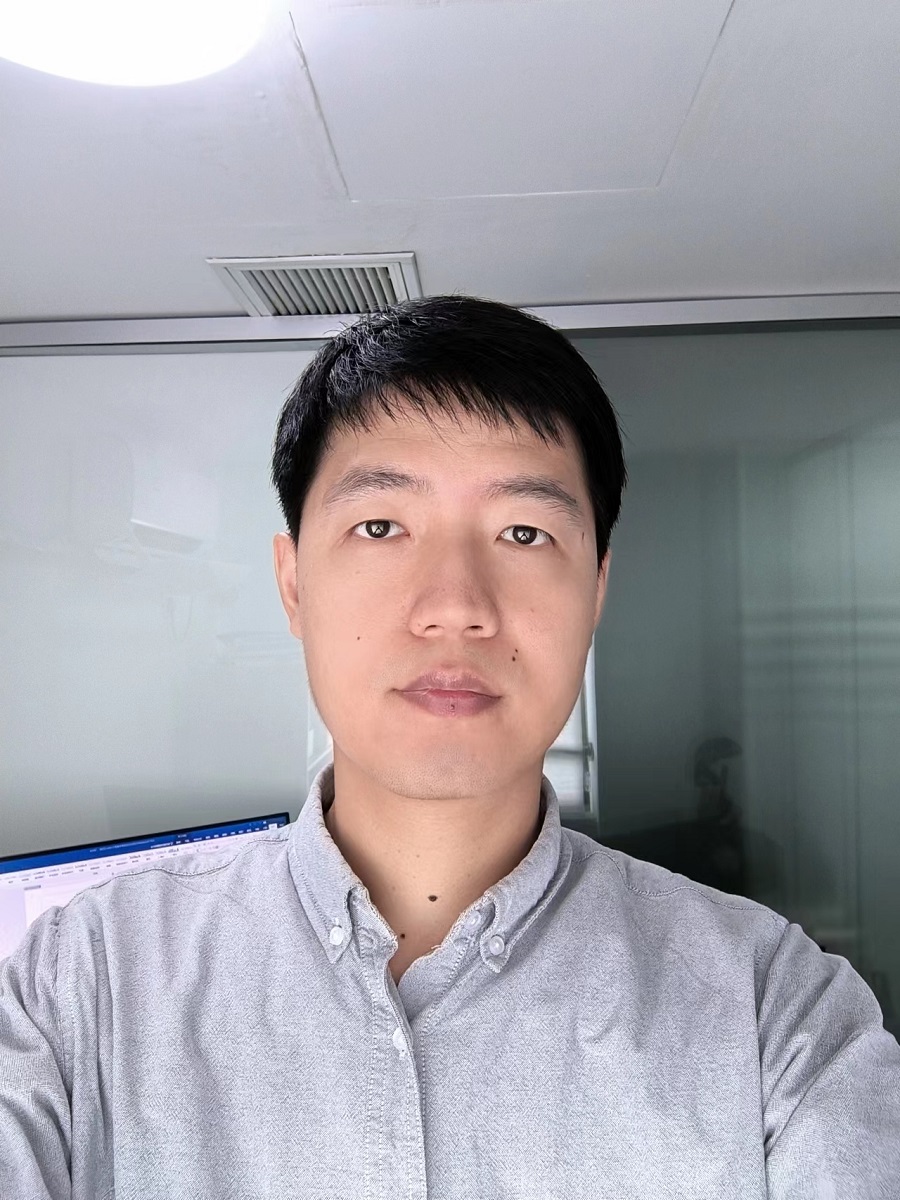
 Yi Gao
· 1 previous affiliation
- Zhejiang UniversitySince 2019
- Full Professor · Since 2024
- Associate Professor · 2019–2023
3 other authors named Yi Gao: Yi Gao (Southeast University · 65 papers), Yi Gao (2 papers), Yi Gao (0 papers)
Research Overview
Yi Gao focuses on the Internet of Things, wireless networking, and edge artificial intelligence. His trajectory spans from foundational protocols and diagnostic tools for wireless sensor networks to holistic system architectures that integrate resource-constrained devices with cloud infrastructure. Most recently, his work addresses the deployment of large language models and real-time neural network inference in edge computing environments.
Research Trajectory
Yi Gao’s early research concentrated on the reliability, diagnostics, and management of wireless sensor networks (WSNs). In 2013, he introduced techniques for Reprogramming over Low Power Link Layer in Wireless Sensor Networks, addressing the challenges of updating software on deployed, resource-constrained nodes. Recognizing the critical need for accurate synchronization and performance monitoring in these environments, he subsequently contributed to Accurate and Robust Time Reconstruction for Deployed Sensor Networks (2015). This work tackled the problem of invalid MAC-layer timestamps—often caused by wireless corruptions, imperfect system designs, or timing attacks—by developing an approach to detect anomalies and recover microsecond-level global time accuracy.
To further improve network visibility, he collaborated on Dophy, a method detailed in Fine-Grained Loss Tomography in Dynamic Sensor Networks (2015). While previous loss tomography studies typically targeted networks with static routing, Dophy was specifically designed to infer per-link loss ratios from end-to-end delivery ratios in environments where nodes dynamically select forwarding paths towards the sink. This focus on understanding complex network topologies continued with iPath: Path Inference in Wireless Sensor Networks (2016).
As the Internet of Things expanded, his research shifted toward holistic system architectures and development frameworks designed to bridge the gap between embedded devices and cloud infrastructure. He explored rapid application development methodologies with TinyLink: A Holistic System for Rapid Development of IoT Applications (2017). His work also extended into novel sensing modalities and applications, such as wearable human-computer interaction in Wearable-based Human-Computer Interaction with LimbMotion (2018), and outdoor localization techniques leveraging satellite imagery in SateLoc: A Virtual Fingerprinting Approach to Outdoor LoRa Localization using Satellite Images (2020). Returning to core IoT infrastructure, he proposed TinyNet: a lightweight, modular, and unified network architecture for the internet of things (2022). To facilitate seamless edge-cloud integration, he investigated the use of modern web technologies on embedded devices, as seen in Bringing webassembly to resource-constrained iot devices for seamless device-cloud integration (2022).
In recent years, his trajectory has increasingly focused on edge computing, distributed systems, and the deployment of artificial intelligence on constrained hardware. To support large-scale experimentation in these areas, he contributed to LinkLab 2.0: A Multi-tenant Programmable IoT Testbed for Experimentation with Edge-Cloud Integration (2023). Addressing the challenges of running neural networks on edge devices with unpredictable resource availability, he and his collaborators developed MEEdge, a system described in Unlocking the Non-deterministic Computing Power with Memory-Elastic Multi-Exit Neural Networks (2023). Because traditional neural networks often fail to output results when deployed on preemptable, non-deterministic computing power, MEEdge automatically transforms classic single-exit models into heterogeneous, memory-elastic structures to maintain task performance. He also explored decentralized data management for the Web of Things, participating in the design of TimeChain: A Secure and Decentralized Off-chain Storage System for IoT Time Series Data (2025). TimeChain batches discrete time series data, storing only the hash value on-chain while keeping the complete data off-chain, thereby significantly reducing blockchain storage overhead.
His most recent work investigates the intersection of large language models (LLMs) and edge AI. He explored the use of natural language for embedded systems development in Programming Embedded IoT Applications in Natural Language with IoTPilot (2025). He also contributed to automated data synthesis with large language models through SDBench: A Survey-based Domain-specific LLM Benchmarking and Optimization Framework (2025), which leverages LLM agents and domain survey papers to construct structured knowledge trees and benchmark datasets with minimal human intervention. In the domain of real-time perception, he participated in the development of RTInfer: Real-Time Inference of Multiple DNNs on Edge GPUs (2026). RTInfer addresses deterministic tensor allocation to prevent GPU memory fragmentation and mitigates weight-switching latency in multi-tenant inference, combining parallel task execution with a memory-aware scheduler to eliminate deadline misses for autonomous robots and drones. Finally, his research extends to fundamental deep learning mechanisms, such as the novel activation function proposed in Activation with Intrinsic-Extrinsic Consensus (2026), which suppresses noisy feature channels by finding a consensus between how often a channel fires and its actual contribution to the final decision.
Current Directions
The most recent papers in the evidence indicate a strong focus on the intersection of artificial intelligence and edge computing. This includes optimizing the execution of multiple deep neural networks on resource-constrained edge GPUs, specifically addressing challenges like memory fragmentation and weight-switching latency to ensure real-time performance for autonomous systems. Additionally, current work explores the application of large language models to specialized domains. This encompasses both the use of natural language interfaces to streamline the programming of embedded IoT applications and the development of automated frameworks for domain-specific LLM benchmarking and data synthesis. Finally, ongoing research investigates fundamental improvements to neural network architectures, such as novel activation mechanisms designed to enhance feature sparsity and interpretability by penalizing irrelevant channels.
Profile updated
Loading new papers…
Other researchers whose papers cluster into the same research directions — a proxy for overlapping technical interests and shared intellectual neighborhoods.
See something wrong? Report a mistake