

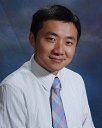
 Yi Fang
· 2 previous affiliations
- Santa Clara UniversitySince 2012
- Full Professor · Since 2012
- Purdue University West Lafayette2007–2012
- PhD student · 2007–2012
3 other authors named Yi Fang: Yi Fang (New York University · 143 papers), Yi Fang (8 papers), Yi Fang (University of Science and Technology of China · 2 papers)
Research Overview
Yi Fang focuses on information retrieval, large language model optimization, and retrieval-augmented generation. Early research explored data-driven talent acquisition and network embedding for incomplete data. Currently, the primary focus is on enhancing dense retrieval systems and language model rankers through weak supervision and preference optimization.
Research Trajectory
Yi Fang's early research trajectory encompasses foundational work in information retrieval and data mining. Around 2015, this included contributions to the broader area of Robust Initialization for Centroid Based Clustering. By 2016, Fang was leading efforts in applied information retrieval, serving as the first author on DDTA 2016: The Workshop on Data-Driven Talent Acquisition. This work explored how big data and expertise search could be leveraged for organizational talent management and data-driven decision-making.
In subsequent years, the focus expanded to structured data extraction and complex network representations. In 2022, Fang co-authored WebFormer: The Web-page Transformer for Structure Information Extraction, contributing to sequence modeling techniques designed to parse unstructured web layouts and serialize tokens effectively. Concurrently, Fang was a key second-author contributor to Deep Partial Multiplex Network Embedding, addressing the challenge of learning low-dimensional node representations when multi-view network data is incomplete or missing across different relations.
Between 2023 and 2024, Fang participated in broader collaborative projects spanning multi-modal machine learning and vision-language models. This included middle-author contributions to Aligning Out-of-Distribution Web Images and Caption Semantics via Evidential Learning, which analyzed performance drops in zero-shot multi-modal tasks and proposed methods to handle real-world noise and variability. During this period, Fang also participated in research on the automatic multi-step distillation of large-scale vision models and efficient product attribute value extraction.
More recently, Fang has established a clear senior leadership role at the intersection of large language models (LLMs) and information retrieval. As principal investigator, Fang directed ChainRank-DPO: Chain Rank Direct Preference Optimization for LLM Rankers in 2024. This work introduced a novel pipeline combining Chain-of-Thought reasoning with supervised fine-tuning and Direct Preference Optimization to improve text reranking without degrading the model's general reasoning capabilities. In parallel, Fang led research on Retrieval-Augmented Generation (RAG) systems, culminating in W-RAG: Weakly Supervised Dense Retrieval in RAG for Open-domain Question Answering. This research addresses the high cost of human annotation in dense retrieval by utilizing the ranking capabilities of LLMs to generate weak training signals, thereby improving factual generation in knowledge-intensive tasks.
Current Directions
The most recent papers in the evidence indicate a sustained focus on optimizing dense retrieval and augmenting large language models for knowledge-intensive tasks. Recent work investigates soft prompt tuning as a mechanism to improve weak data quality and filter noise in dense retrieval pipelines. Additionally, ongoing research continues to refine Retrieval-Augmented Generation (RAG) architectures, emphasizing reproducible and robust methods for open-domain question answering that reduce reliance on expensive human-annotated datasets while maximizing the utility of open-source LLMs.
Profile updated
Loading new papers…
Other researchers whose papers cluster into the same research directions — a proxy for overlapping technical interests and shared intellectual neighborhoods.
See something wrong? Report a mistake