

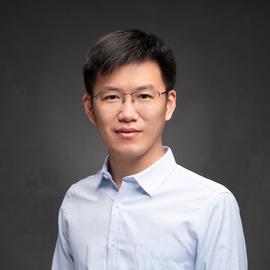
 Yequan Wang
· 3 previous affiliations
- Researcher · Since 2022
- Peking UniversitySince 2025
- Researcher · Since 2025
- Chinese Academy of Sciences2020–2022
- Assistant Professor · 2020–2022
Research Overview
Yequan Wang focuses on large language model architectures, embodied artificial intelligence, and multimodal reasoning. His early work addressed natural language processing and sentiment analysis before shifting toward the efficient pre-training and dynamic knowledge editing of foundational models. His current research investigates full-duplex interaction systems and the detection of synthetic media to support robust, real-time autonomous agents.
Research Trajectory
Wang's early research concentrated on foundational natural language processing tasks. In 2016, he introduced Attention-based LSTM for Aspect-level Sentiment Classification, exploring how neural architectures could better isolate and evaluate sentiment targets within text.
As his focus expanded to large language models, Wang—affiliated with the Beijing Academy of Artificial Intelligence (BAAI) and Peking University—began addressing the computational bottlenecks of model pre-training and inference. He developed Masked Structural Growth for 2x Faster Language Model Pre-training, a framework that progressively scales transformer architectures during training while preserving their mathematical functions to avoid performance degradation. To optimize deployment, he contributed to the research direction of Early Exiting to Prevent Overthinking in Deep Networks through Not All Layers of LLMs Are Necessary During Inference. This work introduced AdaInfer, an algorithm that dynamically terminates computation at intermediate layers based on input complexity, significantly reducing inference costs without altering the underlying model parameters.
A major theme in Wang's trajectory involves managing and updating the knowledge embedded within large models. He addressed the challenge of editing broad, non-instantiated facts in Commonsense Knowledge Editing Based on Free-Text in LLMs, advancing the broader area of Multi-Hop Consistency in Factual Model Editing. Building on this, he participated in developing Knowledge Editing with Dynamic Knowledge Graphs for Multi-Hop Question Answering, which utilizes structured memory to ensure that factual updates correctly influence downstream reasoning chains. When models face discrepancies between their internal weights and external inputs, Wang explored solutions in the area of Resolving Conflicts Between Parametric and Contextual Knowledge. His co-authored work, Discerning and Resolving Knowledge Conflicts through Adaptive Decoding with Contextual Information-Entropy Constraint, proposed decoding strategies to align model outputs with provided context. He later expanded on memory architecture by designing Integrated Episodic and Semantic Memory via Modulating Transformer FeedForward Layers, a hypernetwork-based approach that embeds both specific events and general knowledge directly into feedforward parameters.
Extending his architectural insights to multimodal domains, Wang investigated how structured knowledge could ground visual and textual reasoning. He introduced Multimodal Reasoning with Multimodal Knowledge Graph, augmenting language models with structured text-image relationships to reduce hallucination. He also contributed to the field of Closed Loop Visual Feedback for Multimodal Generation with VisualPrompter: Semantic-Aware Prompt Optimization with Visual Feedback for Text-to-Image Synthesis, a closed-loop system that iteratively refines prompts based on missing semantic elements in generated images. Similarly, he collaborated on Let Language Constrain Geometry: Vision–Language Models as Semantic and Spatial Critics for 3D Generation, utilizing vision-language models to correct geometric anomalies in text-to-3D synthesis. Concurrently, Wang led efforts to identify synthetic media. He developed Few-Shot Learner Generalizes Across AI-Generated Image Detection, employing prototypical metric learning to recognize artifacts from unseen generative models using minimal examples. He expanded this into a unified detection and attribution framework with OmniDFA: A Unified Framework for Open Set Synthesis Image Detection and Few-Shot Attribution.
Most recently, Wang's work has converged on embodied artificial intelligence and real-time interaction. He outlined a roadmap for the field in Toward Embodied AGI: A Review of Embodied AI and the Road Ahead, proposing a framework for autonomous agents equipped with omnimodal processing and physical world models. To realize these capabilities, he advanced the research direction of Full Duplex Architectures for Real-Time AI Interaction through his participation in RoboEgo System Card: An Omnimodal Model with Native Full Duplexity, which detailed a model capable of simultaneous perception, reasoning, and action with minimal latency. He further refined these interaction paradigms in the area of Full-Duplex Spoken Language Models with FLM-Audio: Natural Monologues Improves Native Full-Duplex Chatbots via Dual Training, exploring how natural monologue structures can improve semantic alignment and cognitive modeling in continuous audio streams.
Current Directions
Wang's most recent work investigates the architecture and deployment of embodied artificial intelligence, focusing on systems capable of real-time, omnimodal interaction. A primary area of interest is the development of native full-duplex models that can simultaneously process audio, visual, and textual streams without relying on traditional time-slicing methods. This includes designing training paradigms that align continuous audio inputs with natural monologue structures to reduce latency in conversational agents. Additionally, he continues to explore multimodal generation and verification, developing closed-loop feedback mechanisms and vision-language critics to ensure semantic and geometric accuracy in text-to-image and 3D synthesis. Alongside generation, his recent research addresses the security implications of these technologies by building generalized, few-shot detection frameworks capable of identifying and attributing synthetic media from unseen generative models.
Profile updated
Loading new papers…
Other researchers whose papers cluster into the same research directions — a proxy for overlapping technical interests and shared intellectual neighborhoods.
See something wrong? Report a mistake