

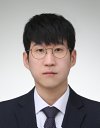
 Yeong Jun Koh
· 2 previous affiliations
- Chungnam National UniversitySince 2019
- Assistant Professor · Since 2019
- Korea University2011–2018
- PhD student · 2011–2018
Research Overview
Yeong Jun Koh focuses on computer vision, image processing, and machine learning, with particular emphasis on video object segmentation and image enhancement. His early work addressed the challenges of discovering and tracking multiple objects in complex video sequences. Recently, he directs research on 3D visual grounding, multi-object tracking, and efficient multi-exposure correction architectures.
Research Trajectory
Koh’s early research concentrated on video object segmentation and tracking methodologies. He developed POD: Discovering Primary Objects in Videos Based on Evolutionary Refinement of Object Recurrence, Background, and Primary Object Models, which introduced an iterative scheme to separate foreground objects from background noise by superposing extracted features. Expanding on this foundation, he introduced CDTS: Collaborative Detection, Tracking, and Segmentation for Online Multiple Object Segmentation in Videos, an online algorithm that transforms bounding box tracks into pixel-wise segments while handling object occlusion and reappearance. To further refine object tracking, he framed video object segmentation as a graph optimization problem in Sequential Clique Optimization for Video Object Segmentation. This work contributed to the broader research direction of Addressing the Recall Ceiling in Tracking by Detection by efficiently identifying consistent object tracks across frames.
Transitioning into image enhancement and interactive systems, Koh proposed PieNet: Personalized Image Enhancement Network, a deep learning framework that maps user aesthetic preferences via metric learning to personalize photo retouching with minimal examples. He also continued advancing video segmentation with Guided Interactive Video Object Segmentation Using Reliability-Based Attention Maps, which accelerated manual annotation by directing users to poorly segmented frames using pixel-wise reliability maps and a global scoring mechanism. Concurrently, he directed research in the area of Preserving Spatial Fidelity in Deep Encoder Decoder Networks with Representative Color Transform for Image Enhancement. This framework utilized a small set of representative colors to achieve high-quality photo retouching and low-light enhancement while maintaining fine architectural details. During this period, he also collaborated on interdisciplinary applications, contributing to the area of Non-Linear Modeling of Epistatic Interactions in Genomics through GpNet: Genomic Prediction Network Using Locally Connected Layers in Korean Native Cattle. This work advanced the research direction of Locally Connected Layers for Position-Dependent Features by capturing non-linear interactions between neighboring DNA markers to predict complex agricultural traits.
In subsequent years, Koh expanded his segmentation methodologies to handle multiple objects with minimal supervision in Sequential Clique Optimization for Unsupervised and Weakly Supervised Video Object Segmentation, advancing the research area Beyond the Single Primary Object Assumption. He oversaw the development of Center-Guided Transformer for Panoptic Segmentation, which decoupled the learning of "thing" and "stuff" queries to improve instance distinction. He also led work on 3D scene understanding with BAAM: Monocular 3D pose and shape reconstruction with bi-contextual attention module and attention-guided modeling, leveraging bi-contextual attention to reconstruct detailed 3D car shapes and poses from single 2D images. In image restoration, he addressed exposure correction through Luminance-aware Color Transform for Multiple Exposure Correction, introducing learned transformation functions to map pixels without the blurring common in standard architectures. Additionally, he continued his interdisciplinary collaborations in agricultural machine learning, directing the development of BTENet: Back-Fat Thickness Estimation Network for Automated Grading of the Korean Commercial Pig and participating in deepGBLUP: joint deep learning networks and GBLUP framework for accurate genomic prediction of complex traits in Korean native cattle.
Current Directions
The most recent papers in the evidence indicate a continued focus on robust temporal modeling for video analysis and efficient architectures for image restoration. In the domain of multi-object tracking, recent work investigates solutions to identity drift through transformer-based frameworks. For example, Dual-Path Temporal Decoder for End-to-End Multi-Object Tracking splits the tracking process into parallel paths to independently manage changing appearances and preserve identity through occlusions. Concurrently, research in image enhancement addresses computational efficiency and feature integration, as seen in Dual-stream feature aggregation and dual guided upsampling for efficient multi-exposure correction, which develops dual-stream methodologies for correcting improperly exposed images.
Profile updated
Loading new papers…
Other researchers whose papers cluster into the same research directions — a proxy for overlapping technical interests and shared intellectual neighborhoods.
See something wrong? Report a mistake