

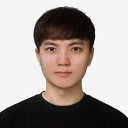
 Yeon-Chang Lee
· 3 previous affiliations
- Assistant Professor · Since 2023
- Current
- Georgia Institute of Technology2022–2023
- Postdoc · 2022–2023
- Hanyang University2014–2022
- Postdoc · 2021–2022
- PhD student · 2014–2021
Research Overview
Yeon-Chang Lee focuses on graph neural networks, recommender systems, and network embedding. His trajectory spans from addressing sparsity and out-of-distribution generalization in directed networks to modeling information diffusion across online communities. Recently, his work emphasizes lightweight collaborative filtering methods and the visualization of dynamic graph structures.
Research Trajectory
Yeon-Chang Lee’s research initially concentrated on the structural challenges of network embedding, particularly in directed and sparse graphs. In 2022, as a second author, he contributed to Directed Network Embedding with Virtual Negative Edges, which addressed the intrinsic difficulty of preserving asymmetric proximities in networks with many low-degree nodes. The work introduced the concept of virtual negative edges to represent latent negative relationships, thereby compensating for the lack of explicit structural information.
Building on this foundation, Lee continued to investigate directed networks with an emphasis on robustness and generalization. In 2023, he co-authored Disentangling Degree-related Biases and Interest for Out-of-Distribution Generalized Directed Network Embedding. This research demonstrated that existing embedding methods often struggle with degree-related distributional shifts. By modeling multiple factors in the formation of directed edges and disentangling degree biases from genuine node interest, the proposed ODIN method improved out-of-distribution generalization. This effort aligns with the broader research direction of Structural Bias Amplification in Graph Neural Networks, where researchers seek to prevent message-passing mechanisms from reinforcing structural inequalities.
Parallel to his work on network embedding, Lee has actively researched information diffusion and social recommendation systems. As a second author, he helped develop frameworks for predicting how content spreads across distinct platforms in Predicting Information Pathways Across Online Communities. By analyzing large-scale, multi-modal datasets—specifically tracking the diffusion of YouTube videos across Reddit—the research modeled the complex, multi-modal trajectories of information spread where inter-community influence is often hidden. To synthesize the rapidly growing intersection of social networks and recommendation, he also contributed to A Survey of Graph Neural Networks for Social Recommender Systems, which systematically reviewed how GNNs leverage both user-item interactions and user-user social relations (such as homophily) to improve recommendation accuracy.
In 2024, Lee’s focus expanded to address the computational overhead and complexity of modern recommendation architectures. Participating as a middle author, he contributed to SVD-AE: Simple Autoencoders for Collaborative Filtering. This work designed a singular value decomposition-based linear autoencoder that utilizes a closed-form solution to balance accuracy, efficiency, and robustness. This approach represents a significant contribution to the emerging theme of Linear Models with Closed Form Solutions for Recommendation, offering a lightweight alternative to deep learning models and providing new perspectives on the ongoing debates within the area of Non-linear Interaction Functions for Neural Recommendation.
Most recently, Lee has collaborated on tools to make complex network dynamics more interpretable. In 2025, he was part of the team that introduced DyGETViz in Empowering Interdisciplinary Insights with Dynamic Graph Embedding Trajectories. This framework visualizes discrete-time dynamic graphs, capturing both micro- and macro-level structural shifts over time. By enabling the analysis of content sharing patterns and community specialization, this work contributes to the broader area of Empirical Validation of Interactive Visual Analytics Systems, bridging the gap between high-dimensional graph representations and human-steerable analysis.
Current Directions
The most recent papers in the evidence indicate a dual focus on algorithmic efficiency in recommender systems and the visual analytics of complex network dynamics. In the recommendation space, recent work investigates lightweight, linear autoencoders that utilize closed-form mathematical solutions. This direction aims to achieve competitive collaborative filtering performance while drastically reducing the computational overhead and training requirements associated with deep graph neural networks.
Concurrently, Lee is involved in developing frameworks designed to track and interpret structural shifts in dynamic graphs. This research focuses on translating massive, discrete-time dynamic networks into visual trajectories, making the temporal evolution of large-scale systems—such as online communities and information pathways—more accessible for interdisciplinary analysis and empirical validation.
Profile updated
| Paper | Venue | Year |
|---|---|---|
| SVD-AE: Simple Autoencoders for Collaborative FilteringGitHubseoyoungh/ | IJCAI | 2024 |
Loading new papers…
Other researchers whose papers cluster into the same research directions — a proxy for overlapping technical interests and shared intellectual neighborhoods.
See something wrong? Report a mistake