

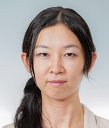
 Yasuko Matsubara
· 1 previous affiliation
- The University of OsakaSince 2019
- Full Professor · Since 2025
- Associate Professor · 2019–2025
Research Overview
Yasuko Matsubara focuses on time-series data mining, nonlinear dynamic systems, and the modeling of complex event streams. Her research trajectory spans the development of scalable algorithms for forecasting social influence and epidemiological patterns to recent advances in causal representation learning and anomaly detection. Currently, she investigates time-evolving causality and latent non-linear equation modeling for high-dimensional data streams.
Research Trajectory
Matsubara’s early research established foundational methods for analyzing and predicting patterns in large-scale, time-stamped event logs. In 2012, she introduced TriMine in Fast mining and forecasting of complex time-stamped events, a scalable algorithm designed to simultaneously discover hidden topics, user groups, and temporal patterns in massive web-click datasets. That same year, she developed SpikeM, detailed in Rise and fall patterns of information diffusion: model and implications, which provided a concise analytical model to explain the rapid propagation and subsequent decay of news and rumors across digital media.
Building on these models of diffusion, her work naturally extended into epidemiology and co-evolving sequences. She presented a unifying analytical model for large-scale disease data in FUNNEL: automatic mining of spatially coevolving epidemics, which successfully captured spikes, dives, and missing values across multiple contagious diseases and locations. She also contributed to automated sequence mining techniques in AutoPlait: automatic mining of co-evolving time sequences. By 2016, her focus deepened into non-linear dynamics. She developed $\Delta$-SPOT in Non-linear Time-series Analysis of Social Influence to automate the discovery of external shocks and cyclic events in web search datasets, contributing to the broader area of Spatio-Temporal Graph Networks for Infectious Disease Forecasting. To handle real-time streams, she introduced REGIMECAST in Regime Shifts in Streams: Real-time Forecasting of Co-evolving Time Sequences, an adaptive system inspired by natural dynamical systems to capture non-linear evolving patterns. She later modeled digital competition and seasonality with RFCast in Real-time Forecasting of Non-linear Competing Online Activities.
In recent years, Matsubara has expanded her methodological toolkit to include tensor decomposition, contrastive learning, and transformer architectures, applying these to both digital streams and biological data. In 2023, she explored multi-omics representation learning in MoCLIM: Towards Accurate Cancer Subtyping via Multi-Omics Contrastive Learning with Omics-Inference Modeling. Returning to complex event streams, she introduced CubeScope in Fast and Multi-aspect Mining of Complex Time-stamped Event Streams. This high-speed framework compresses and mines high-order tensors to identify large-scale temporal shifts, advancing the research direction of Resolving the Temporal Window Size Trade-off.
Throughout 2024, she collaborated on several specialized neural network architectures. She participated in developing probabilistic graph neural networks for sparse electronic health records in BernGraph: Probabilistic Graph Neural Networks for EHR-based Medication Recommendations, which transforms binary medical events into continuous probabilities to prevent signal degradation. She also contributed to self-supervised representation learning for neural signals in SplitSEE: A Splittable Self-supervised Framework for Single-Channel EEG Representation Learning. In the domain of time series forecasting, she collaborated on Fredformer: Frequency Debiased Transformer for Time Series Forecasting, a framework that addresses frequency bias by modeling data in the frequency domain, which aligns with the area of Frequency Wise Normalization for Signal Domain Generalization.
Her most recent work tackles causality, anomaly detection, and the underlying mathematical structures of dynamic systems. In 2025, she addressed the shifting nature of dynamic relationships in Modeling Time-evolving Causality over Data Streams. She also developed RedLamp, an unsupervised anomaly detector detailed in Robust and Explainable Detector of Time Series Anomaly via Augmenting Multiclass Pseudo-Anomalies, which uses soft labels and pseudo-anomalies to maintain robustness even when training data is contaminated. She further advanced spatial diffusion modeling with D-Tracker in D-Tracker: Modeling Interest Diffusion in Social Activity Tensor Data Streams, combining tensor decomposition with physics-inspired reaction-diffusion equations. To discover the hidden mathematical equations governing noisy time series, she introduced LaNoLem in Modeling Latent Non-Linear Dynamical System over Time Series. In 2026, she collaborated on estimating longitudinal treatment effects in A/B tests in Modeling Covariate Transition for Efficient Estimation of Longitudinal Treatment Effects in Randomized Experiments, and on determining the safety of model retraining after concept drift in When to Retrain after Drift: A Data-Only Test of Post-Drift Data Size Sufficiency.
Current Directions
The most recent papers in the evidence address the challenges of non-stationary environments and complex dynamical systems. Recent work investigates time-evolving causality, where relationships between variables shift dynamically over data streams rather than remaining fixed. Another major focus is the robust discovery of governing equations from noisy time series by mapping observations into latent spaces to separate signal from noise. Additionally, recent contributions explore practical machine learning reliability, including unsupervised anomaly detection using multiclass pseudo-anomalies and data-driven methods for determining exactly when to safely retrain models following sudden concept drift.
Profile updated
Loading new papers…
Other researchers whose papers cluster into the same research directions — a proxy for overlapping technical interests and shared intellectual neighborhoods.
See something wrong? Report a mistake