

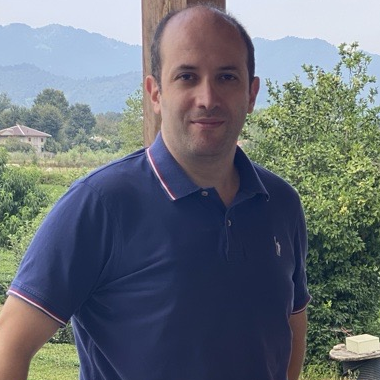
 Yashar Deldjoo
· 1 previous affiliation
- Polytechnic University of BariSince 2019
- Associate Professor · Since 2025
- Current
- Assistant Professor · 2019–2025
Research Overview
Yashar Deldjoo focuses on recommender systems, adversarial machine learning, and the integration of multimedia modalities into personalization algorithms. His early work explored the robustness of collaborative filtering against malicious attacks and the use of visual features in recommendation. More recently, his research investigates the evaluation and deployment of generative models and language agents within modern retrieval frameworks.
Research Trajectory
His early research included work in computer vision, specifically evaluating representation techniques in Sparse vs. Non-sparse: Which One Is Better for Practical Visual Tracking?, which demonstrated that non-sparse trackers could achieve competitive accuracy without the computational overhead of sparsity constraints.
Transitioning to the domain of recommender systems, he began investigating the vulnerabilities of collaborative filtering algorithms to malicious manipulation. He analyzed how injected counterfeit data impacts different user segments in Assessing the Impact of a User-Item Collaborative Attack on Class of Users. Building on this, he explored the underlying structural properties of user-item rating matrices that exacerbate these vulnerabilities in How Dataset Characteristics Affect the Robustness of Collaborative Recommendation Models. This foundational analysis of shilling attacks culminated in a comprehensive overview of the field, Adversarial Machine Learning in Recommender Systems: State of the art and Challenges. This work maps the landscape of subtle perturbations designed to force erroneous outputs, contributing to the broader research direction of Data Poisoning and Shilling in Recommender Systems.
In 2021, his focus expanded to include algorithmic equity and the integration of rich media. He proposed methods to measure both user and item parity, moving beyond simple accuracy metrics to address multi-stakeholder equity in A flexible framework for evaluating user and item fairness in recommender systems. Concurrently, he examined the role of deep feature extractors in visually-aware recommendation, evaluating different architectures in A Study on the Relative Importance of Convolutional Neural Networks in Visually-Aware Recommender Systems.
By 2022, these threads of robustness and multimedia integration matured significantly. He provided an updated taxonomy of both security defenses and generative adversarial networks in A Survey on Adversarial Recommender Systems: From Attack/Defense Strategies to Generative Adversarial Networks. In the multimedia domain, he detailed the algorithmic challenges of using side information—such as images and audio—to overcome cold-start problems in Multimedia Recommender Systems: Algorithms and Challenges. He also introduced techniques for disentangling visual features to improve personalization in Leveraging Content-Style Item Representation for Visual Recommendation.
In recent years, the trajectory shifted toward the paradigm of generative AI and large language models. He categorized the transition from traditional interaction matrices to systems leveraging rich text and image data in A Review of Modern Recommender Systems Using Generative Models (Gen-RecSys). This work aligns with the research area of Multimodal Feature Fusion for Recommender Systems and touches upon applications in the area of Grounding Language Models with External Knowledge Retrieval. He applied similar modern taxonomies to domain-specific challenges, highlighting the unique data requirements of apparel and style in A Review of Modern Fashion Recommender Systems.
Most recently, he has focused on the intersection of conversational AI and retrieval. He outlined the architecture of agentic systems in GENNEXT: The Next Generation of IR and Recommender Systems with Language Agents, Generative Models, and Conversational AI. Recognizing the limitations of traditional accuracy metrics for these open-ended systems, he proposed comprehensive assessment frameworks in Toward Holistic Evaluation of Recommender Systems Powered by Generative Models. This recent focus contributes to emerging areas such as Grounding Generative Models in Fixed Item Catalogs and Mitigating Error Cascades in Multi-Agent LLM Workflows.
Current Directions
The most recent work in the evidence addresses the paradigm shift brought by large language models and conversational agents in information retrieval and recommendation. A primary focus is the development of holistic evaluation frameworks for generative recommender systems. Because these systems produce open-ended text rather than simple ranked lists, traditional accuracy metrics are insufficient. Current efforts emphasize multi-faceted evaluation criteria—such as helpfulness, truthfulness, and harmlessness—across various system components and stakeholders. Additionally, the research explores the deployment of language agents, investigating how to structure multi-agent workflows and ground generative models effectively to prevent hallucinations and cascading errors in conversational recommendation settings.
Profile updated
| Paper | Venue | Year |
|---|---|---|
| MSAP: Multi-Step Adversarial Perturbations on Recommender Systems EmbeddingsGitHubsisinflab/ | Flairs | 2021 |
Loading new papers…
Other researchers whose papers cluster into the same research directions — a proxy for overlapping technical interests and shared intellectual neighborhoods.
See something wrong? Report a mistake