


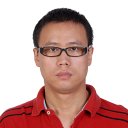
Research Overview
Yaqiang Wu focuses on multimedia information processing, document understanding, and open-world learning. His research trajectory spans from foundational scene text recognition and visual information extraction to advanced generalized category discovery and multimodal reasoning. Currently, his work investigates the integration of large language models with external tools and the refinement of foundation models for complex visual tasks.
Research Trajectory
Early in his observed trajectory, Wu contributed to foundational challenges in computer vision, particularly in the robust detection and recognition of text in natural scenes. In 2019, he participated in the development of Omnidirectional Scene Text Detection with Sequential-free Box Discretization, which addressed the label confusion issue inherent in quadrilateral bounding boxes by discretizing boxes into key edges. Building on this focus, he contributed to Decoupled Attention Network for Text Recognition (2020). This work tackled the "alignment drift" problem by separating character alignment from the decoding process, advancing the area of Mitigating Attention Drift in Sequence Recognition and the broader domain of Texture Induced False Positives in Computer Vision. Extending these capabilities to structured documents, he collaborated on Towards Robust Visual Information Extraction in Real World: New Dataset and Novel Solution (2021), which introduced the end-to-end VIES framework and the EPHOIE dataset, contributing to the research direction of End-to-End Scene Text Spotting.
Bridging industrial and academic research through his roles at the Lenovo Group AI Technology Center and Xi'an Jiaotong University, Wu's work expanded into natural language processing, educational data mining, and complex visual reasoning. In 2022, his research group introduced MatchPrompt: Prompt-based Open Relation Extraction with Semantic Consistency Guided Clustering. The following year, he led multiple projects applying advanced machine learning to educational contexts. He directed work on GPTR: Gestalt-Perception Transformer for Diagram Object Detection (2023), which utilized an encoder-decoder architecture inspired by Gestalt principles to handle the sparse visual features and low-frequency object categories typical of diagrams. This visual understanding was further integrated with text in Spatial-Semantic Collaborative Graph Network for Textbook Question Answering (2023), addressing the semantic ambiguity of educational diagrams and domain-specific terminology. Concurrently, his team proposed A prediction model of student performance based on self-attention mechanism (2023), which extracted high-order behavioral features from campus card data to predict academic outcomes.
By 2024, Wu's research heavily emphasized open-world learning and the orchestration of large language models (LLMs). In the domain of category discovery, he proposed A Tri-Branch Network with Prototype-aware Matching for Universal Category Discovery (2024), advancing the area of Semantic Labeling for Discovered Data Patterns. He also introduced Flipped Classroom: Aligning Teacher Attention with Student in Generalized Category Discovery (2024), a novel approach that dynamically updated a teacher model's attention based on the student model's focus, significantly improving performance in the research direction of Generalized Category Discovery for Open World Learning.
Alongside open-world learning, Wu continued to refine document and image processing techniques. He presented RDLNet: A Novel and Accurate Real-world Document Localization Method (2024) to handle complex backgrounds and low-contrast photographic conditions, and developed MRCI: Multi-range Context Interaction for Boundary Refinement in Image Segmentation (2024), a lightweight post-processing framework to enhance the boundary accuracy of foundational segmentation models. In educational data mining, he designed Programming knowledge tracing based on heterogeneous graph representation (2024). Furthermore, his group developed Knowledge Acquisition Disentanglement for Knowledge-based Visual Question Answering with Large Language Models (2024), a training-free framework that utilized LLMs to decouple complex questions into distinct image-based and knowledge-based sub-questions, reducing retrieval noise.
In his most recent observed work, Wu has continued to push the boundaries of multimodal intelligence and sequence learning. He contributed to Unleashing the Potential of Model Bias for Generalized Category Discovery (2025), which introduced Self-Debiasing Calibration to surgically adjust logits and mitigate category confusion, contributing to the area of Mitigating Seen Class Bias in Open World Learning. Returning to foundational text recognition challenges, he participated in PerturbCTC: Improving Alignment in Scene Text Recognition with Feature Perturbation Based CTC (2025), addressing the spiky distribution outputs and alignment issues inherent in Connectionist Temporal Classification. Additionally, he co-authored Empowering Multimodal LLMs with External Tools: A Comprehensive Survey (2025), synthesizing the rapidly evolving landscape of integrating expert models, web crawlers, and APIs into multimodal systems.
Current Directions
Based on his most recent publications, Wu's current research focuses on three primary themes. First, he is investigating the enhancement of Multimodal Large Language Models (MLLMs) through the integration of external tools and disentangled reasoning frameworks, enabling models to execute complex tasks and retrieve external knowledge with higher precision. Second, he is advancing Generalized Category Discovery (GCD) in open-world environments by developing novel calibration techniques that leverage, rather than suppress, the inherent biases of pre-trained models. Finally, he continues to refine foundational vision and sequence models, developing lightweight post-processing techniques for precise image segmentation boundaries and feature perturbation methods to improve alignment in scene text recognition.
Profile updated
Loading new papers…
Other researchers whose papers cluster into the same research directions — a proxy for overlapping technical interests and shared intellectual neighborhoods.
See something wrong? Report a mistake