

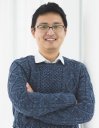
 Yaoqing Yang
· 4 previous affiliations
- Dartmouth CollegeSince 2023
- Assistant Professor · Since 2023
- Postdoc · 2019–2022
- Carnegie Mellon University2013–2019
- PhD student · 2013–2019
- Tsinghua University2009–2013
- Undergrad student · 2009–2013
Research Overview
Yaoqing Yang focuses on diagnosing and mitigating failures in machine learning models by analyzing geometric and spectral features in high-dimensional spaces. His trajectory spans early contributions to coded computation and 3D point cloud processing before shifting toward the theoretical foundations of deep learning. His current work investigates weight matrix spectral densities, loss landscapes, and the robustness of large language models and scientific machine learning systems.
Research Trajectory
Yang’s early research began in wireless communications and signal processing, as seen in his work on Doppler frequency offsets estimation and diversity reception scheme of high speed railway with multiple antennas on separated carriages (2012). He subsequently transitioned into distributed systems, making significant contributions to the area of Straggler-Resilient Coded Computation. In Coded Distributed Computing for Inverse Problems (2017), he introduced an error-correcting-code inspired technique to mitigate the bottleneck of slow workers (stragglers) in parallelized implementations of iterative methods. That same year, he developed the "ENCODED" technique in Computing Linear Transformations With Unreliable Components, embedding error correction directly within computations to ensure reliability and energy efficiency even when underlying circuit components are prone to failure. He later expanded on these distributed computing paradigms with Coded Elastic Computing (2019), designing techniques that allow machines to elastically join or leave a computation without sacrificing algorithm-level performance, advancing the broader direction of Algebraic Redundancy for Straggler Resilient Distributed Systems.
Parallel to his work in distributed systems, Yang explored unsupervised learning architectures for complex geometric data. He contributed to the research direction of Deep Learning on Unstructured 3D Point Clouds with FoldingNet: Point Cloud Auto-Encoder via Deep Grid Deformation (2018). This work proposed a novel end-to-end deep auto-encoder that deforms a canonical 2D grid onto an underlying 3D object surface, achieving low reconstruction errors for delicate structures while using a fraction of the parameters required by traditional decoders.
Entering the 2020s, Yang’s focus shifted toward the theoretical and geometric properties of deep neural networks, particularly their loss landscapes and decision boundaries. He investigated model robustness in Boundary thickness and robustness in learning models (2020). Building on this geometric perspective, he conducted a large-scale empirical analysis in Taxonomizing local versus global structure in neural network loss landscapes (2021). By systematically varying learning tasks, architectures, and data quality, this work explored how local metrics correlate with global generalization performance, contributing to the area of Linear Mode Connectivity in Deep Learning.
A major theme in his recent trajectory is the application of spectral analysis to understand and optimize large-scale models, aligning with the research direction of Heavy Tailed Self Regularization in Deep Neural Networks. This is exemplified by AlphaPruning: Using Heavy-Tailed Self Regularization Theory for Improved Layer-wise Pruning of Large Language Models (2024), which utilized the shape of weight matrices to dictate layer-wise pruning, allowing models like LLaMA-7B to reach high sparsity while remaining functional. He further explored the theoretical underpinnings of this phenomenon in From Spikes to Heavy Tails: Unveiling the Spectral Evolution of Neural Networks (2025), presenting a theory-informed setup to model the emergence of heavy-tailed empirical spectral densities during training. To ensure these diagnostic tools remain accurate, he developed the FARMS method in Eigenspectrum Analysis of Neural Networks without Aspect Ratio Bias (2025), which removes aspect ratio biases that can trick diagnostic tools into mischaracterizing layer training quality.
Alongside his spectral research, Yang has investigated the vulnerabilities of generative models. In Why LLM Safety Guardrails Collapse After Fine-tuning: A Similarity Analysis Between Alignment and Fine-tuning Datasets (2025), he analyzed how the similarity between a model's safety alignment data and its downstream fine-tuning data dictates the robustness of its guardrails against jailbreaks.
In 2026, Yang's research expanded into Scientific Machine Learning (SciML) and the fundamental dynamics of network optimization. He introduced a diagnostic framework in Unveiling Multi-regime Patterns in SciML: Distinct Failure Modes and Regime-specific Optimization, demonstrating that standard deep learning intuitions regarding flat minima do not always apply to scientific contexts. He also addressed the persistent issue of spectral bias in neural operators with Iterative Refinement Neural Operators are Learned Fixed-Point Solvers: A Principled Approach to Spectral Bias Mitigation, improving their ability to resolve fine-grained, high-frequency details essential for multi-physics modeling. Returning to optimization dynamics, his work provided an exact mathematical characterization of layer-wise learning rates in Balancing Learning Rates Across Layers: Exact Two-Step Dynamics and Optimal Scaling in Linear Neural Networks, revealing an asymmetry-to-balance transition during early training steps. Finally, synthesizing his ongoing work in spectral analysis and large language models, he introduced a data-free method for fingerprinting models in Spectral Signatures of Large Language Models, enabling precise model lineage tracing and performance prediction based purely on the mathematical shape of internal weight matrices.
Current Directions
Yang’s most recent work focuses on the intersection of spectral model diagnostics, Scientific Machine Learning (SciML), and the safety of Large Language Models (LLMs). A primary ongoing direction is the use of eigenspectrum analysis to evaluate and manipulate deep neural networks without relying on validation data. By analyzing the heavy-tailed spectral densities and spectral signatures of weight matrices, his group is developing principled methods for layer-wise pruning, hyperparameter tuning, and model lineage tracing.
In the domain of SciML, recent papers investigate the unique optimization landscapes of physics-informed models and neural operators. This includes identifying distinct training regimes (well-trained, under-trained, and over-trained) that defy conventional deep learning wisdom, as well as mitigating the spectral bias that prevents neural operators from capturing high-frequency physical phenomena. Additionally, his research addresses the fragility of LLM safety mechanisms, specifically exploring how the statistical similarity between alignment datasets and user fine-tuning datasets can lead to the collapse of safety guardrails.
Profile updated
Loading new papers…
Other researchers whose papers cluster into the same research directions — a proxy for overlapping technical interests and shared intellectual neighborhoods.
See something wrong? Report a mistake