

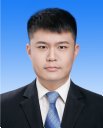
 Yao Mu
· 1 previous affiliation
- Shanghai Jiao Tong UniversitySince 2025
- Assistant Professor · Since 2025
- Current
Research Overview
Yao Mu focuses on embodied artificial intelligence, generative robot agents, and reinforcement learning for complex robotic control. His trajectory spans from foundational model-based reinforcement learning and autonomous driving decision frameworks to the integration of large language and diffusion models for robotic reasoning. Currently, his work emphasizes scaling general-purpose robotics through vision-language-action models and robust data synthesis for bimanual manipulation.
Research Trajectory
Yao Mu's early research focused on improving the sample efficiency and adaptability of reinforcement learning (RL) for continuous control. In 2021, he introduced Model-Based Reinforcement Learning via Imagination with Derived Memory, a framework that leverages latent dynamics models to simulate high-dimensional experiences, mimicking human memory prosthesis to enhance policy learning. Building on the need for adaptable policies in changing environments, he developed DOMINO: Decomposed Mutual Information Optimization for Generalized Context in Meta-Reinforcement Learning (2022). This work explicitly disentangles context variables to maximize mutual information, allowing agents to better adjust their behavior when transition dynamics shift due to complex confounders.
In 2023, his focus expanded to encompass autonomous driving, generative planning, and early embodied AI. He designed a Neural MPC-based Decision-making Framework for Autonomous Driving in Multi-Lane Roundabout, which generates real-time backup static paths to navigate complex traffic flows safely. With collaborators, he proposed AdaptDiffuser: Diffusion Models as Adaptive Self-evolving Planners, an evolutionary planning method that uses reward guidance to self-improve diffusion models on both seen and unseen tasks, advancing the research direction of Integrating Kinematic Constraints into Neural Trajectory Predictors. That same year, he presented EmbodiedGPT: Vision-Language Pre-Training via Embodied Chain of Thought, a foundational model that bridges high-level linguistic planning with low-level motor control by introducing chain-of-thought reasoning to physical manipulation tasks.
Moving into 2024, Mu extensively explored the integration of large language models (LLMs) and diffusion models for complex, multi-agent, and long-horizon robotic tasks. He created CAMON: Cooperative Agents for Multi-Object Navigation with LLM-based Conversations, a decentralized framework that enables robots to autonomously divide tasks and share semantic room descriptions with minimal communication overhead. To bridge the gap between high-level instructions and physical execution, he built RoboCodeX: Multimodal Code Generation for Robotic Behavior Synthesis, which translates human commands into executable Python code by predicting physical constraints, contributing to the area of Functional Grasp Synthesis for Robotic Manipulation. For bimanual coordination, he formulated DAG-Plan: Generating Directed Acyclic Dependency Graphs for Dual-Arm Cooperative Planning, utilizing LLMs to decompose long-horizon tasks into explicit temporal dependencies for parallel execution. He also engineered SkillDiffuser: Interpretable Hierarchical Planning via Skill Abstractions in Diffusion-Based Task Execution, combining discrete skill learning with diffusion models to support the broader direction of Scaling Robotic Control to Long-Horizon Multi-Stage Tasks.
In 2025, his work increasingly addressed the nuances of physical interaction, perception, and imitation. His research explored visual imitation learning in FMimic: Foundation models are fine-grained action learners from human videos, which harnesses foundation models to directly learn generalizable skills without relying on pre-defined motion primitives. He extended LLM-driven reasoning to quadrupedal locomotion with Adaptive Interactive Navigation of Quadruped Robots using Large Language Models, enabling robots to proactively interact with obstacles in impassable environments. To improve 3D manipulation, he introduced G3Flow: Generative 3D Semantic Flow for Pose-aware and Generalizable Object Manipulation, integrating 3D generative models and robust pose tracking to maintain semantic understanding even under occlusions. He further addressed the physical accuracy of generative policies in DexHandDiff: Interaction-aware Diffusion Planning for Adaptive Dexterous Manipulation, jointly modeling state-action dynamics to solve the "ghost state" problem in complex, goal-adaptive tasks.
By 2026, Mu's collaborative and leadership efforts focused on scaling embodied AI through robust simulation and data generation. He contributed to PhysForge: Generating Physics-Grounded 3D Assets for Interactive Virtual World, a framework combining vision-language and diffusion models to create simulation-ready 3D objects endowed with materials and functional joints. He also participated in developing From Perception to Planning: Evolving Ego-Centric Task-Oriented Spatiotemporal Reasoning via Curriculum Learning, which teaches vision-language models to reason about dynamic environments through a massive, multi-stage curriculum. Finally, his group introduced RoboTwin 2.0: A Scalable Data Generator and Benchmark with Strong Domain Randomization for Robust Bimanual Robotic Manipulation, a closed-loop simulation framework that leverages multimodal LLMs to synthesize physically valid training data, driving forward the research area of Scaling General Purpose Robotics via Vision Language Action Models. Mu also collaborated on DeformGen: Dynamics-Based Topology Augmentation for Deformable Manipulation Policy Learning, which generates topology-coherent states and warps trajectories to advance Scaling Robotic Learning Beyond Expert Demonstrations, and contributed to RoboMorpher: Scaling Robot Morphology Representations for Cross-Embodiment Action Prediction, which tokenizes joint actions alongside link poses for cross-embodiment policies. In parallel, they contributed to Foresight Forcing: Learning Spatial Foresight for Robotic Manipulation, a world action model framework that distills 3D feature transitions into spatial transition queries for geometry-aware action prediction.
Current Directions
The most recent papers in the evidence indicate a strong focus on scaling robotic learning through advanced simulation, synthetic data generation, and egocentric reasoning. Recent work investigates the creation of physics-grounded 3D assets and highly randomized simulation environments to overcome the data scarcity bottleneck in bimanual and dexterous manipulation. Additionally, there is an ongoing emphasis on training vision-language models to perform complex spatiotemporal reasoning directly from egocentric perspectives, moving beyond static planning to dynamic, closed-loop execution in physically realistic virtual and real-world environments.
Profile updated
Loading new papers…
Other researchers whose papers cluster into the same research directions — a proxy for overlapping technical interests and shared intellectual neighborhoods.
See something wrong? Report a mistake