

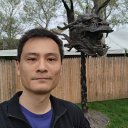
 Yao Lu
· 3 previous affiliations
- National University of SingaporeSince 2024
- Assistant Professor · Since 2024
- Microsoft (United States)2018–2023
- Researcher · 2018–2023
- University of Washington2013–2018
- PhD student · 2013–2018
10 other authors named Yao Lu: Yao Lu (physical intelligence · 66 papers), Yao Lu (Harbin Institute of Technology · 65 papers), Yao Lu (Shenzhen MSU-BIT University · 48 papers), Yao Lu (18 papers), Yao Lu (University College London · 17 papers), and 5 more
Research Overview
Yao Lu focuses on the intersection of artificial intelligence, systems, and their applications in cloud infrastructure and scientific domains. His research spans the development of next-generation AI infrastructures, machine learning systems, and agentic workflows, with a particular emphasis on large language models (LLMs) and reinforcement learning. Currently an Assistant Professor at the National University of Singapore, Lu’s work addresses the challenges of deploying complex AI models across heterogeneous environments, optimizing video analytics, and enhancing the efficiency of generative AI through system-level innovations.
Research Trajectory
The evolution of Lu’s research reflects a transition from core computer vision and image understanding toward the systemic challenges of large-scale machine learning and generative AI. His early work, beginning around 2010, was primarily concerned with semantic indexing and visual perception. During this period, he investigated methods for improving video tagging and image attention, often utilizing fusion frameworks to integrate explicit and implicit correlations in visual data. This phase established a foundation in Abstractive Synthesis and Novel Phrase Generation and visual feature extraction, which would later inform his work on more complex video analytics.
During his doctoral studies at the University of Washington and his decade-long tenure at Microsoft Research Redmond, Lu’s focus shifted toward the structural and temporal aspects of computer vision. He developed novel approaches for edge detection, object proposals, and crowd counting, moving away from static image analysis toward dynamic, real-time applications. This period also saw an increased interest in Robust Temporal Alignment for Degraded Video Restoration, where he explored how temporal redundancy in video sequences could be leveraged for better accuracy in restoration and localization tasks.
As AI models grew in complexity, Lu’s research increasingly targeted the systems that support them. He began addressing the computational bottlenecks of video analytics, participating in the development of systems like Zeus and EVA. These projects sought to optimize action localization and query processing in large-scale video databases, often incorporating Efficient Correlation Volumes for High Resolution Motion Estimation to track pixel-level changes across frames efficiently. His work during this time bridged the gap between high-level AI tasks and low-level system performance, particularly in heterogeneous environments where compute resources vary between the edge and the cloud.
In recent years, Lu has focused on the infrastructure required for the era of large generative models and autonomous agents. His current research directions involve optimizing LLM serving, developing composable agentic workflows, and improving the alignment of models through innovative routing mechanisms. This work addresses the "needle in a haystack" problem of Parallel Decomposition for Scaling Long Video Understanding and the memory constraints of modern vision-language models. Additionally, he has explored Conservative Value Estimation for Offline Reinforcement Learning and The Reward Engineering Bottleneck in Reinforcement Learning to create more robust and scalable AI agents for real-world applications, including finance and robotics.
Current Directions
Lu’s current research is centered on three primary pillars: Next-Gen AI infrastructures, agentic workflows, and AI applications in science. A major focus is the development of "service fabrics" for LLMs, which treat complex workflows—such as Reinforcement Learning from Human Feedback (RLHF) and retrieval-augmented generation (RAG)—as shared services rather than isolated jobs. This approach aims to reduce the cost and energy consumption of serving large models while maintaining low latency.
He is also investigating the optimization of long-text and long-video processing. Through collaborative projects like OkraLong and SpecBranch, he explores how speculative decoding and adaptive retrieval can overcome the prohibitive costs of processing massive contexts. Furthermore, his work on reward model routing seeks to improve the alignment of LLMs by dynamically directing queries to specialized reward models, ensuring that the evaluation of model outputs is both accurate and context-aware.
Representative Work
Learning attention map from images In this early work, Lu proposed a context-aware model for predicting attention and eye fixation maps. By utilizing figure-ground maps and considering both pixel-wise and region-wise interactions, the research demonstrated that perceptual organization mechanisms could significantly improve the accuracy of attention selection models. This paper marked a key step in Lu's early career focus on the intersection of human perception and computer vision.
Closing the Loop for Edge Detection and Object Proposals This research addressed the traditional separation of edge detection and object proposal tasks in computer vision. Lu argued that these procedures should be unified, proposing a novel objectness metric that ranks proposal boxes based on the size and edge intensity of closed contours. By constructing global object hierarchies, the work improved edge detection through top-down object proposals, demonstrating the benefits of a unified perceptual organization framework.
Crowd Counting with Density Adaption Networks Lu introduced Density Adaption Networks (DAN), a deep learning framework designed to handle varying crowd densities in real-time video. The system employs a spatial gating mechanism to switch between specialized networks for low-density and high-density areas. This approach achieved state-of-the-art accuracy on major benchmarks while maintaining high processing speeds, addressing the "one-size-fits-all" limitation of previous crowd-counting architectures.
Serving and Optimizing Machine Learning Workflows on Heterogeneous Infrastructures This paper explores the challenges of machine learning inference in tiered computing environments that include edge devices, local hubs, and cloud datacenters. Lu developed a platform for optimizing ML workflows across these heterogeneous infrastructures, leveraging model variants (such as pruned or quantized versions) to balance performance and resource constraints. This work represents a significant shift toward the systems-oriented research that characterizes his more recent career.
FlowMesh: A Service Fabric for Composable LLM Workflows As the senior author, Lu presented FlowMesh, a multi-tenant service fabric designed for complex LLM workflows. FlowMesh reimagines agentic pipelines and RLHF as a single shared service, using a global control plane to deduplicate work and batch requests across users. The system achieves substantial reductions in cost and energy usage, providing a scalable infrastructure for the next generation of generative AI applications.
Reward Model Routing in Alignment In this work, Lu addressed the limitations of using a single reward model for LLM alignment. He proposed a routing mechanism that directs different types of queries to specialized reward models, acknowledging that no single judge is an expert in all domains. This approach enhances the precision of the alignment process, ensuring that model responses are evaluated by the most appropriate specialized "judge."
In addition to these primary contributions, Lu has participated in several large-scale collaborative projects. He contributed to the development of EVA: An End-to-End Exploratory Video Analytics System, a video database management system designed for extensibility and holistic optimization. He also collaborated on SpecBranch: Speculative Decoding via Hybrid Drafting and Rollback-Aware Branch Parallelism, which introduces branch parallelism to eliminate waiting bubbles in speculative decoding, and Precise Temporal Action Localization by Evolving Temporal Proposals, which refined the boundaries of action detection in long, untrimmed videos.
Profile updated
Loading new papers…
Other researchers whose papers cluster into the same research directions — a proxy for overlapping technical interests and shared intellectual neighborhoods.
See something wrong? Report a mistake