

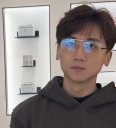
 Yansong Qu
· 2 previous affiliations
- Xiamen UniversitySince 2023
- PhD student · 2023–2027
- Beihang University2020–2023
- MS student · 2020–2023
Research Overview
Yansong Qu focuses on 3D generation, 3D perception, and scene understanding, with an emphasis on efficient rendering and interactive editing techniques. His trajectory spans from optimizing neural radiance fields for sparse inputs to advancing 3D Gaussian splatting for open-vocabulary interaction and drag-based manipulation. Currently, his work investigates accelerated autoregressive mesh generation and scalable visual geometry processing for long sequences.
Research Trajectory
The early phase of his research focused on overcoming the practical limitations of Neural Radiance Fields (NeRF) for scene reconstruction and editing. Addressing the laborious nature of capturing hundreds of high-quality images for room-scale environments, he introduced SG-NeRF: Semantic-guided Point-based Neural Radiance Fields. This method leverages sparse 3D point clouds augmented with neural features as geometry constraints, enabling high-quality rendering from just tens of input images. In parallel, he participated in developing RIP-NeRF: Learning Rotation-Invariant Point-based Neural Radiance Field for Fine-grained Editing and Compositing. By combining implicit NeRF-based representations with explicit point-based scaffolds, this research enabled fine-grained editing and cross-scene compositing that remains robust even when the orientation of the explicit scaffold is altered.
As his focus expanded to text-driven generation and multi-modal perception, he contributed to the area of Compositional and Scalable 3D Scene Synthesis through his work on Director3D: Real-world Camera Trajectory and 3D Scene Generation from Text. This system generates entire real-world scenes featuring complex backgrounds and natural camera movements from text prompts. The work engages directly with the research direction of Bridging the Synthetic to Real Gap in 3D Reconstruction and utilizes techniques for Lifting 2D Diffusion Priors for 3D Generation to model the complexities of the physical world, thereby advancing the broader area of Neural Radiance Fields for Unbounded Outdoor Scenes.
Exploring vulnerabilities in multi-modal systems, he also collaborated on Cross-Modality Perturbation Synergy Attack for Person Re-identification. This research exposed security flaws in cross-modality person re-identification systems by optimizing a universal perturbation across both visible and infrared modalities, significantly degrading identification accuracy. This study contributes to the research direction of Bridging the Modality Gap in Cross Spectral Vision and the broader area of Unified Multi-Modal Perception for Heterogeneous Sensor Suites.
Returning to scene understanding, he developed GOI: Find 3D Gaussians of Interest with an Optimizable Open-vocabulary Semantic-space Hyperplane. This framework integrates semantic features from 2D vision-language foundation models into 3D Gaussian Splatting (3DGS). By employing an optimizable semantic-space hyperplane and compressing high-dimensional features into compact vectors using scene priors, the method allows for the open-vocabulary localization of specific regions within a 3D space based on natural language instructions. His research subsequently advanced to precise geometric manipulation with Drag Your Gaussian: Effective Drag-Based Editing with Score Distillation for 3D Gaussian Splatting. Addressing the limitations of text-guided editing—which often fails at complex geometric changes—this work introduced a drag-based editing method for 3DGS. By incorporating score distillation, the approach enables accurate spatial control over edits, allowing for structural modifications rather than just texture updates.
Recent efforts emphasize inference efficiency and sequence scaling. With collaborators, he designed XSpecMesh: Quality-Preserving Auto-Regressive Mesh Generation Acceleration via Multi-Head Speculative Decoding, a framework that accelerates auto-regressive 3D mesh generation. Using a multi-head speculative decoding strategy, the system predicts multiple tokens in parallel and verifies them in a single forward pass, achieving substantial speedups while preserving geometric and topological quality. Further work in this period includes participation in FastVGGT: Fast Visual Geometry Transformer, a training-free framework that enables visual geometry transformers to process sequences of up to 1,000 frames. By strategically pruning redundant tokens through a novel partitioning strategy, the method accelerates inference and reduces error accumulation over long trajectories.
Current Directions
The most recent papers in the evidence address the efficiency, scalability, and controllability of 3D generation and perception models. Recent work investigates accelerated inference for autoregressive 3D mesh generation, utilizing speculative decoding strategies that maintain strict geometric and topological fidelity while significantly reducing computational overhead. Additionally, ongoing research explores training-free acceleration techniques for visual geometry transformers, enabling the processing of extensive image sequences while mitigating error accumulation over time. A continuing theme in this recent work is the precise, interactive manipulation of 3D representations, moving beyond simple texture modifications to allow for complex, user-guided geometric edits in 3D Gaussian Splatting frameworks.
Profile updated
Loading new papers…
Other researchers whose papers cluster into the same research directions — a proxy for overlapping technical interests and shared intellectual neighborhoods.
See something wrong? Report a mistake