

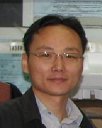
 Yanming Shen
· 3 previous affiliations
- Dalian University of TechnologySince 2008
- Full Professor · Since 2012
- Associate Professor · 2008–2012
- New York University2001–2008
- Postdoc · 2007–2008
- PhD student · 2001–2007
- Tsinghua University1995–2000
- Undergrad student · 1995–2000
Research Overview
Yanming Shen focuses on graph neural networks, spatio-temporal traffic forecasting, and the integration of large language models with molecular biology. His early work addressed network scheduling and parallel data mining before shifting toward deep learning architectures for complex graph and traffic data. Recently, his research explores adapting foundation models for scientific domains, particularly in protein design and molecular graph understanding.
Research Trajectory
Shen's early research addressed foundational problems in network systems and parallel computing. He investigated peer-to-peer architectures for multimedia distribution in Streaming layered encoded video using peers and later developed high-throughput scheduling algorithms for crosspoint buffered switches in SQUID: A Practical 100% Throughput Scheduler for Crosspoint Buffered Switches. As his focus expanded to data mining and sensor systems, his lab developed GPU-accelerated parallel algorithms for frequent itemset mining. This work, detailed in D2P-Apriori: A deep parallel frequent itemset mining algorithm with dynamic queue, introduced dynamic queues and graph-join methods to adapt candidate generation to GPU architectures. He also oversaw work on multi-sensor fusion for adaptive gait detection using foot-mounted inertial sensors in Adaptive gait detection based on foot-mounted inertial sensors and multi-sensor fusion.
Entering the 2020s, Shen made significant contributions to the theoretical and practical capabilities of graph neural networks (GNNs). To address the limitations of standard aggregation functions—such as SUM or MEAN—that fail to distinguish between different neighborhood structures, he introduced rank-preserving layers in Breaking the Expressive Bottlenecks of Graph Neural Networks. This work advanced the study of higher-order expressivity and methods for overcoming low-rank bottlenecks in attention mechanisms. Building on this foundation, he developed continuous, learnable masking mechanisms to extract task-relevant subgraphs in Soft-mask: Adaptive Substructure Extractions for Graph Neural Networks. By enabling sparse aggregation, this approach filters out noise and improves representation power, contributing to broader efforts in preserving structural integrity and adaptive graph coarsening.
Concurrently, Shen applied deep learning architectures to complex urban mobility and traffic forecasting problems. He participated in developing models to overcome data scarcity in road networks, contributing to the research direction of Cross-City Transfer Learning for Urban Spatio-Temporal Prediction with the paper NodeTrans: A Graph Transfer Learning Approach for Traffic Prediction. His group further explored generative adversarial networks and multi-graph convolutional networks for traffic forecasting in TFGAN: Traffic forecasting using generative adversarial network with multi-graph convolutional network. To improve origin-destination travel time estimation, he oversaw the design of feature-selection modules and gating mechanisms in GSTA: gated spatial-temporal attention approach for travel time prediction. This focus on travel time prediction continued with clustering methods based on nonnegative matrix factorization in Travel time prediction based on route links' similarity and the integration of temporal convolutional networks to handle spatial sparseness in STTG-TTE: spatial-temporal gated multi-modality approach for travel time estimation based on temporal convolutional networks.
Most recently, Shen's trajectory has expanded to intersect large language models (LLMs) with scientific machine learning, particularly in molecular biology and protein design. He guided the development of methods to align graph tokens with LLM vocabularies in Graph2Token: Make LLMs Understand Molecule Graphs, enabling foundation models to process molecular data without extensive architectural fine-tuning. This work supports broader areas such as explainable graph neural networks and graph representations for molecular property prediction. He continued to explore this intersection in Bridging Molecular Graphs and Large Language Models. Returning to traffic systems with transformer architectures, he also explored domain-specific prompt memory in MDPM: Modulating domain-specific prompt memory for multi-domain traffic flow prediction with transformers. In the domain of protein optimization, his lab proposed framing LLM adaptation as the optimization of external domain expertise rather than parameter updates, as detailed in Language-Guided Expertise Evolution for Protein Optimization.
Current Directions
Recent work investigates the adaptation of large language models for specialized scientific and spatio-temporal domains. The most recent papers in the evidence address the challenge of integrating structured graph data—such as molecular structures—into the reasoning pathways of foundation models. This involves developing token-alignment strategies that allow LLMs to natively interpret molecular graphs and optimizing external knowledge pools to guide protein design without prohibitive parameter fine-tuning. Alongside these scientific applications, ongoing research continues to refine multi-domain traffic flow prediction by leveraging transformer architectures and domain-specific prompt memory.
Profile updated
| Title | Venue | Year |
|---|---|---|
| From graphs to tokens: Substructure-aware molecular representation for large language models | Information Processing & Management | 2026 |
| Language-Guided Expertise Evolution for Protein Optimization | RSI @ ICLR | 2026 |
| A Heterogeneous Graph Optimization Perspective for Multi-Agent System Workflows | Openreview | 2026 |
| KnowEvo: Knowledge Evolution for Protein Optimization | arXiv | 2026 |
| Think2Go: Generative Next POI Recommendation with LLM Reasoning | KDD | 2026 |
| Matrix-Free Stochastic Training of Low-Rank Spectral Graph Learning via Randomized Adaptive Spectral Estimation | NeurIPS | 2026 |
| Path-Aware Few-Shot Knowledge Graph Completion | IEEE Trans. Artif. Intell | 2025 |
| MDPM: Modulating domain-specific prompt memory for multi-domain traffic flow prediction with transformers | Knowledge-Based Systems | 2025 |
| Motif-driven molecular graph representation learning | Expert Systems with Applications | 2025 |
| Formulating and Representing Multiagent Systems With Hypergraphs | IEEE TNNLS | 2025 |
Loading new papers…
Other researchers whose papers cluster into the same research directions — a proxy for overlapping technical interests and shared intellectual neighborhoods.
See something wrong? Report a mistake