

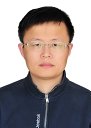
 Yanjun Huang
· 5 previous affiliations
- Tongji UniversitySince 2020
- Full Professor · Since 2021
- Professor · Since 2020
- University of Waterloo2012–2016
- Postdoctoral Fellow · 2012–2016
- Hunan University2015
- Master Student Supervisor · 2015
- CrossChasm Technologies (Canada)2013
- Intern · 2013
- Jilin University2009–2012
- Master’s Degree, Automotive Engineering Technology/Technician · 2009–2012
Research Overview
Yanjun Huang focuses on model predictive control, trajectory forecasting, and robust scene understanding for autonomous vehicles. His trajectory spans from power management in hybrid systems to ethical decision-making frameworks and social trajectory prediction for highway pilots. Currently, his work addresses causality-inspired invariant representations to improve the out-of-distribution generalization of autonomous driving models.
Research Trajectory
Early work by Huang centered on the application of model predictive control (MPC) to complex vehicle systems. This included the development of an MPC-based power management strategy for a series hybrid electric tracked bulldozer in 2017, demonstrating the utility of predictive optimization in heavy machinery.
By 2020, this focus on predictive control transitioned toward the domain of autonomous driving. Huang contributed to the design of an Ethical Decision-Making Platform in Autonomous Vehicles With Lexicographic Optimization Based Model Predictive Controller. This framework addressed the sensitive challenge of inevitable crashes by implementing rational ethical rules through a lexicographic optimization approach, which prioritizes specific obstacles and constraints during the decision-making process.
Continuing in the autonomous vehicle domain, Huang participated in a comprehensive synthesis of the field in Model predictive control for autonomous ground vehicles: a review. This 2021 work examined the application of optimal control methods to both single and multiple autonomous ground vehicles. It situated MPC within several broader research areas, including the direction of Mitigating String Instability in Mixed Autonomy Traffic and the area of Decomposing Optimization for Distributed Predictive Control. Furthermore, the review explored how predictive algorithms intersect with the research direction of Scaling Multi-Agent Systems Beyond Centralized Control and the broader area of Unifying Behavioral Planning and Trajectory Control.
In subsequent years, Huang's research expanded to incorporate attention mechanisms and transformer architectures for complex highway scenarios. He oversaw the development of the Enhanced Social Trajectory Prediction Transformer for L3 Highway Pilots. Because full-coverage high-definition maps are often prohibitively expensive, this 2023 framework was designed to handle coordinate-based inputs without relying on HD maps. By integrating a Social Encoder module into a Transformer network, the system improved the prediction of surrounding vehicles' trajectories to enhance driving safety and comfort.
Most recently, Huang has investigated causality and robust perception in autonomous systems. He contributed to CURVE: Learning Causality-Inspired Invariant Representations for Robust Scene Understanding via Uncertainty-Guided Regularization, a 2026 framework that utilizes uncertainty to prune unreliable connections within scene graphs. By disentangling stable physical interactions from environment-specific noise such as weather or lighting, this approach improves out-of-distribution generalization. This work aligns with the broader research direction of addressing Upstream Detection Bottlenecks in Structured Visual Reasoning.
Current Directions
The most recent work in the evidence indicates a focus on the robustness and generalization of perception systems in autonomous driving. Moving beyond traditional predictive control and trajectory forecasting, current efforts investigate how causality-inspired representations can improve scene understanding. By leveraging uncertainty to filter out environmental noise—such as adverse weather or variable lighting—this research aims to isolate stable physical interactions. The overarching goal of these recent investigations is to achieve reliable out-of-distribution generalization in complex, real-world driving scenarios where structured visual reasoning is critical.
Profile updated
Loading new papers…
Other researchers whose papers cluster into the same research directions — a proxy for overlapping technical interests and shared intellectual neighborhoods.
See something wrong? Report a mistake