

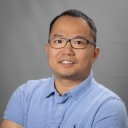
 Yanjie Fu
· 1 previous affiliation
- Arizona State UniversitySince 2023
- Associate Professor · Since 2023
Research Overview
Yanjie Fu focuses on automated feature engineering, spatial data mining, and the optimization of large language models. His trajectory spans from early work in geographic dependency modeling to the development of reinforcement learning frameworks for continuous feature selection. Most recently, his research investigates autonomous data agents and efficient reasoning in multimodal architectures.
Research Trajectory
Fu’s early research investigated spatial data mining and urban computing, with a particular emphasis on modeling geographic dependencies. In 2014, he introduced methods for real estate appraisal that leveraged mobile data to capture the influence of neighborhood characteristics and peer estates in Exploiting geographic dependencies for real estate appraisal: a mutual perspective of ranking and clustering. He expanded on this spatial analysis by incorporating the functional diversity of communities, developing a geographic function learning model in Real Estate Ranking via Mixed Land-use Latent Models.
Transitioning toward broader challenges in statistical machine learning, his work addressed high-dimensional data environments. With collaborators, he contributed to the research direction of Correcting Shrinkage Bias in High Dimensional Estimation through the development of a de-biased classification algorithm for "High Dimension Low Sample Size" data in De-biasing Covariance-Regularized Discriminant Analysis.
A central pillar of Fu’s trajectory is the automation of feature engineering and selection. To address the challenge of Taming the Combinatorial Explosion in Feature Selection, he explored reinforcement learning as a globally optimal search strategy. This began with Automating Feature Subspace Exploration via Multi-Agent Reinforcement Learning, a framework later expanded in Automated Feature Selection: A Reinforcement Learning Perspective. Advancing the area of Symbolic Automated Feature Engineering, he developed a cascading reinforcement learning approach to discover human-readable, mathematically crossed features in Group-wise Reinforcement Feature Generation for Optimal and Explainable Representation Space Reconstruction.
Recognizing the limitations of discrete search spaces, Fu subsequently shifted toward the broader area of Optimizing Discrete Structures via Continuous Latent Spaces. He led the development of the GAINS framework in Beyond Discrete Selection: Continuous Embedding Space Optimization for Generative Feature Selection, which reframed feature selection as a continuous, gradient-based optimization problem, while also addressing Hyperparameter Sensitivity in Complex Machine Learning Frameworks. He applied similar continuous-space gradient steering to postfix expressions in Reinforcement-Enhanced Autoregressive Feature Transformation: Gradient-steered Search in Continuous Space for Postfix Expressions.
In recent years, Fu has integrated large language models (LLMs) and multi-agent systems into data engineering pipelines. Contributing to the research direction of Role Specialization in Multi-Agent Architectures, his lab introduced an unsupervised feature engineering framework utilizing a "duet" of generator and critic LLM agents in Unsupervised Feature Transformation via In-context Generation, Generator-critic LLM Agents, and Duet-play Teaming. This autonomous paradigm was further formalized in Dataforge: A Data Agent Platform for Autonomous Data Engineering, which bridges raw datasets and AI-ready features through hierarchical routing.
His investigation of LLMs extends to their fundamental reasoning capabilities and application in complex optimization tasks. He explored the fine-tuning of models for whole-page optimization using implicit user feedback in Enhanced Whole Page Optimization via Mixed-Grained Reward Mechanism-Adapted Language Models, and leveraged edge information for recommendations in LLM-Enhanced User-Item Interactions: Leveraging Edge Information for Optimized Recommendations. Addressing internal model dynamics, he proposed lightweight post-training methods in Efficient Post-Training Refinement of Latent Reasoning in Large Language Models and analyzed the limits of contextual persuasion on LLM inference states in Not All Answers Are Contextually Persuadable: Inference Dynamics in Large Language Models under Contextual Influence.
Concurrently, Fu has expanded into multimodal architectures. He developed a novel contrastive learning framework that translates numerical time series data into visual and textual representations in Teaching Time Series to See and Speak: Forecasting with Aligned Visual and Textual Perspectives. He also participated in research on pruning redundant visual tokens to accelerate vision-language models in MMTok: Multimodal Coverage Maximization for Efficient Inference of VLMs. Returning to his early focus on urban environments, he recently co-authored work applying generative AI to spatial regeneration and urban planning in Generative AI for spatial regeneration planning: Integrating urban planning theories and ethics.
Current Directions
The most recent papers in the evidence indicate a strong focus on the intersection of large language models, autonomous agents, and multimodal reasoning. Current work investigates how specialized multi-agent architectures can fully automate complex data engineering and feature transformation pipelines. Additionally, Fu is exploring the internal inference dynamics of LLMs—particularly how latent reasoning can be refined post-training and the extent to which models are influenced by contextual prompting. His recent trajectory also highlights an emerging interest in multimodal efficiency, including the alignment of visual and textual perspectives for time series forecasting and the optimization of vision-language models through token pruning.
Profile updated
Loading new papers…
Other researchers whose papers cluster into the same research directions — a proxy for overlapping technical interests and shared intellectual neighborhoods.
See something wrong? Report a mistake