

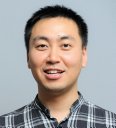
 Yangming Ou
· 1 previous affiliation
- Harvard UniversitySince 2023
- Associate Professor · Since 2023
Research Overview
Yangming Ou focuses on medical image analysis, deformable registration, and clinical reasoning models. His early trajectory established robust frameworks for multi-modal image registration and pediatric neuroimaging processing across diverse clinical environments. More recently, his work addresses complex clinical decision-making by integrating visual and domain knowledge into specialized reasoning models for healthcare.
Research Trajectory
Yangming Ou’s early research established foundational methods in medical image registration, particularly focusing on complex, multi-modal alignments. He introduced a joint segmentation and registration framework in Non-rigid registration between histological and MR images of the prostate: A joint segmentation and registration framework, which reconstructed 3D histological volumes from 2D slices and aligned them with MRI by maximizing landmark similarity and cancer region overlap. He subsequently contributed to bridging landmark-based and iconic-based voxel-wise methods using Markov Random Field theory in Simultaneous Geometric - Iconic Registration. This line of methodological development led to DRAMMS: Deformable registration via attribute matching and mutual-saliency weighting, a core deformable registration algorithm. The practical utility of the DRAMMS framework was later validated in clinical contexts, such as analyzing spatio-temporal tumor changes in Quantification of tumor changes during neoadjuvant chemotherapy with longitudinal breast DCE-MRI registration.
As his work progressed, Ou increasingly focused on the challenges of processing neuroimaging data across diverse clinical environments, particularly in pediatric populations. He developed automated techniques for Brain extraction in pediatric ADC maps, toward characterizing neuro-development in multi-platform and multi-institution clinical images, ensuring accuracy and consistency across different scanning sites and platforms. Recognizing that multi-site data introduces significant variability, he addressed preprocessing bottlenecks by introducing automated field-of-view adjustments in Field of View Normalization in Multi-Site Brain MRI. He also extended his registration expertise to intraoperative applications, guiding the development of Deformable MRI-Ultrasound registration using correlation-based attribute matching for brain shift correction: Accuracy and generality in multi-site data.
Alongside his primary focus on registration and preprocessing, Ou participated in collaborative efforts to model anatomical changes over time and during early development. This included contributing to temporal shape analysis using spectral signatures in eCurves: A Temporal Shape Encoding, and participating in the development of age-specific templates for the developing brain in Infant FreeSurfer: An automated segmentation and surface extraction pipeline for T1-weighted neuroimaging data of infants 0-2 years.
In subsequent years, his research incorporated advanced machine learning techniques to tackle difficult segmentation tasks, particularly for targets with low-contrast boundaries. He directed research on nasopharyngeal carcinoma (NPC), a highly infiltrative tumor that is difficult to distinguish from surrounding tissues. This work yielded a convolutional neural network with recurrent attention modules in Achieving Accurate Segmentation of Nasopharyngeal Carcinoma in MR Images Through Recurrent Attention. Building on this, he oversaw the creation of a collaborative dictionary learning model in A Collaborative Dictionary Learning Model for Nasopharyngeal Carcinoma Segmentation on Multimodalities MR Sequences, which integrated information from multiple MRI sequences into a shared latent space to improve segmentation accuracy.
Most recently, Ou's trajectory has expanded into the intersection of medical imaging and large language models, focusing on complex clinical decision-making. In Visual and Domain Knowledge for Professional-level Graph-of-Thought Medical Reasoning, he and his collaborators introduced the HIE-Reasoning benchmark and the Clinical Graph of Thoughts (CGoT) model. This approach mimics a clinician’s workflow by decomposing high-level prognoses into structured intermediate reasoning steps, significantly improving the prediction of neonatal neurocognitive outcomes.
Current Directions
The most recent papers in the evidence indicate a strong focus on integrating visual data with advanced reasoning models to support complex clinical decision-making. A primary emphasis is the research direction of Specialized Clinical Reasoning in Large Language Models, where work seeks to move artificial intelligence beyond basic image recognition toward structured, professional-level prognosis. This involves Bridging the Clinical Reasoning Gap in Language Models by developing frameworks that mimic the step-by-step diagnostic workflows of human clinicians.
Additionally, this recent work addresses the broader area of Cross-Institutional Generalization in Medical Deep Learning. By designing systems capable of Learning from Limited Data in Specialized Medical Domains and Learning Temporal Health Trajectories from Sparse Data, Ou's current research aims to build robust, interpretable models that can reliably predict long-term patient outcomes, such as neonatal neurocognitive development, while supporting the Validating Medical Artificial Intelligence in Live Clinical Workflows.
Profile updated
Loading new papers…
Other researchers whose papers cluster into the same research directions — a proxy for overlapping technical interests and shared intellectual neighborhoods.
See something wrong? Report a mistake