

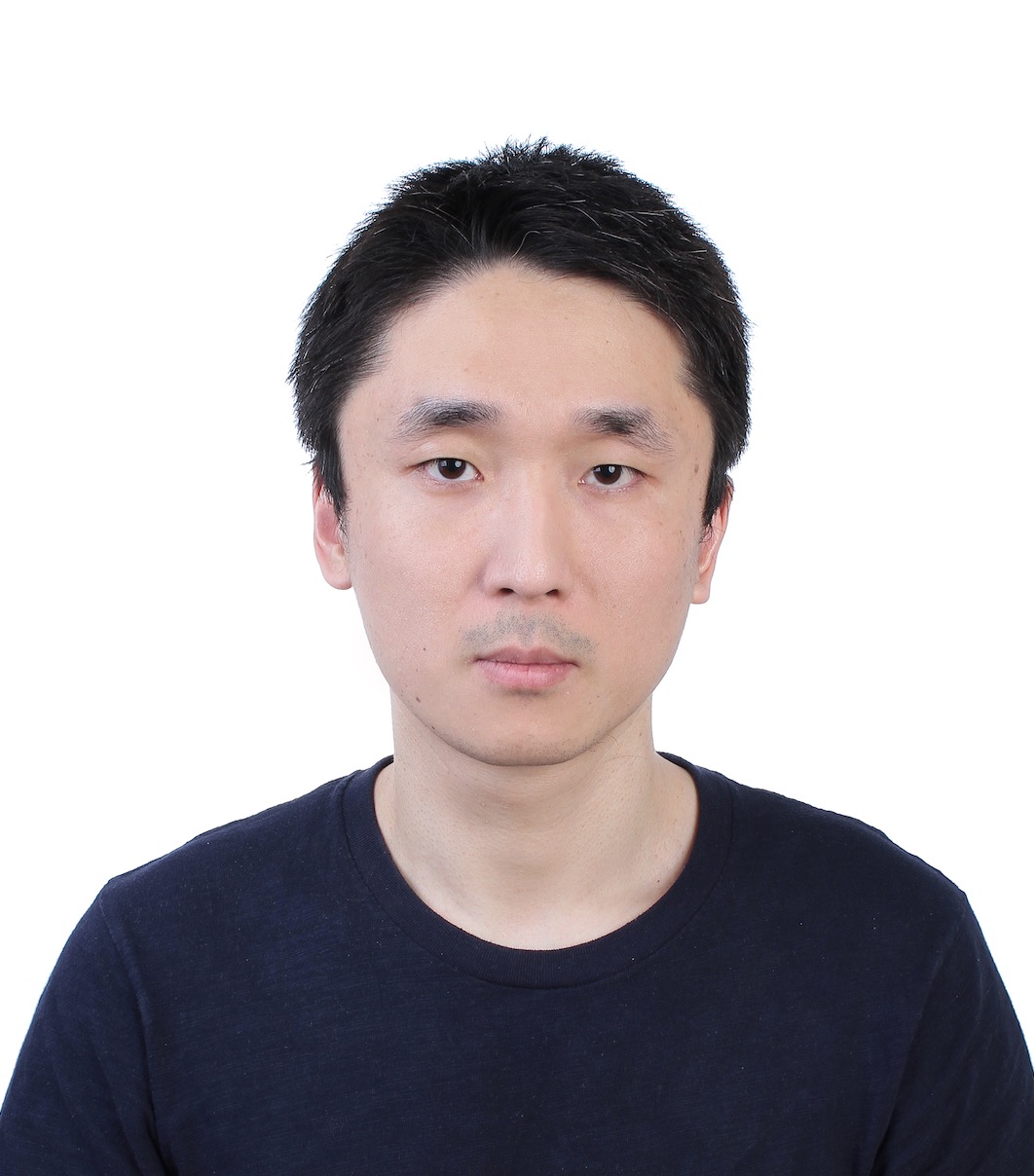
 Yang Song
· 4 previous affiliations
- PayPal Inc.Since 2026
- Researcher · Since 2026
- PayPal (United States)Current
- Current
- C3.ai2022–2026
- Researcher · 2022–2026
- Nanyang Technological University2016–2022
- Postdoc · 2016–2022
14 other authors named Yang Song: Yang Song (UNSW Sydney · 456 papers), Yang Song (Meta (United States) · Google (United States) · 176 papers), Yang Song (Meta (United States) · Meta Superintelligence Labs · 42 papers), Yang Song (Boss Zhipin · BOSS Zhipin · 21 papers), Yang Song (14 papers), and 9 more
Research Overview
Yang Song focuses on robust machine learning, statistical signal processing, and the stability of continuous-time neural architectures. His trajectory spans from early work in sensor network privacy and multi-modal localization to developing adversarial defenses using error-correcting codes and dynamical systems. Most recently, his research investigates autonomous coding agents for mathematical optimization and the structural robustness of graph neural networks.
Research Trajectory
Song’s early research addressed foundational problems in signal processing and robotics. His initial work included techniques for signal estimation, such as Decoupled 2D Direction-of-Arrival Estimation using Partly Calibrated Vector Hydrophones (2013). He subsequently applied estimation and fusion techniques to mobile robotics, developing methods for cooperative sensor networks. In UWB/LiDAR Fusion For Cooperative Range-Only SLAM (2019), he introduced an approach to fuse peer-to-peer ultra-wideband ranges with 2D laser scanning data, improving simultaneous localization and mapping in unknown environments.
Around 2020, Song expanded his focus to data privacy within distributed systems and sensor networks. He developed optimization frameworks for linear dynamical systems in Compressive Privacy for a Linear Dynamical System, designing compression matrices that balance the utility of estimating public states against the need to protect private states. He further formalized this domain by establishing theoretical limits for privacy mechanisms, deriving Cramer-Rao lower bounds to maximize estimation error for private parameters in Maximum Privacy under Perfect Utility in Sensor Networks.
Concurrently, Song began a sustained investigation into the vulnerabilities of deep learning models, contributing significantly to the research direction of Mechanisms for Adversarial Resilience in Neural Networks. He participated in the design of an Error-Correcting Neural Network (2019), which utilized an ensemble of binary classifiers to maximize fault tolerance against adversarial perturbations. He subsequently expanded on this framework, formalizing the code matrix design to maximize both Hamming distance and shared information distance in Error-Correcting Output Codes with Ensemble Diversity for Robust Learning in Neural Networks (2021).
His interest in robustness naturally intersected with the study of continuous-time dynamical systems. With collaborators, he demonstrated that constraining the equilibrium points of neural ordinary differential equations (ODEs) provides intrinsic defense mechanisms against adversarial inputs in Stable Neural ODE with Lyapunov-Stable Equilibrium Points for Defending Against Adversarial Attacks. This dynamical systems perspective was then applied to Graph Neural Networks (GNNs). Song investigated graph neural partial differential equations in On the Robustness of Graph Neural Diffusion to Topology Perturbations (2022), showing their stability under structural attacks by exploiting the properties of the heat semigroup. He also contributed to modeling node feature updates as energy-conserving systems in NEURAL HAMILTONIAN FLOWS IN GRAPH NEURAL NETWORKS (2023), addressing oversmoothing issues. Continuing this trajectory, he explored the long-memory properties of fractional calculus in Coupling Graph Neural Networks with Fractional Order Continuous Dynamics: A Robustness Study (2024), demonstrating that fractional-order differential equations yield models that are highly robust against attacks on graph structure.
In parallel with his theoretical work on robustness, Song maintained an active research line in spatial perception and 3D vision. He contributed to the broader area of Hyperbolic Embeddings for Hierarchical Representation Learning through his participation in HypLiLoc: Towards Effective LiDAR Pose Regression with Hyperbolic Fusion (2023), which fused 3D point cloud features with 2D spherical projections to capture the hierarchical structure of 3D scenes. He also collaborated on point cloud registration techniques in PosDiffNet: Positional Neural Diffusion for Point Cloud Registration in a Large Field of View with Perturbations (2024).
Following his transition to industry as a data scientist, his most recent work has expanded into the domain of large language models and autonomous agents. In 2026, he introduced NEMO: Execution-Aware Optimization Modeling via Autonomous Coding Agents, a system that translates natural-language business problems into executable mathematical optimization models using an asymmetric validation loop to verify the optimizer's outputs.
Current Directions
The most recent papers in the evidence indicate a dual focus on the intersection of continuous dynamics with graph representation learning, and the application of autonomous agents to mathematical optimization. Work in the former area explores how fractional-order differential equations and Hamiltonian flows can mathematically guarantee robustness and prevent oversmoothing in graph neural networks. Concurrently, his latest research addresses the automated formulation of optimization models, utilizing execution-aware coding agents to bridge natural language problem descriptions with executable solver code.
Profile updated
Loading new papers…
Other researchers whose papers cluster into the same research directions — a proxy for overlapping technical interests and shared intellectual neighborhoods.
See something wrong? Report a mistake